
Postcards from Maine
I returned with a Forestry degree after college and spent a summer working in the North Maine woods. I remember my boss, at the time, giving directions, “Drive to the top of New Hampshire, head North through Canada for two hours and then take a right into Maine” Needless to say, I saw many more bears than people that summer. In the years since, I have been fortunate to film and photograph for Yankee Magazine from Kennebunkport to Lubec. One winter I explored Caribou by snow machine, followed by a summer voyage on Moosehead Lake with Captain Rocky aboard the steamboat Katahdin.
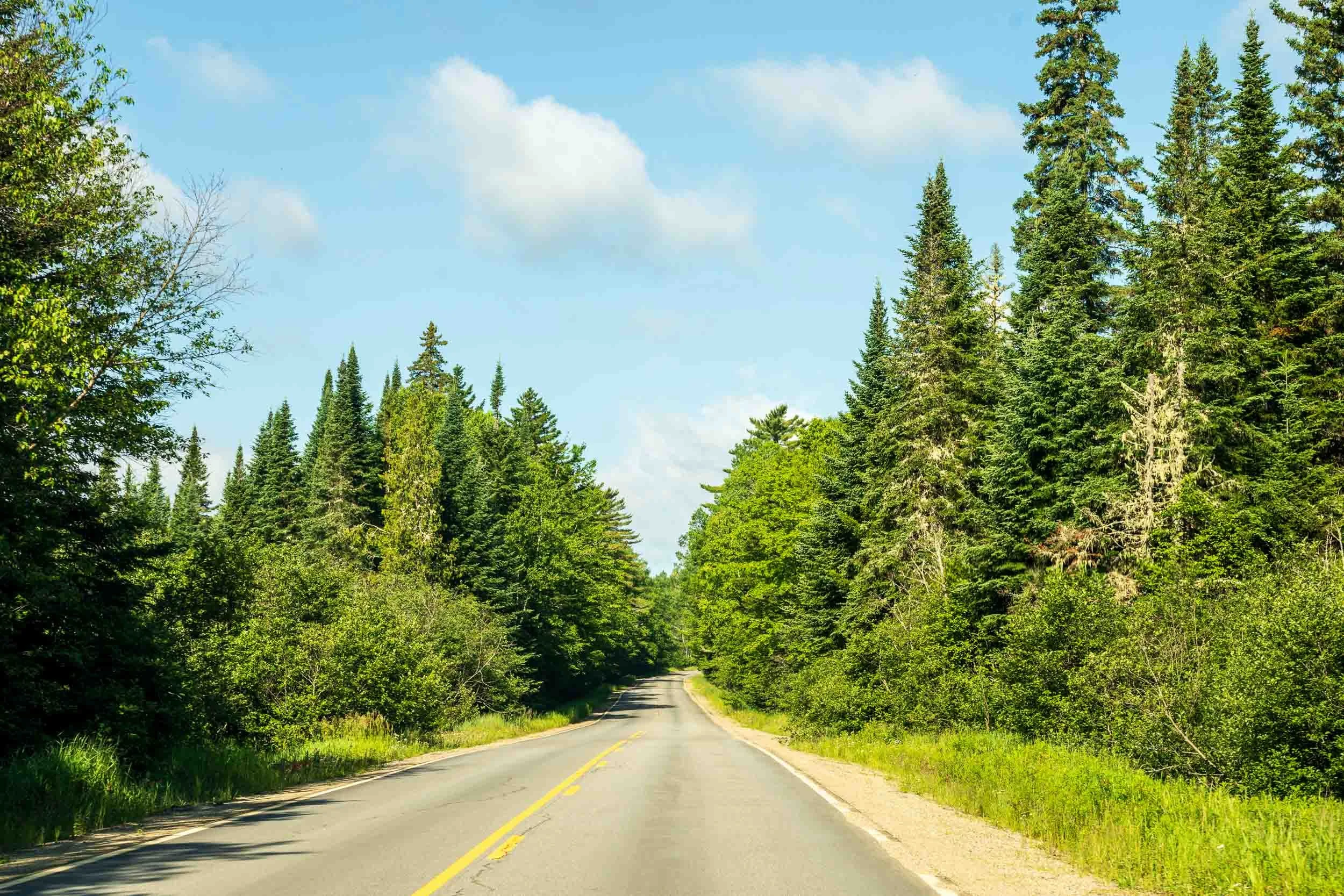
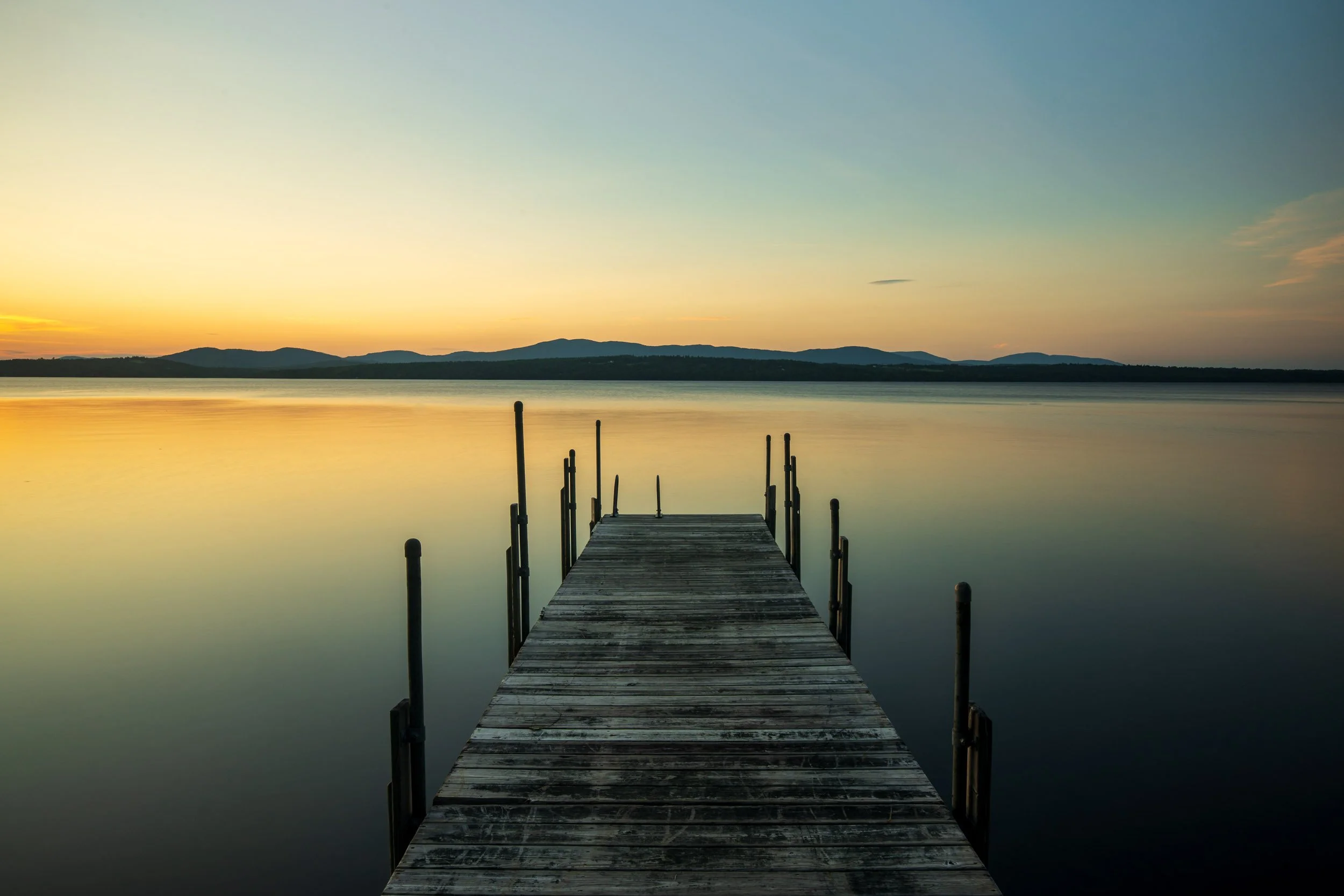
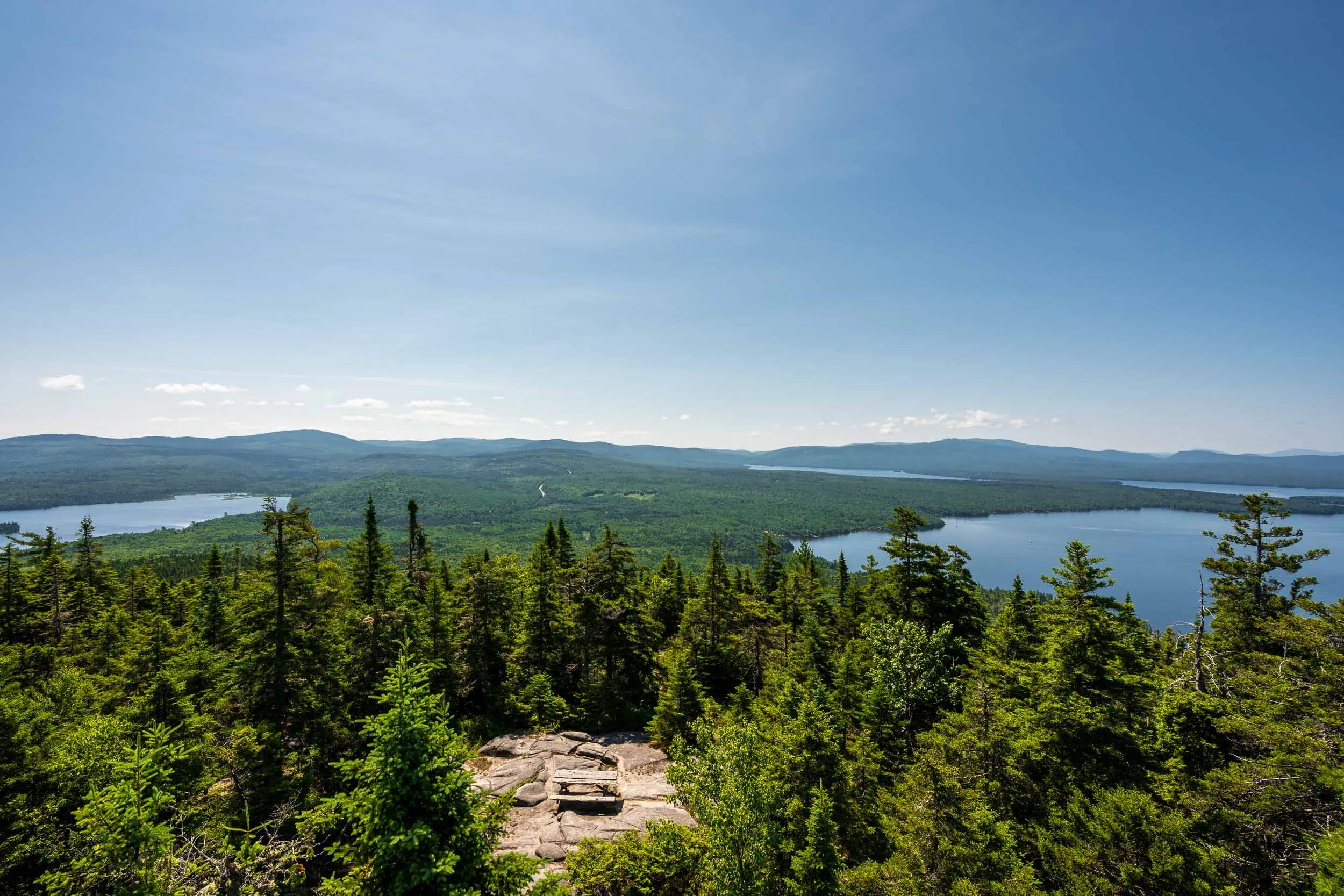
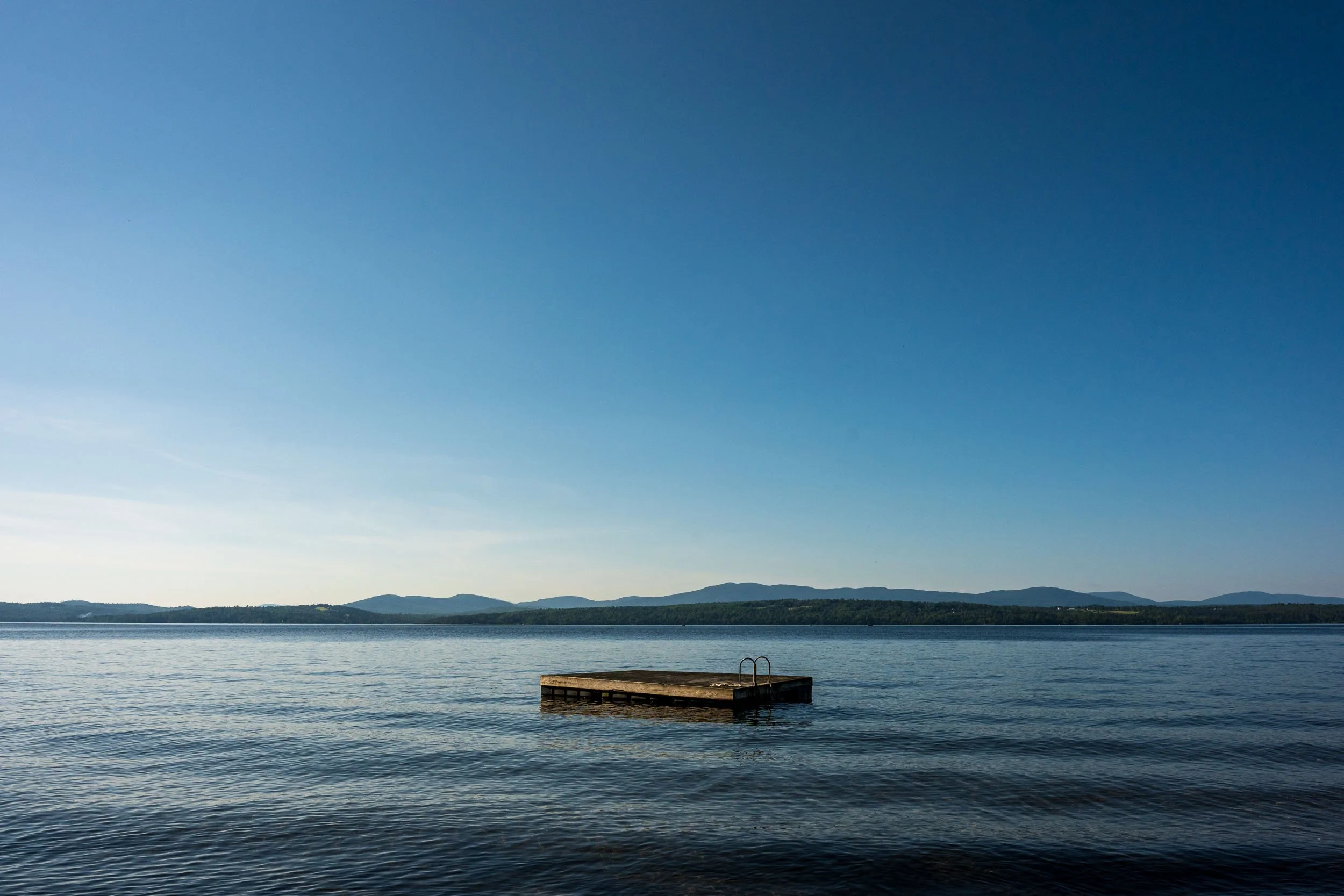
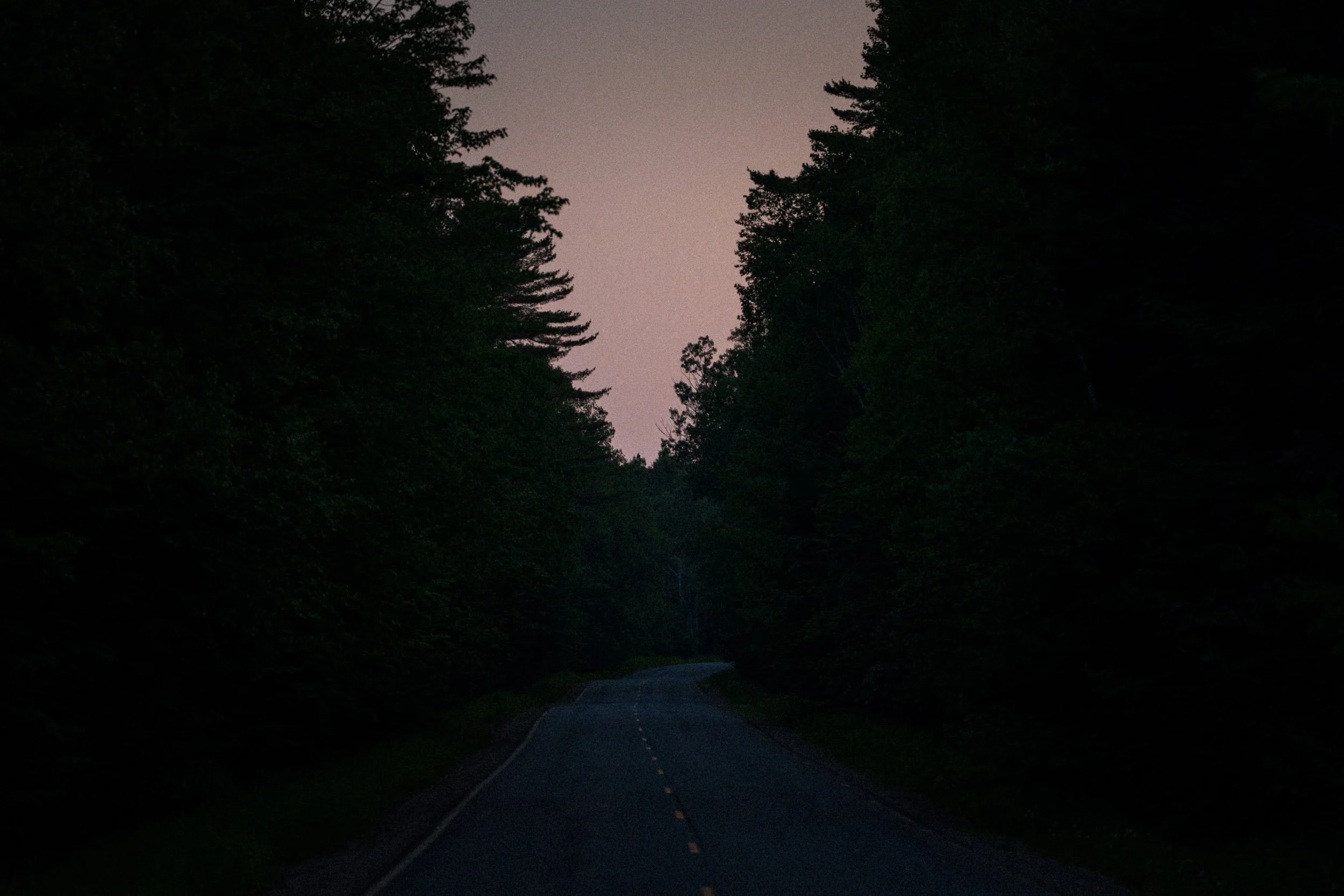
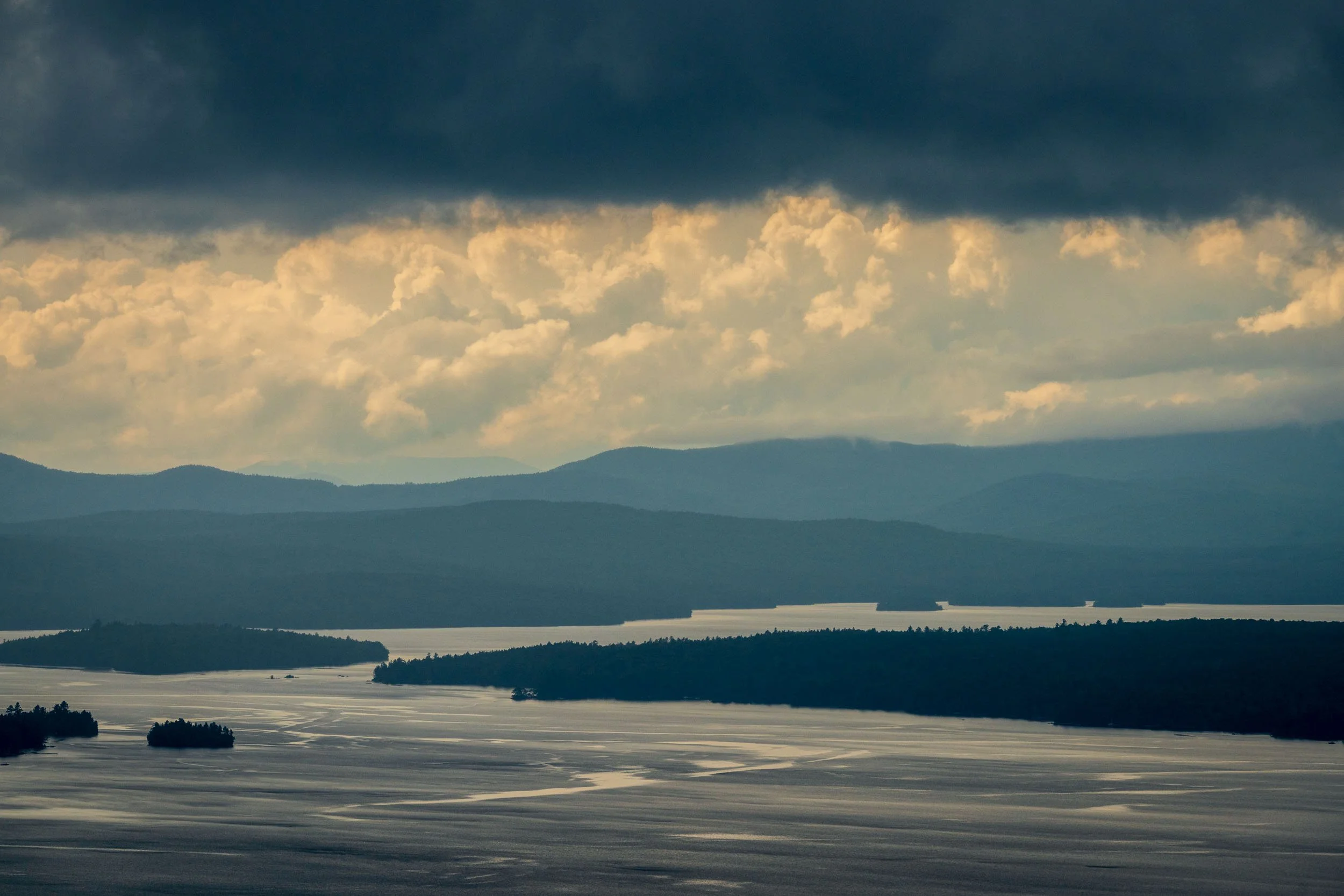
Maine has always pulled me Eastward to its mountains, lakes, forests and coastline. As a young boy I remember being woken up before dawn to watch the sunrise on Cadillac Mountain. I returned with a Forestry degree after college and spent a summer working in the North Maine woods. I remember my boss, at the time, giving directions, “Drive to the top of New Hampshire, head North through Canada for 2 hours and then take a right into Maine” Needless to say, I saw many more moose than people that summer. In the years since, I have been fortunate to film and photograph for Yankee Magazine from Kennebunkport to Lubec. One winter I explored, and filmed, the Caribou area by snow machine, followed by a summer voyage on Moosehead Lake with Captain Rocky aboard the Steamboat Katahdin.
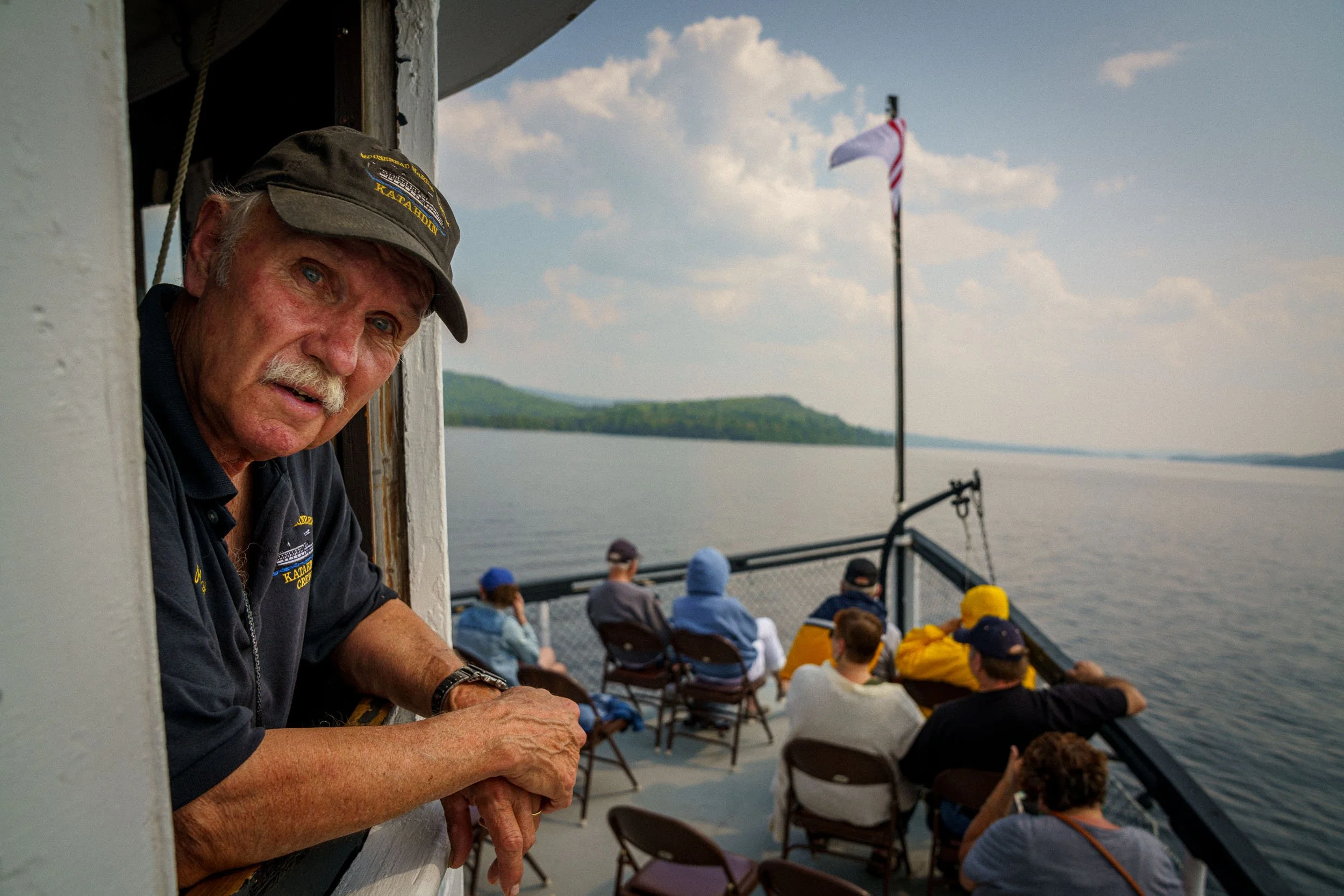
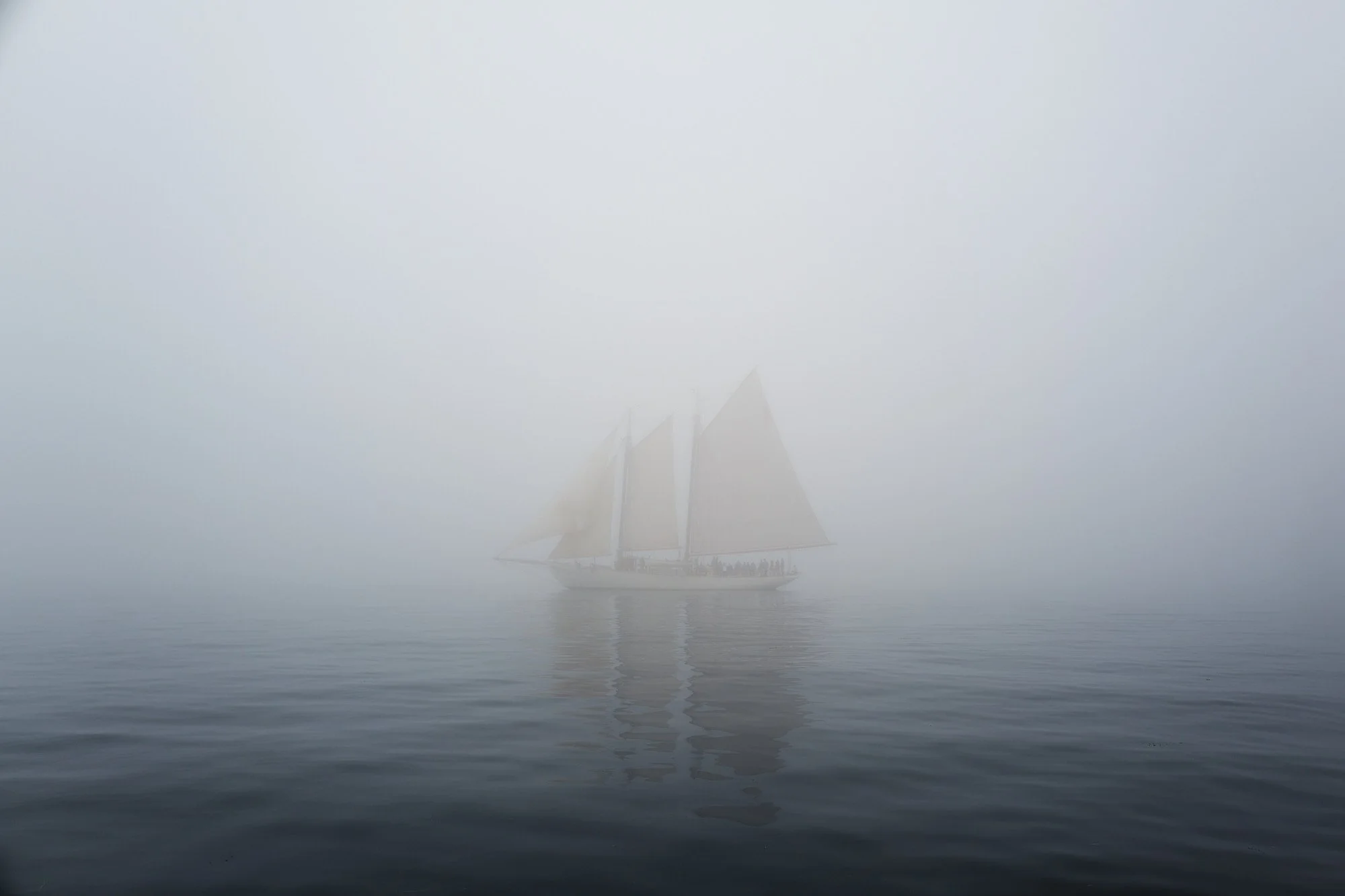
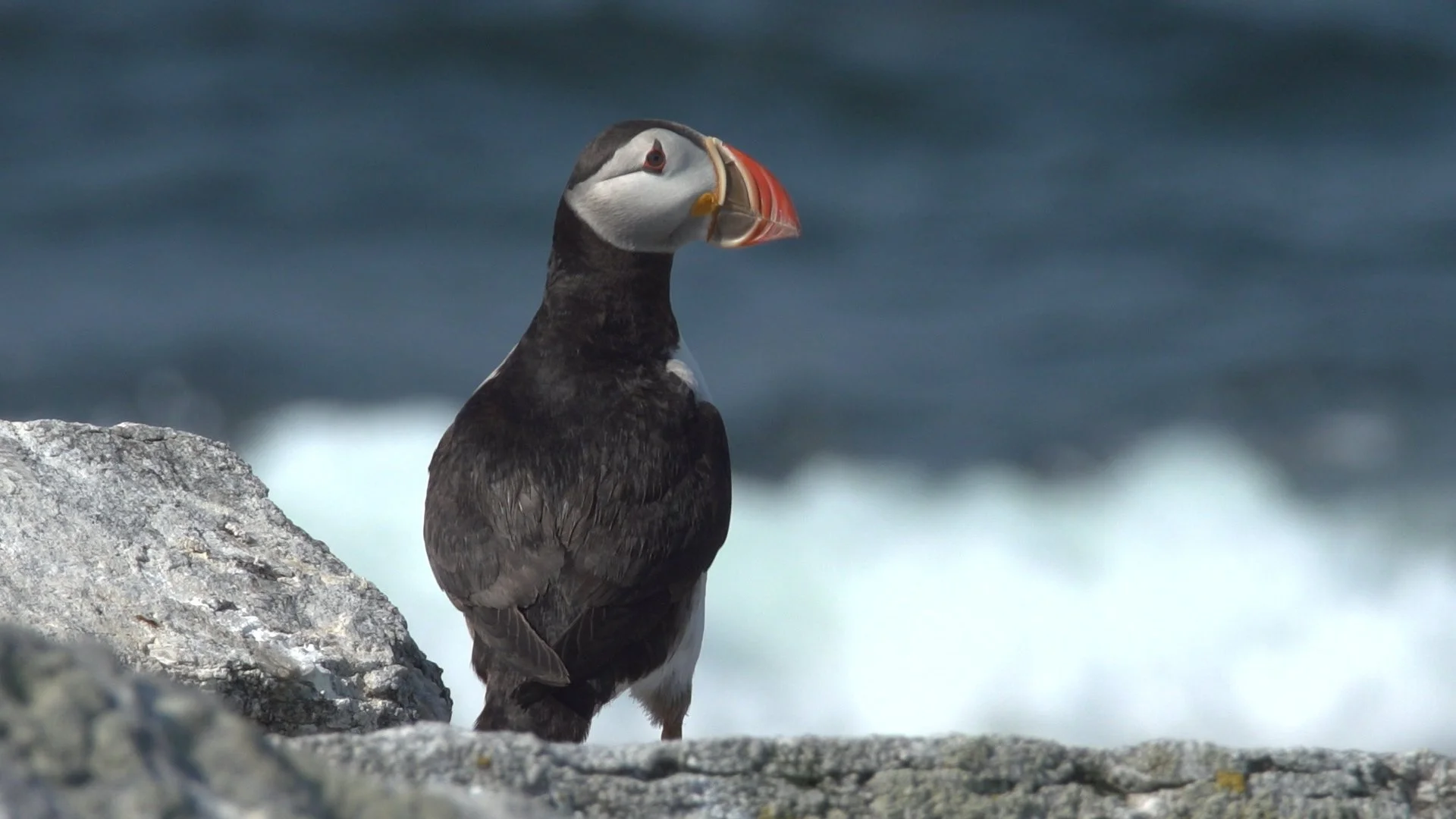
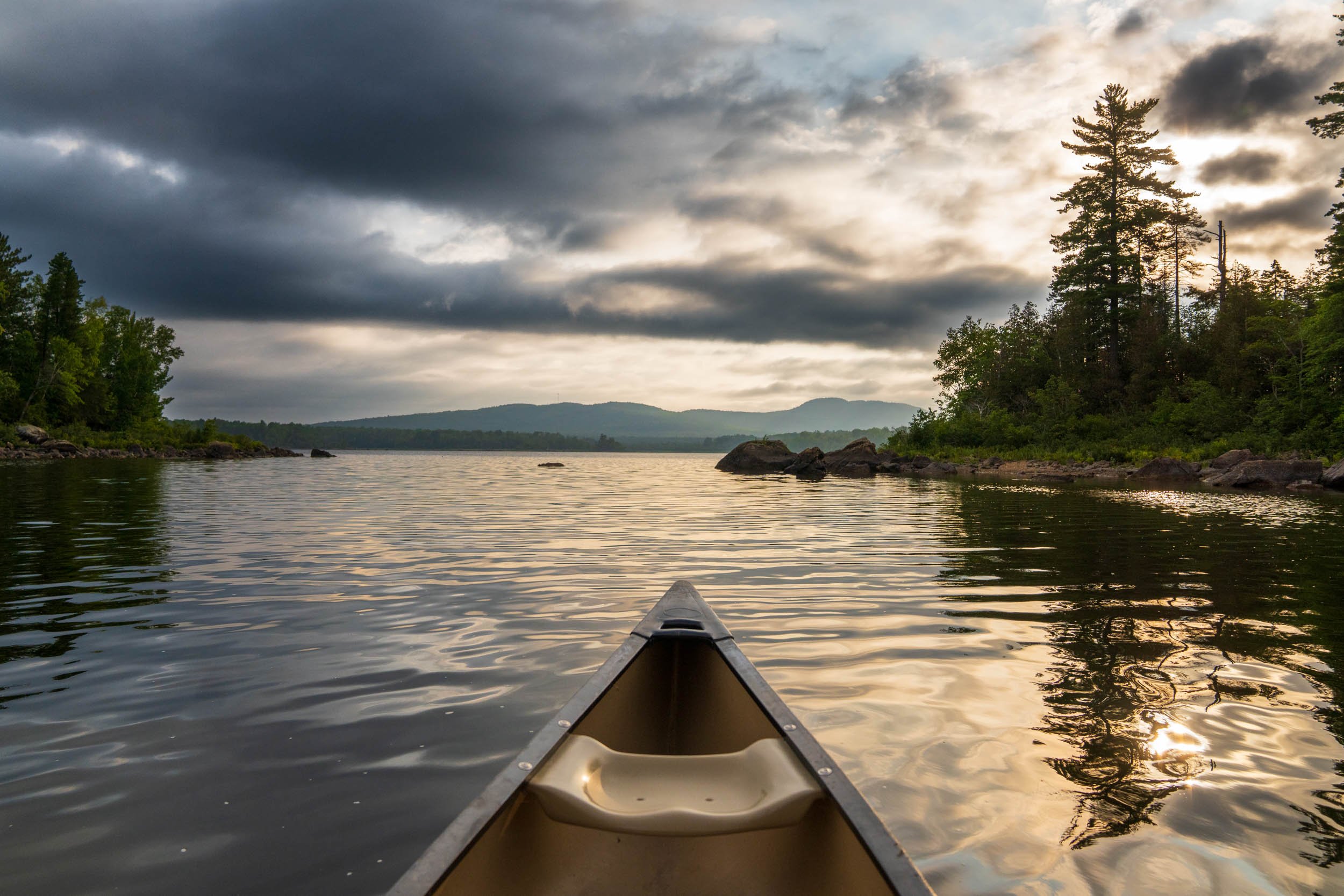
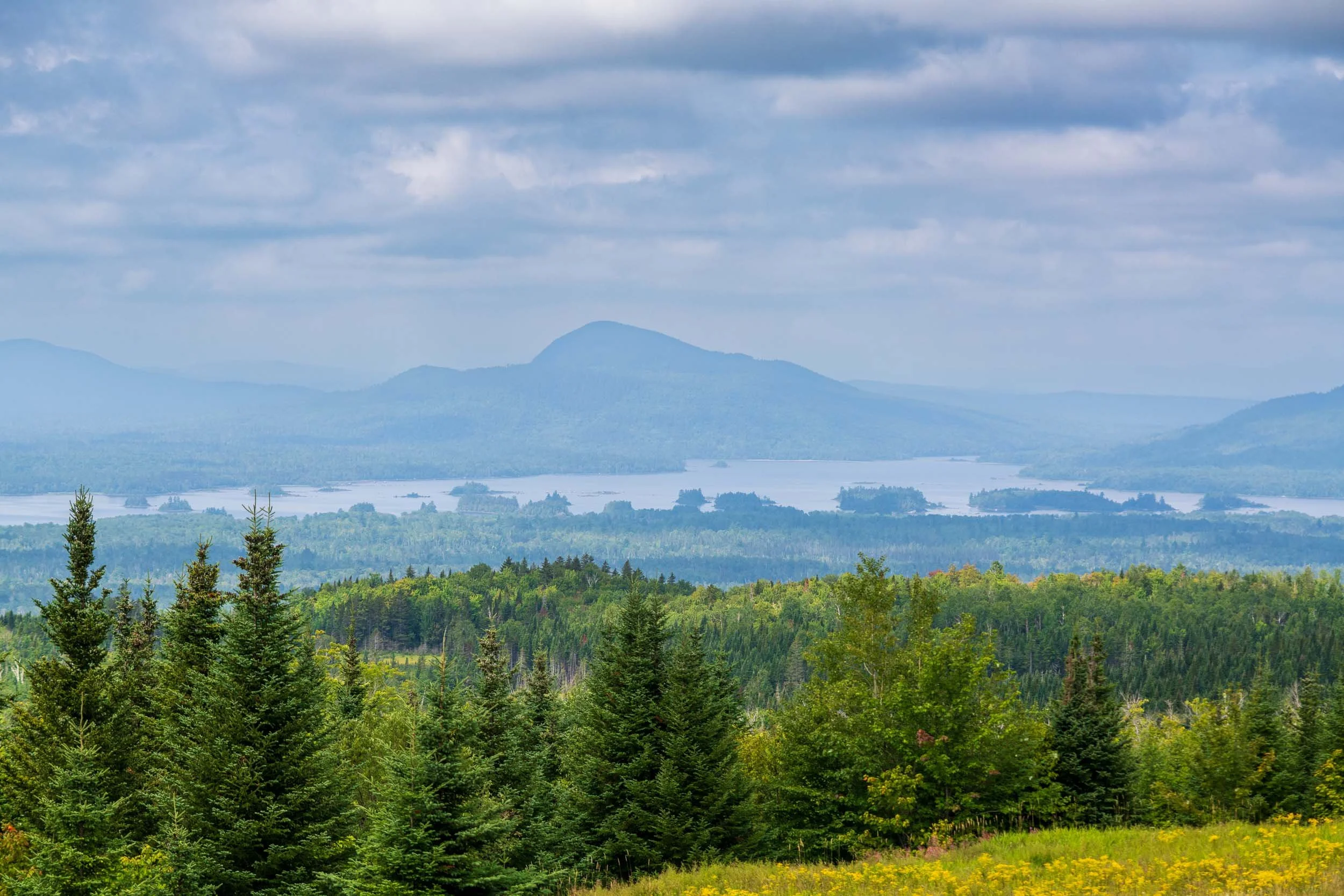
As the Director of Photography for a PBS show, Weekends With Yankee, I got to look back at the Maine coast from inside the Nubble Lighthouse, mountain biked in Bethel, raced a schooner in the fog and filmed a memorable trip to Eastern Egg Island with the Puffin Man, Steve Kress. One of the best parts of my job is getting to share these places and stories with my kids. Last week I took them to another place I learned about from behind the camera, Rangeley. Ironically, I almost do not want to identify this area by name for fear of spoiling it. Too late… but I love the lack of development, long views, cold water and of course, the Loons. My daughter even commented that, “It just feels calm up here.”. A statement made humorous by sharing that our town has less than 500 residents and a single traffic light.
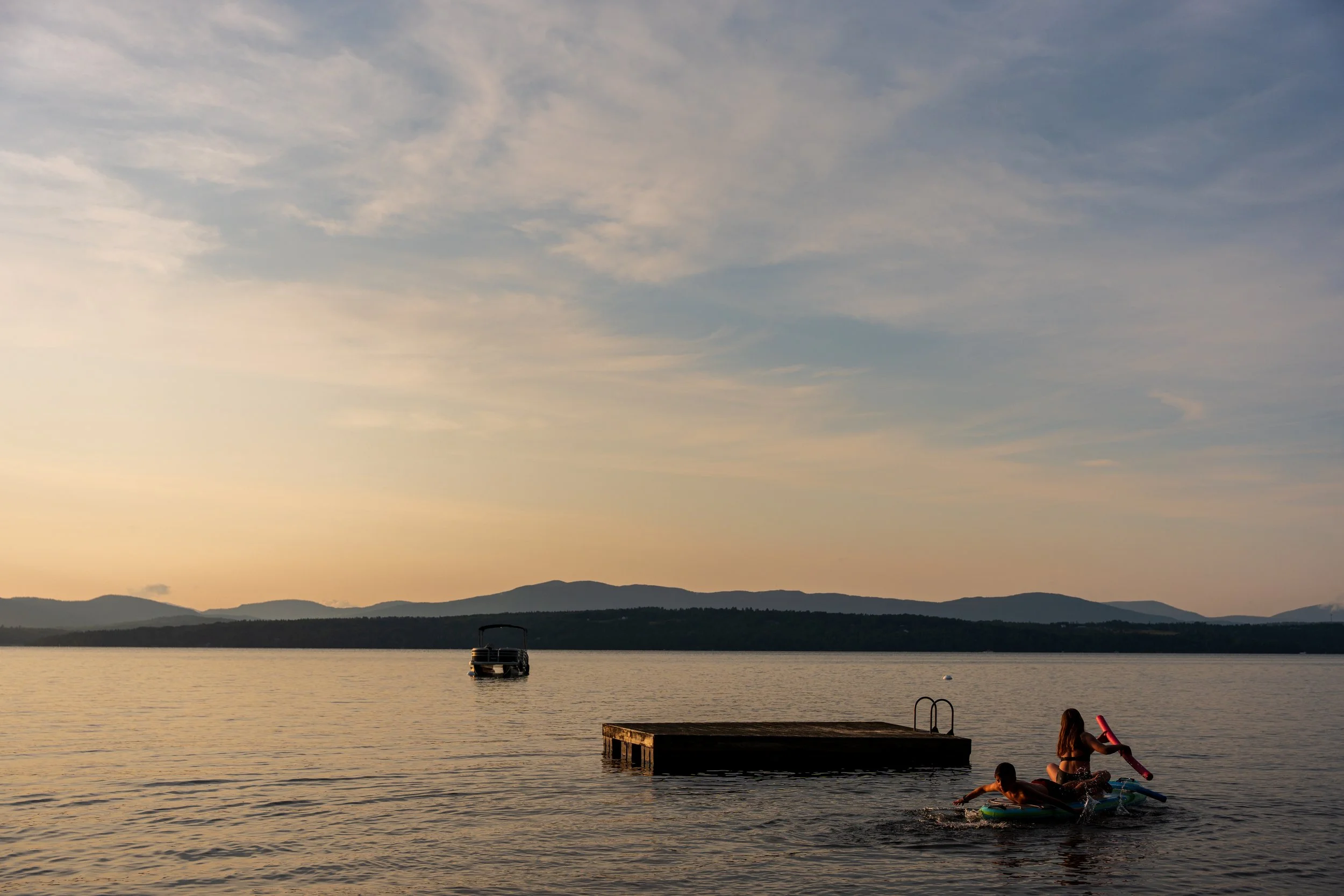
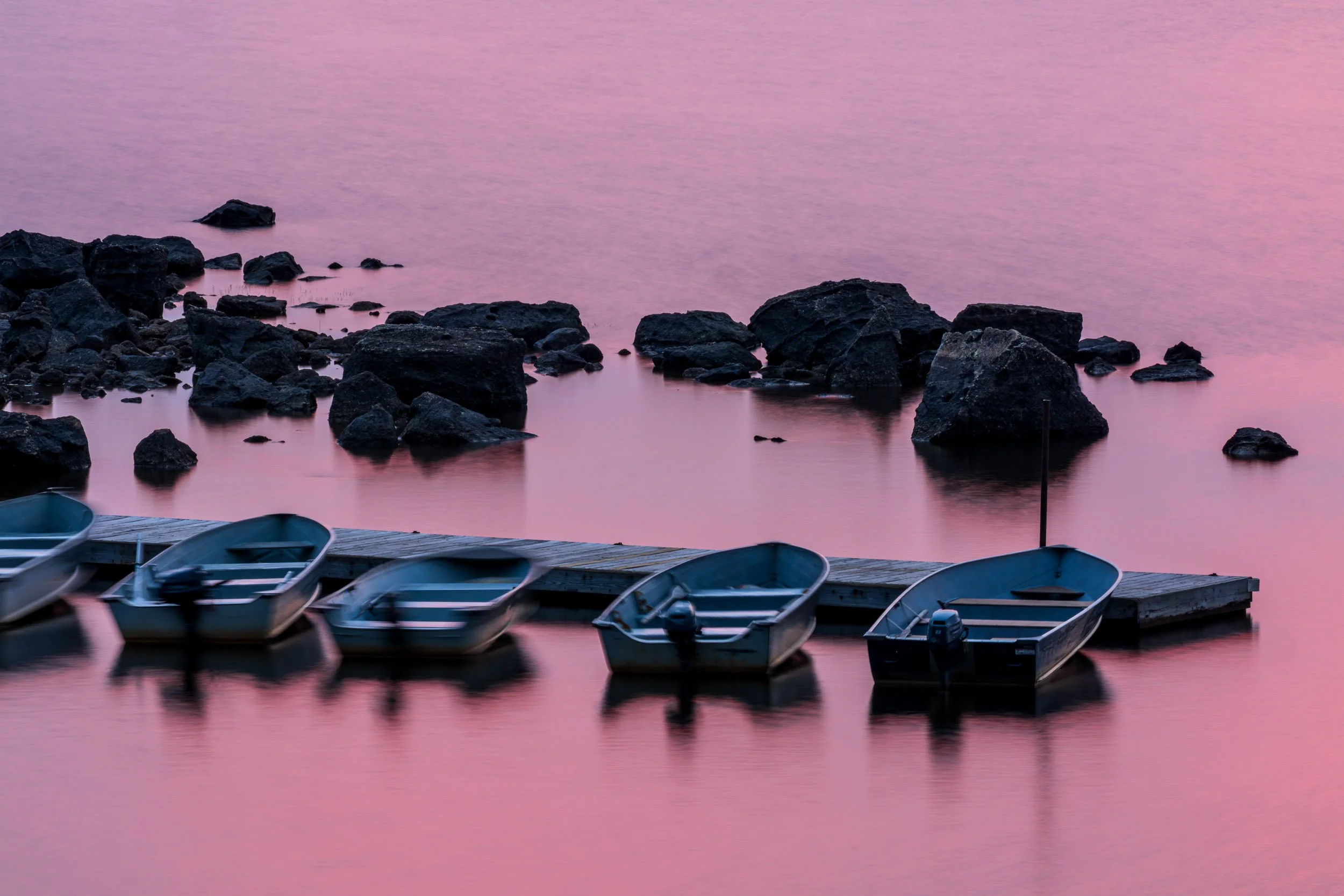
Rangeley Lake, Maine.
If I am being honest, I did not succeed in prying my children entirely off of screens, but the majority of their time was spent blissfully immersed in nature. A highlight being skipping stones, and then racing, with swim goggles on to retrieve them. The reality of our time blew in one day from the West, with a smokey haze replacing the endless blue. I recently finished the book “Immemorial” by Lauren Markham, and it was there that I learned of the term, Solastalgia. It is defined as, “a form of homesickness one gets when one is still at home, but the environment has been altered and feels unfamiliar.” Kids today will inhabit a world vastly different from what I experienced growing up, with deadly floods and catastrophic fire becoming a normal headline. I hope our adventures together in Maine remain recognizable and that they can share a love of the natural world with their own kids.

Thoughts on place
I want to observe and create long term projects, extracting slivers of time that can speak to a certain familiarity and sense of place. Stephen Gill summarized this perfectly in the British Journal of Photography, “I realised that it’s all here. It’s all outside my house, and it’s also the biggest challenge,” he says. “To go somewhere unfamiliar, it’s exotic, and easy to make images. That was a language I never really tapped into. If you can latch onto your home environment, it’s unbelievable, you just have to look and absorb.” This sentiment inspired me, though it can also pose challenges because inevitably one's home environment can feel banal.
Distinct seasons are in my blood and are part of what pulled me back to Vermont. I love how the landscape gets reset every year, seeing the contours of the mountains when the leaves are gone and then entering into a world of green come summer. We live far enough north to notice a difference in the angle of the sun as the equinoxes come and go. The shadows inside our house reorient and the cats move to new sections of sun drenched floor. This shift in the way everyday life appears, with shorter nights and light from a different angle, is amplified by the time change. The rhythm of life skips a beat and forces a second glance at our surroundings. The change of season also exerts a certain amount of creative pressure on photographers; it's stressful to consider having to wait a full year if one does not capitalize on the ephemeral beauty of fall or spring.
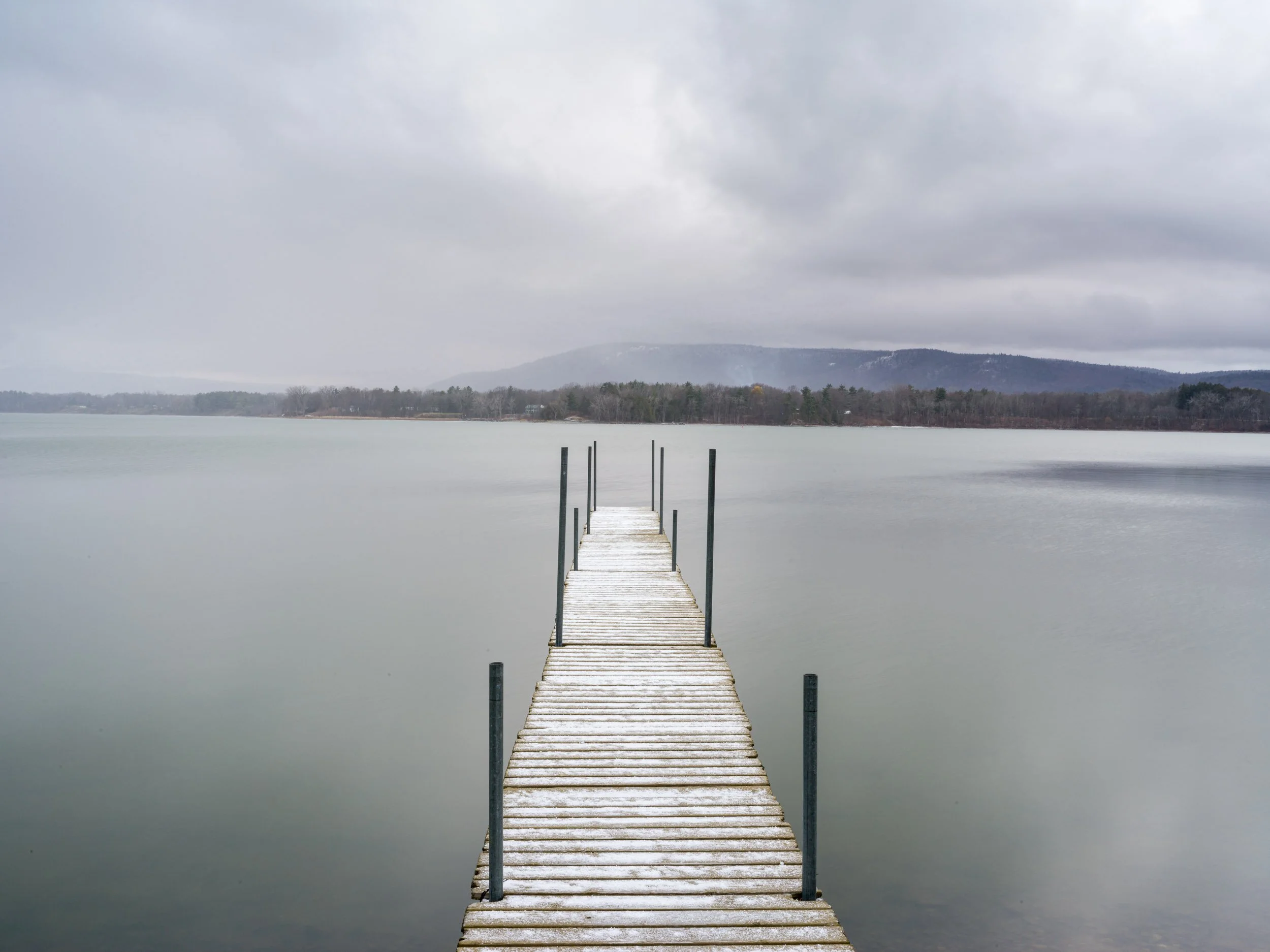
Looking West over Lake Champlain as a snow squall approaches, Bridport Vermont.
Despite having left it blocking the door, my daughter forgot to bring her bicycle helmet to school. Moving the clocks for Daylight Savings Time has always wreaked havoc on our family routine. The late day sun is a welcome reprieve after winter, but waking up in the dark is a fresh challenge. I filled a travel mug of coffee, grabbed my camera and headed towards school to drop off the pink helmet.
I have been working close to home lately, focusing on a project defined by Route 125, our 36 mile long road connecting the Green Mountains to Lake Champlain. Creating work that is close to home affords the luxury of revisiting locations. I have been fascinated with the possibilities of how to articulate the passage of time in the photographs. The most basic impulse has been to simply rephotograph these places that pull me in throughout the year, a practice more instinctual than scientific. Forcing myself to remember and recreate previous compositions for the sake of comparison has become enjoyable. It has forced me to make peace with the unsettling notion that I am repeating myself. Initially it felt like a lack of creativity or an artistic plateau. It is a self-doubt that can be compounded by the commonplace subject matter–the landscapes and textures that have come to define home. How can I recognize what is interesting about my place in the world without forcing myself to look at it over and over again?
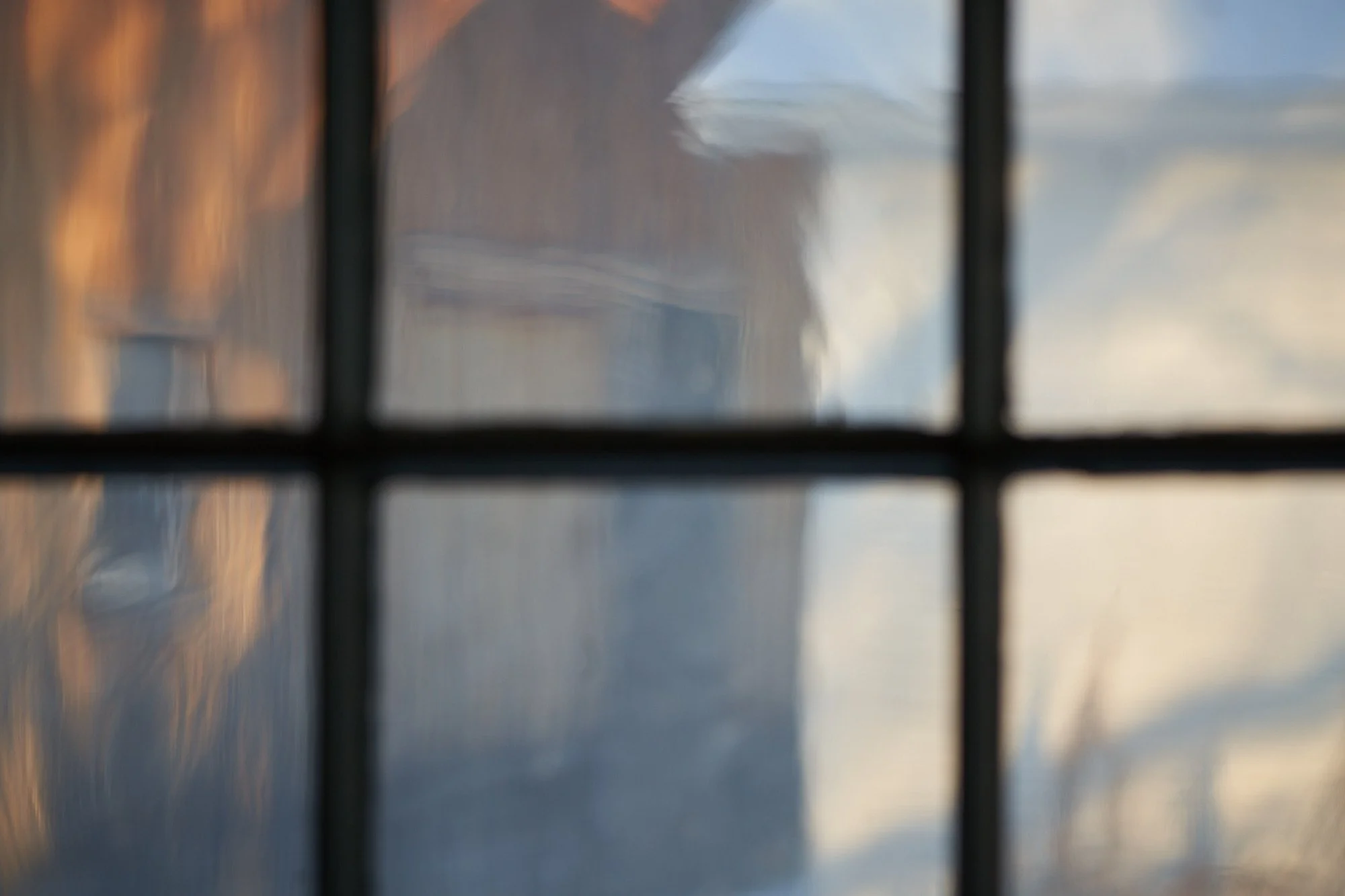
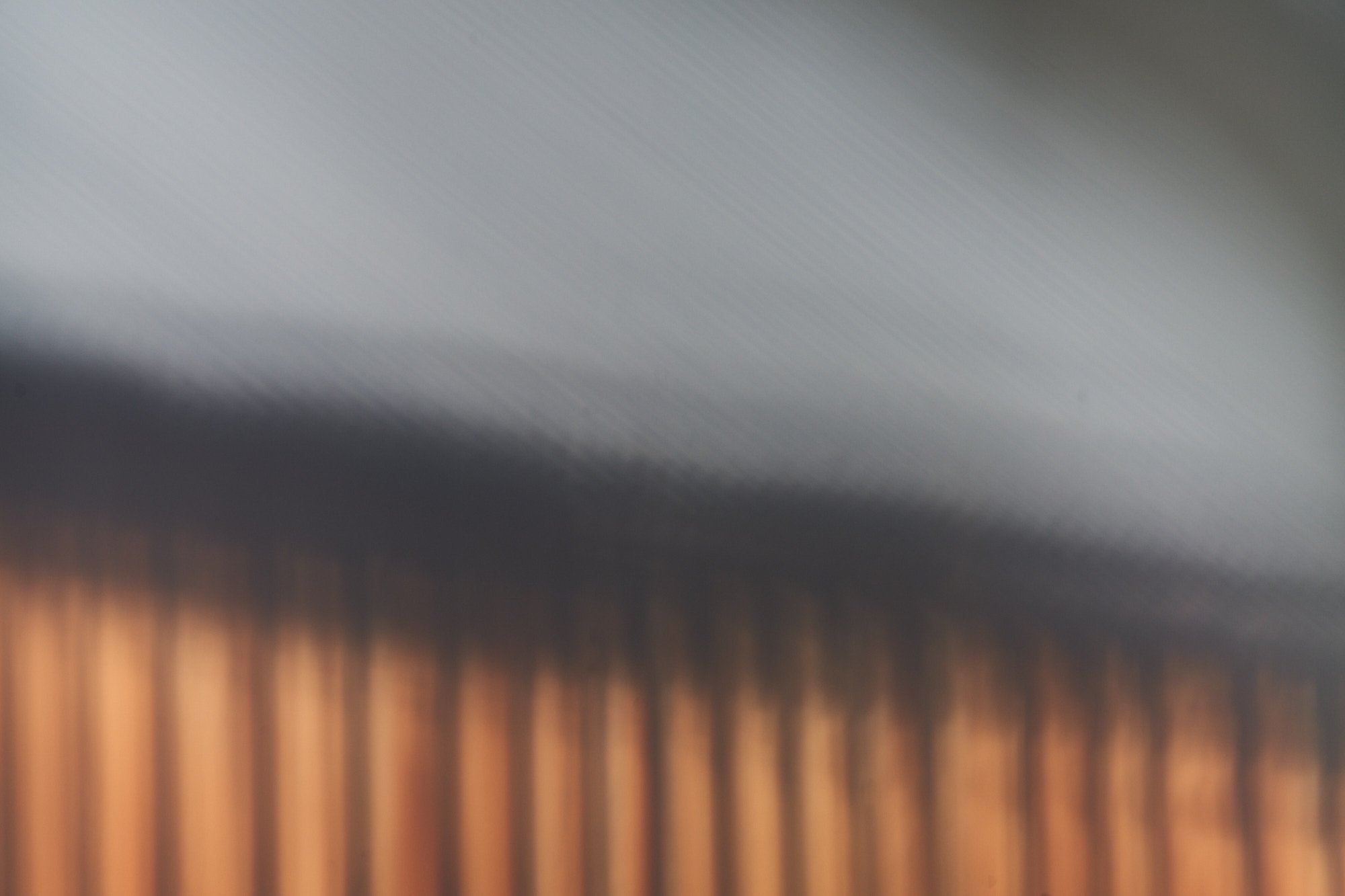
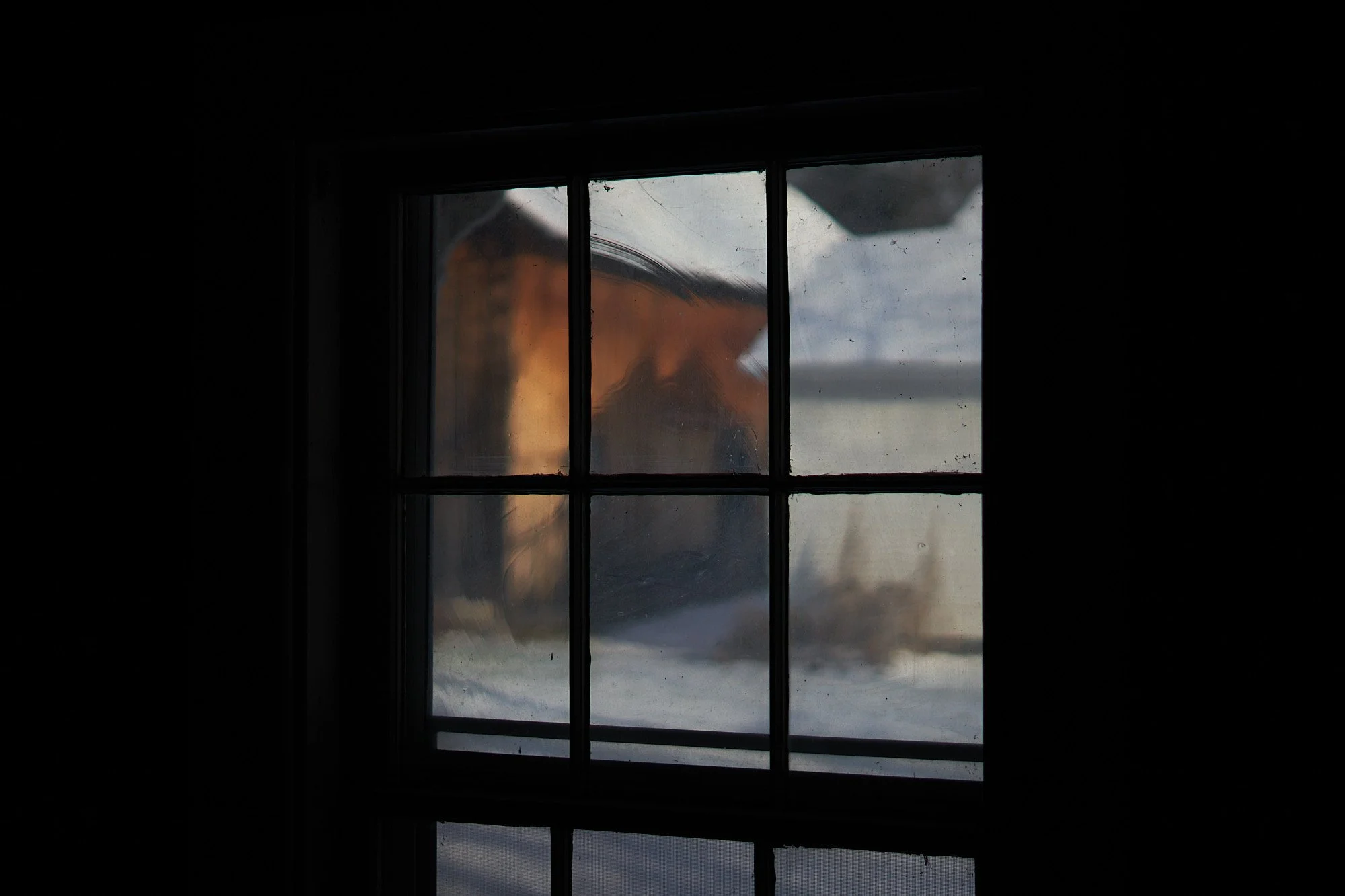
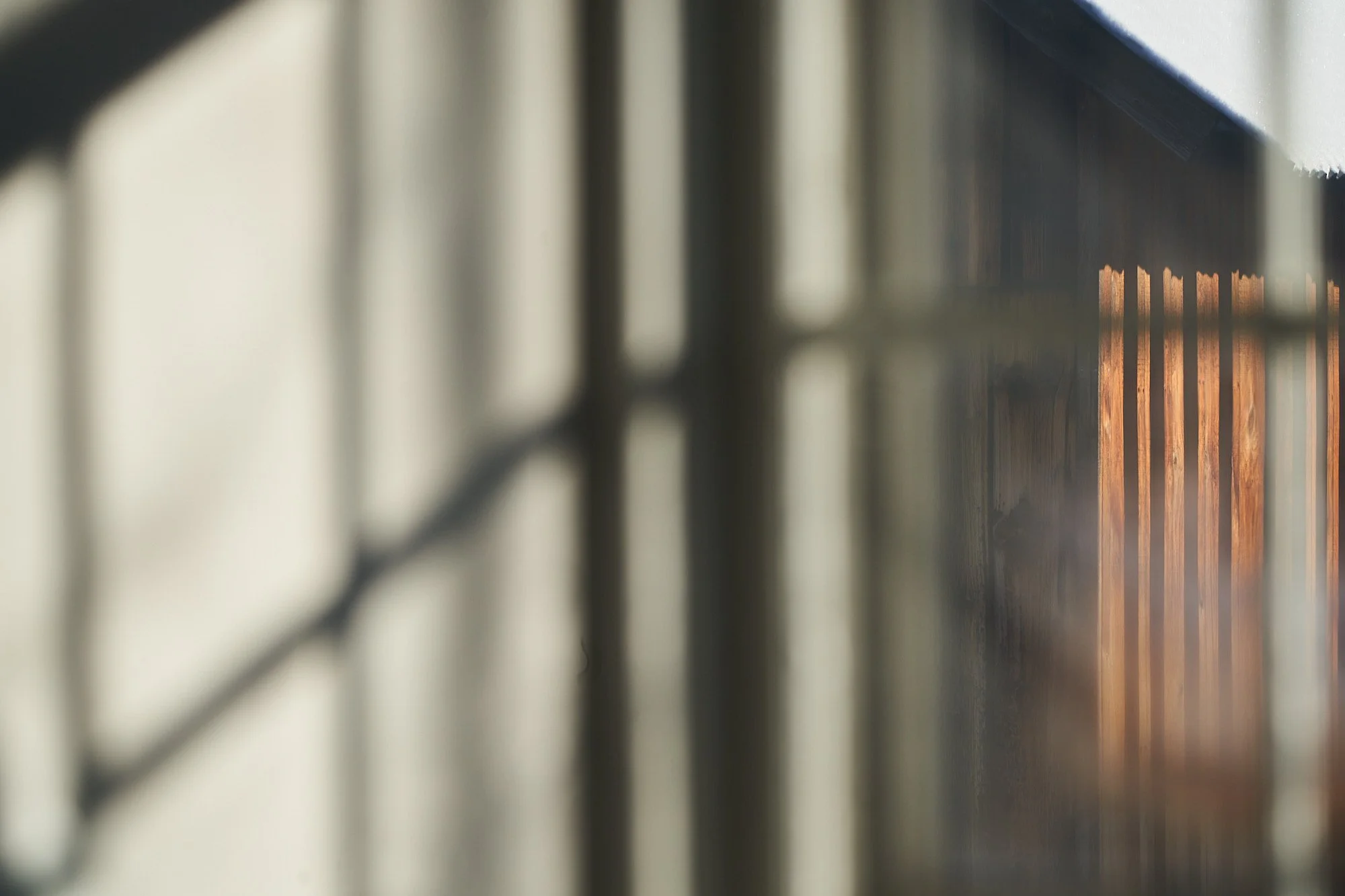
This thread of obsession with locality, had already been weaving its way through my photography. We have lived in our house for a decade now, and I have consistently enjoyed making photographs of the neighbors’ barn. It is the first and last thing I see each day, glancing out the window of the bedroom. Our side windows are old and made from spun glass. They have wonderfully distorted optics, at certain times of year they seem to project wave-like patterns on the walls. Looking or photographing through them also creates a beautiful rippled effect. The barn is always there, just waiting for me to make its portait. Until recently I never realized it had quietly produced a meaningful series of photos. It is always in the periphery of our life here. Over the years it has become a habit to grab whatever camera is within reach and photograph it without much thought; a muscle twitch. The neighbors' barn has been the backdrop for numerous portraits of the kids and has even appeared on our holiday cards. After ten years, now when I view these images I recognize that it is the barn that is the constant, stalwart against the vagaries of landscaping and the gnawing New England climate. The old weathered structure is what I now use to measure time, the seasonal changing shadow lines, and the growth of our children with it as the backdrop. I often wonder if the previous owners of our house admired it as I do.
Another collection of photos, created with my dog Jake, comes to mind when I think about rephotography as a hedge against an endlessly changing world. Susan Sontag famously wrote in On Photography, "All photographs are memento mori. To take a photograph is to participate in another person's (or thing's) mortality, vulnerability, mutability. Precisely by slicing out this moment and freezing it, all photographs testify to time's relentless melt." I was in the habit of walking Jake down the very same stretch of road each day. And when he passed away, the collection of dog-walk photos was left spinning on the hard drive for a number of years. Finding them again I was reminded of my natural tendency to photograph the same settings and views on each walk.
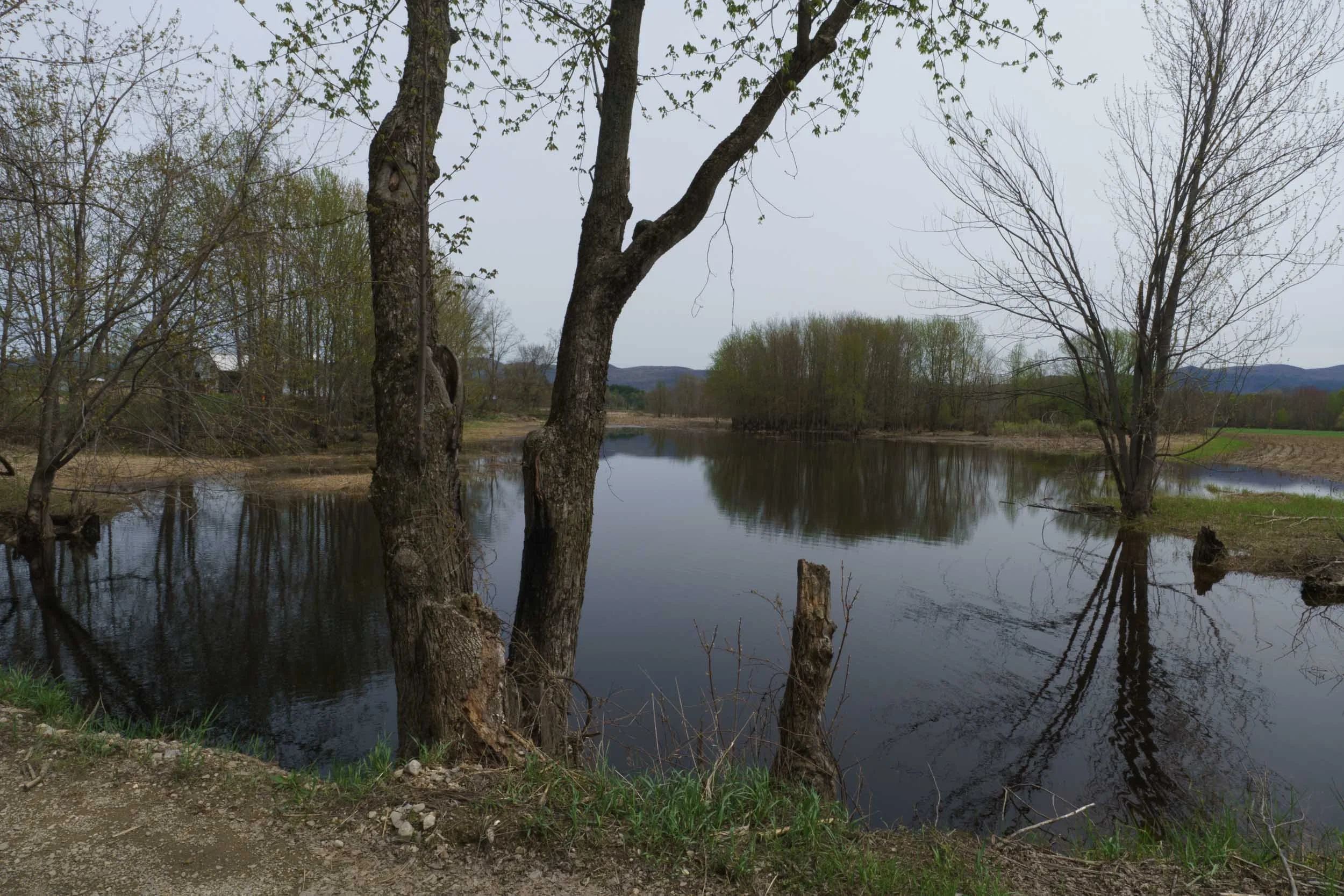
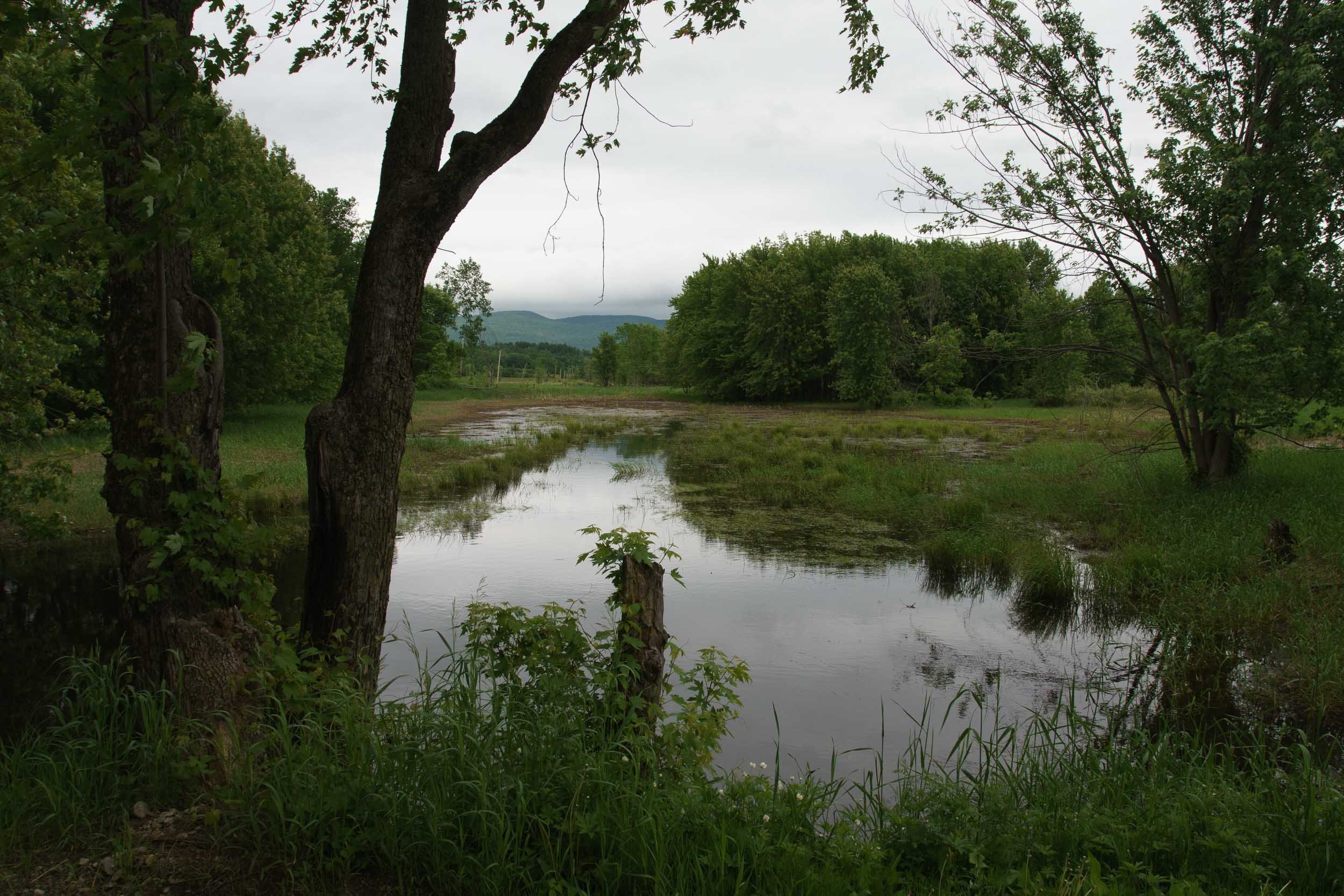
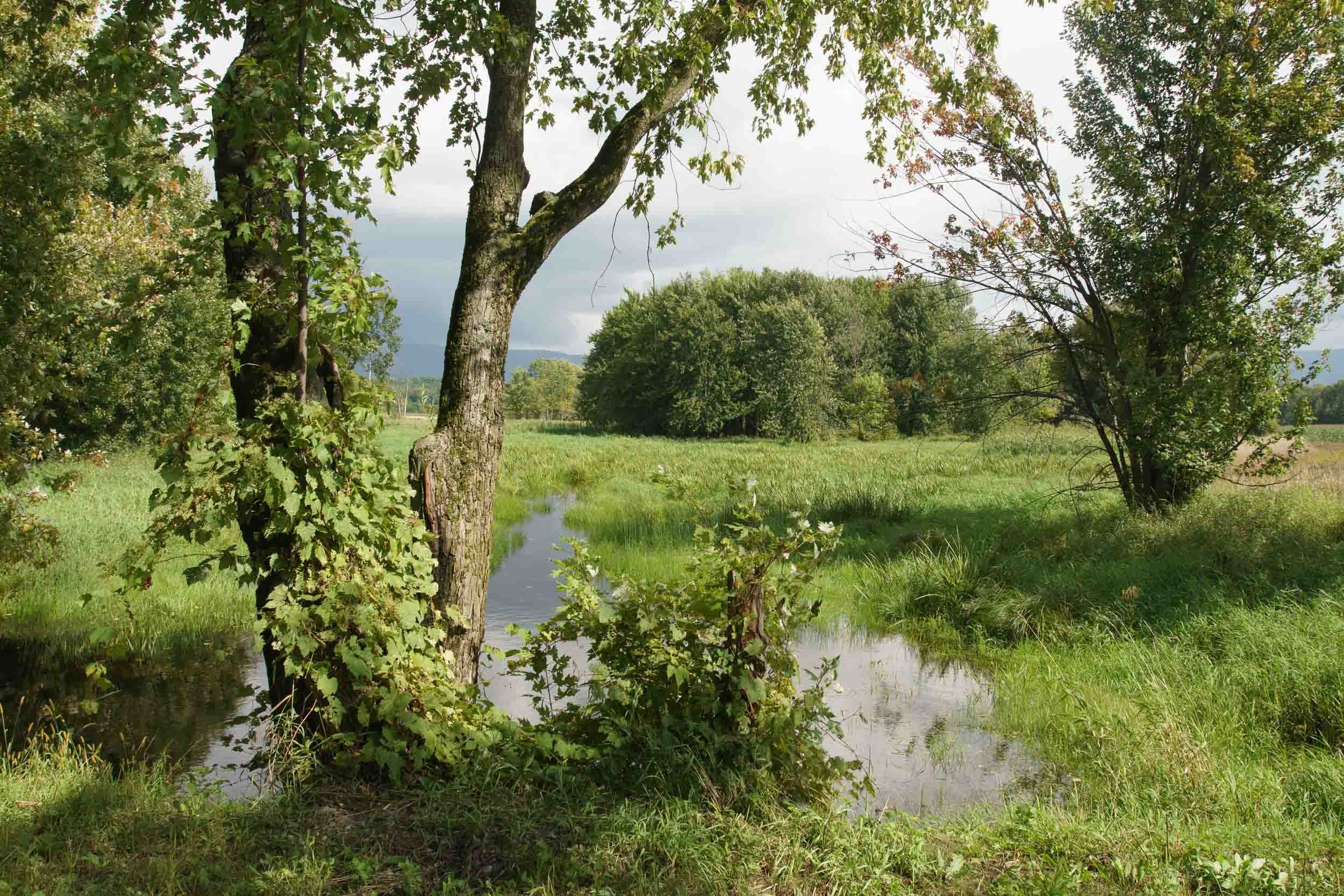
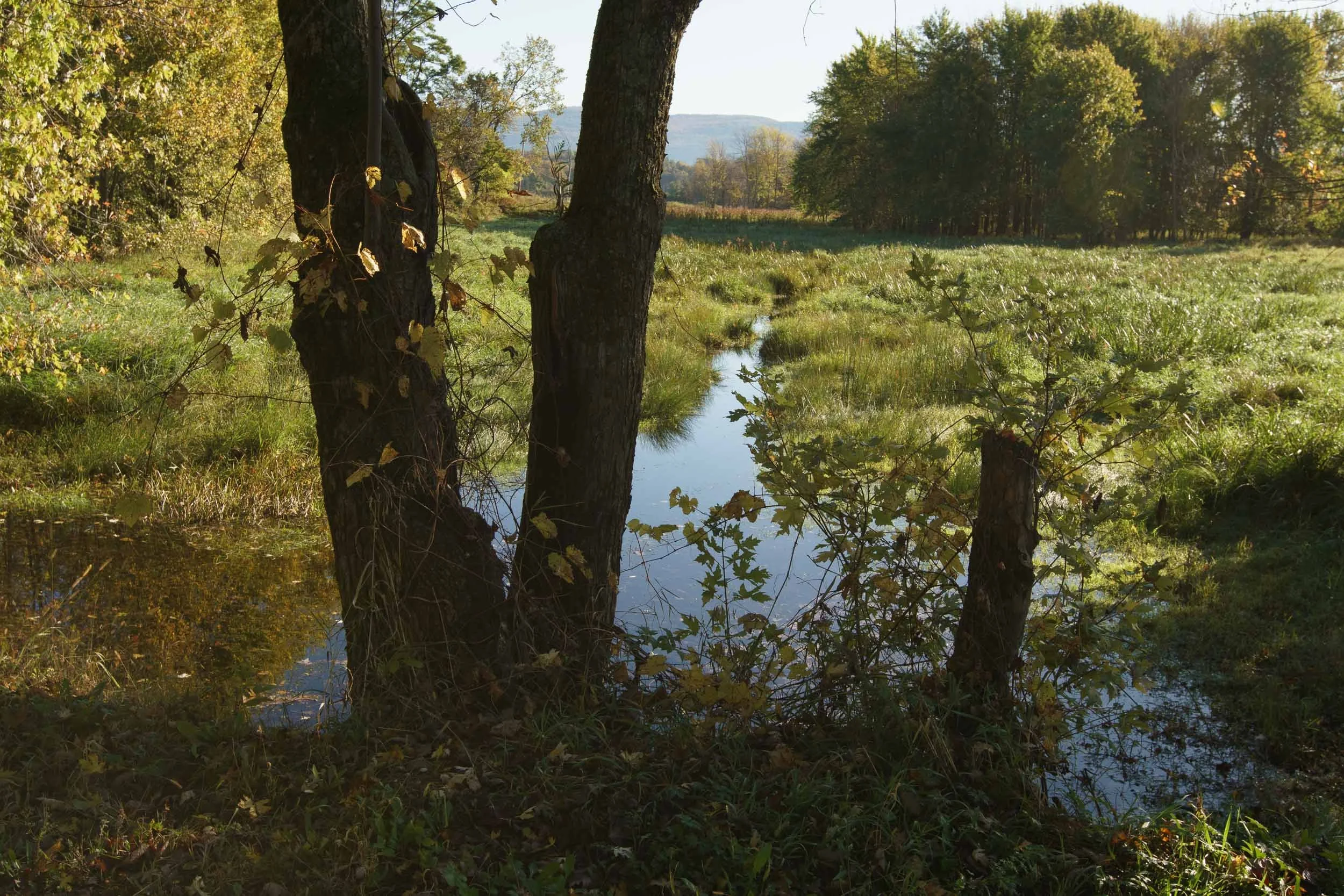
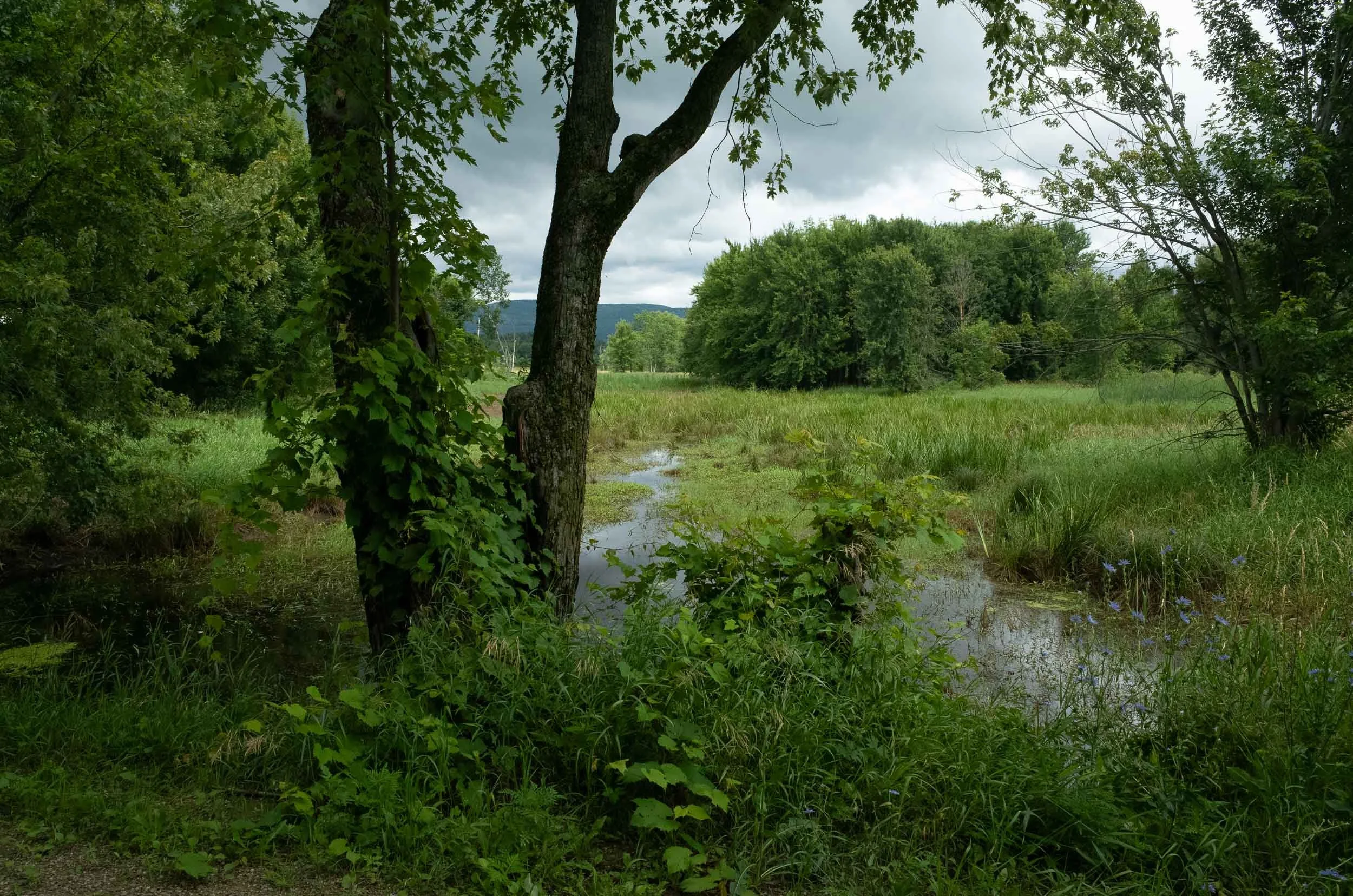
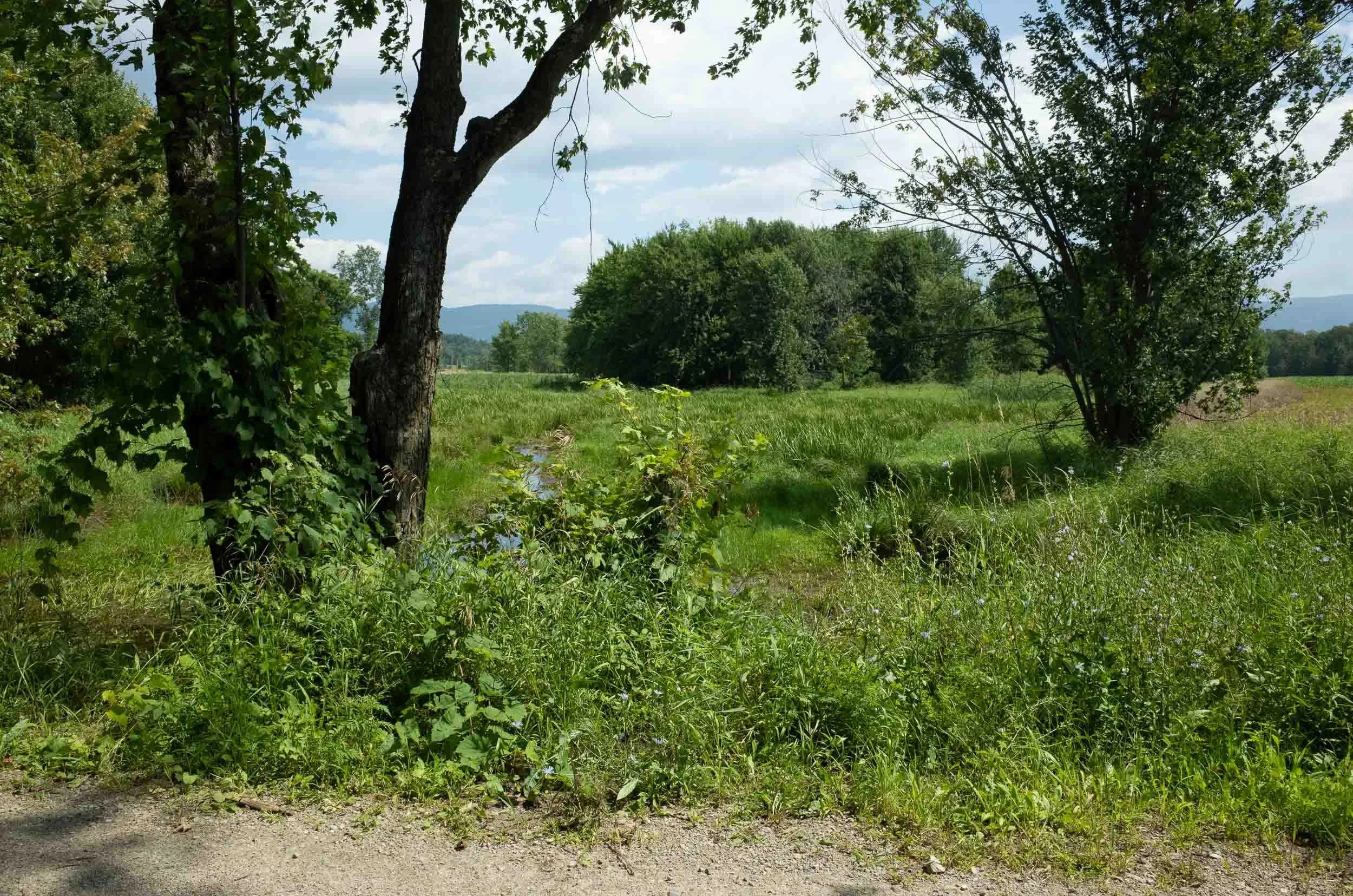
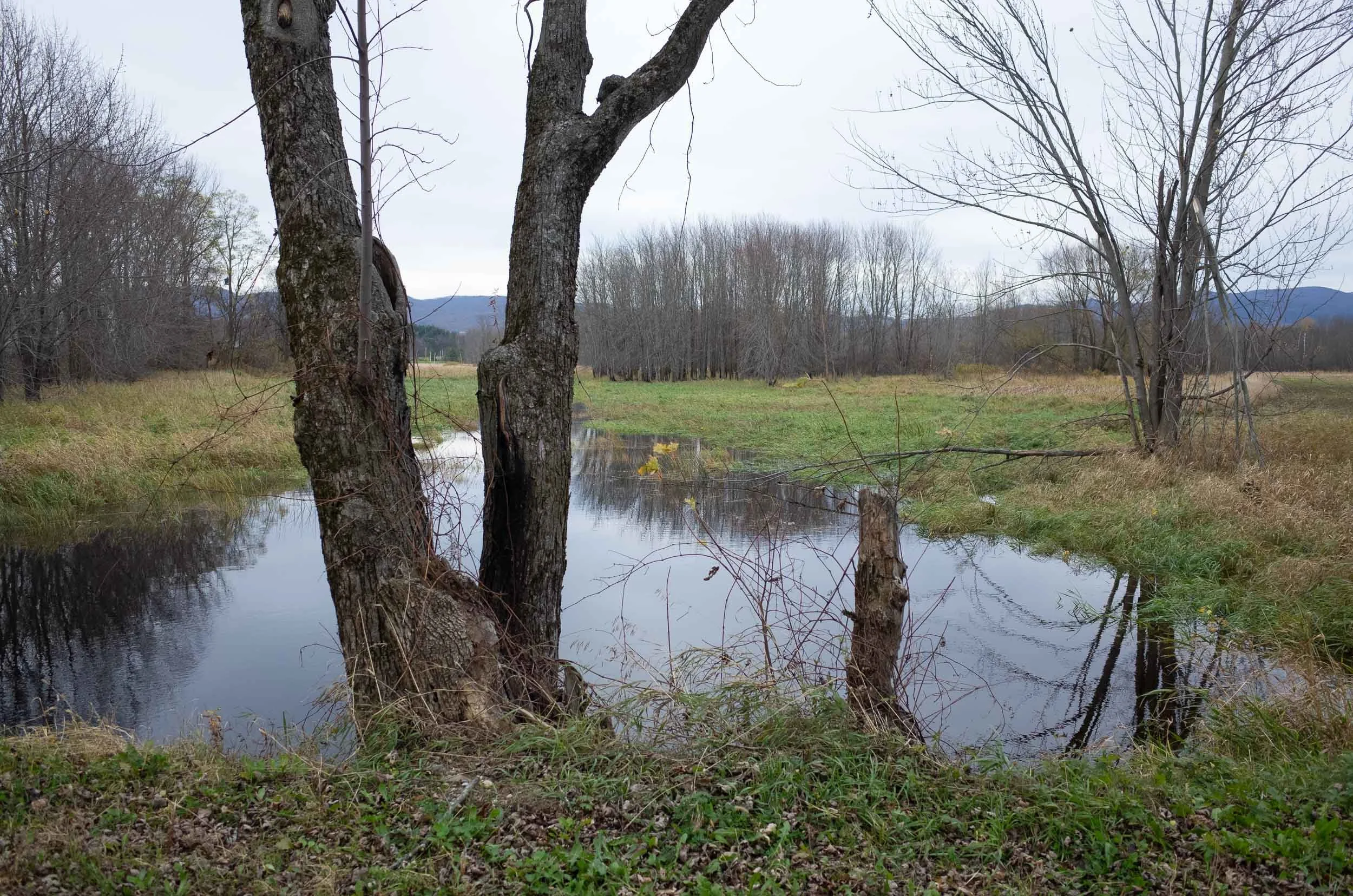
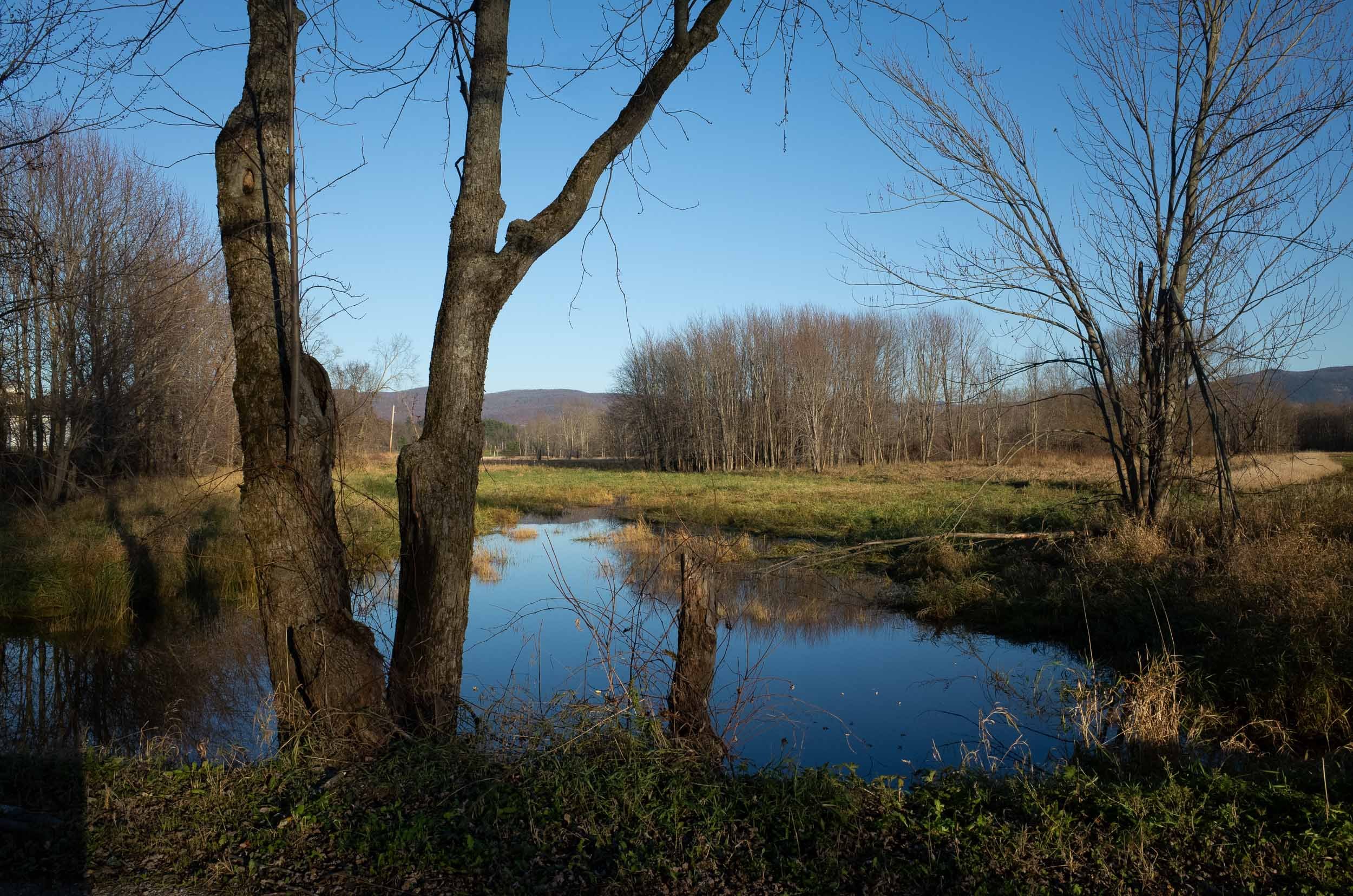
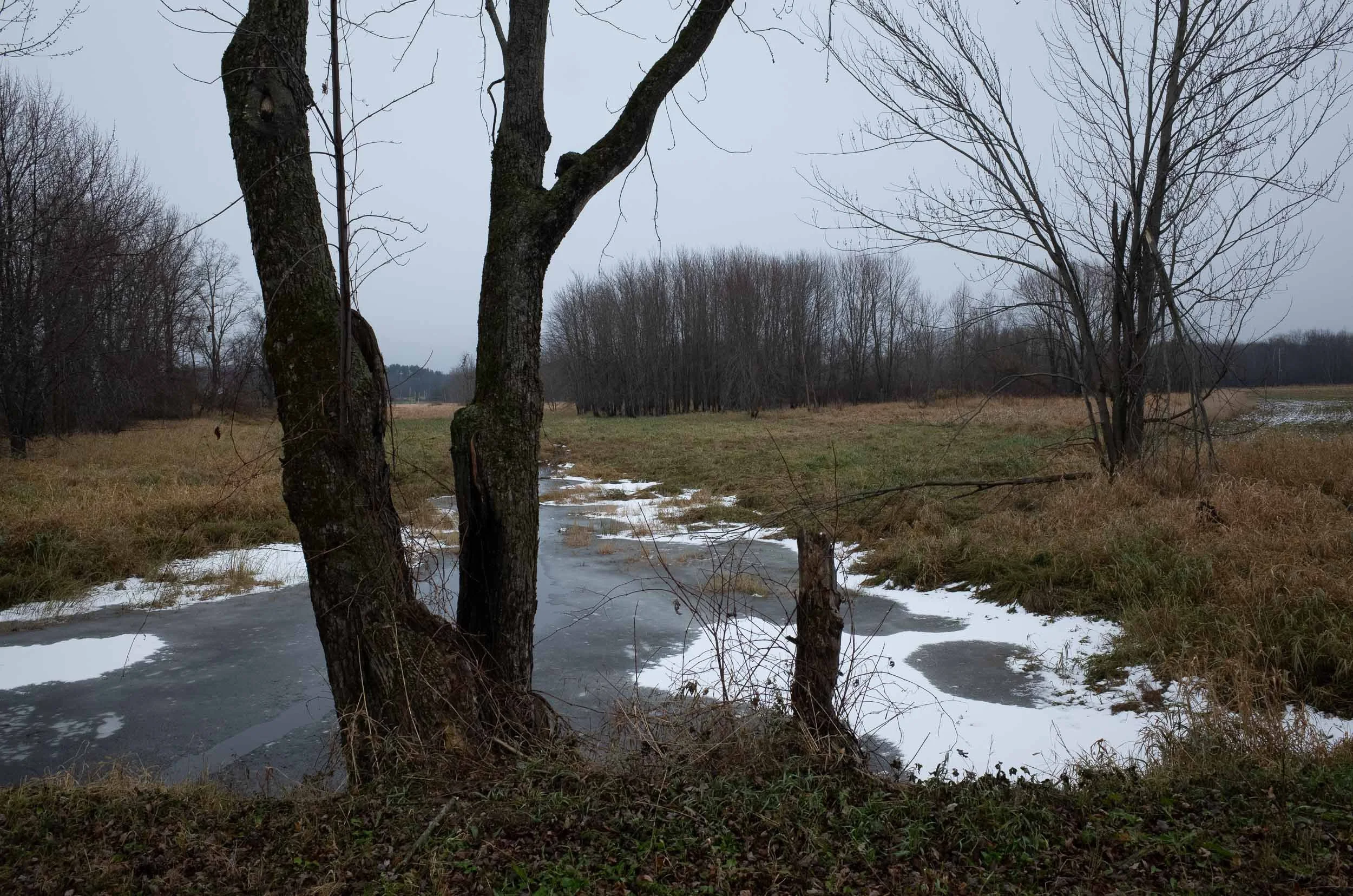
Similar to the barn photos, these images represent the seasonality which defines the place where I live. Wind, rain, ice and snow were hassles in the moment, but in a body of still photography they are what help to create the sense of time and capture life gradually passing. One of the great things about dogs is that they need to walk everyday, and this repetition provides the ideal context for learning to observe. And, to Sontag’s point, this work also preserves the mortality of a beloved pet.
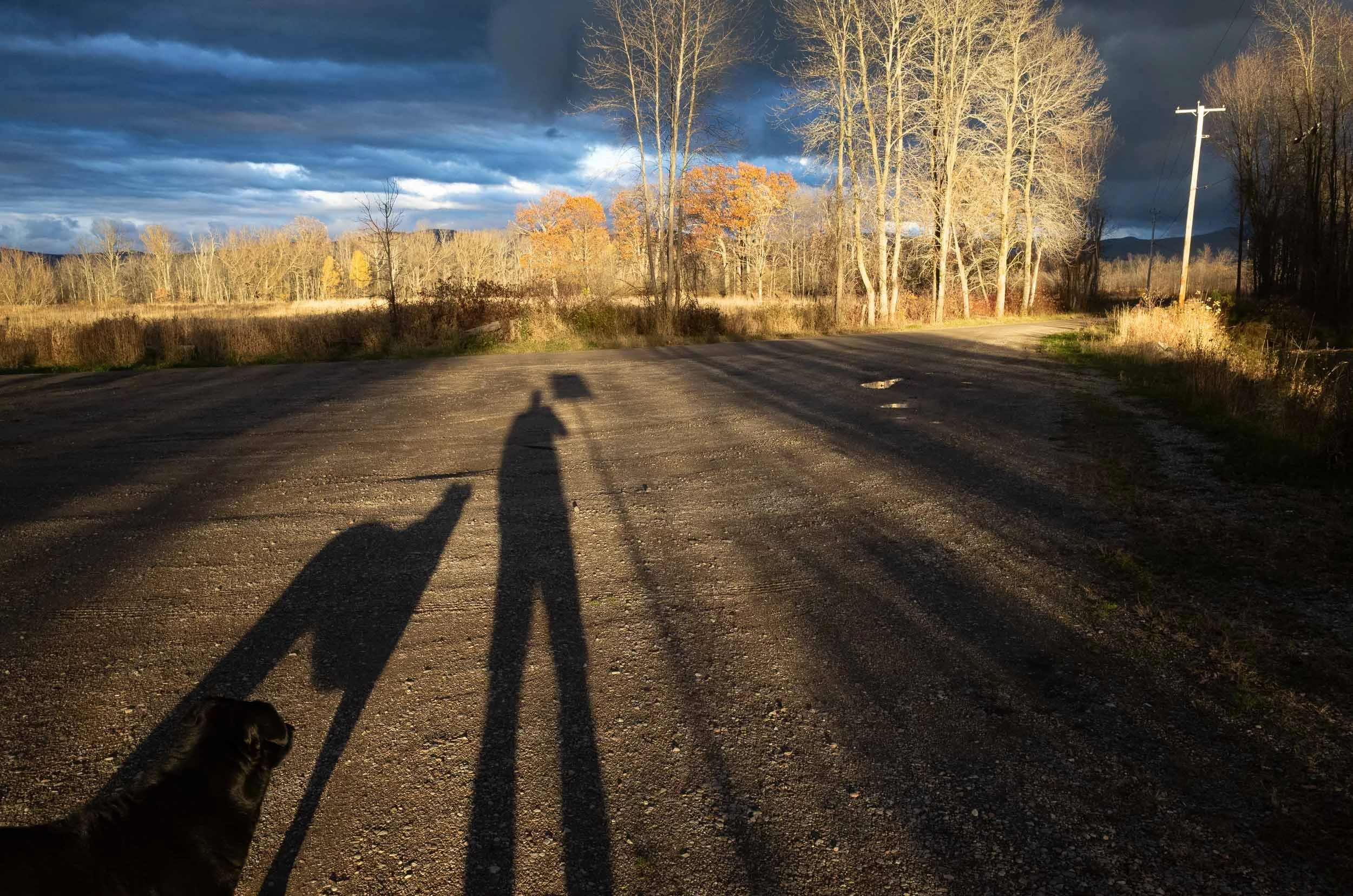
Jake and I walking Creek Road at sunset, Middlebury Vermont.
On the way to the school to deliver the forgotten helmet, my daughter called and let me know the PE unit on cycling was scheduled for the following day. She no longer needed it, but I was already out of the house and had my camera equipment in the car. The coffee was working now, and I began noticing the changed light. The slight disorientation of having moved the clocks fueled a renewed observation of familiar Route 125. Before long I found myself in a rhythm: driving, looking, stopping to make photographs, and documenting this early glimpse of spring.
The notion of making work close to home feels more relevant now, and it is comforting to understand that the relationship between unremarkable and striking is predicated simply on familiarity. I find this inspiring, and am also relieved that traveling for the sake of photography no longer has much draw. I want to observe and create long term projects, extracting slivers of time that can speak to a certain familiarity and sense of place. Stephen Gill summarized this perfectly in the British Journal of Photography, “I realised that it’s all here. It’s all outside my house, and it’s also the biggest challenge,” he says. “To go somewhere unfamiliar, it’s exotic, and easy to make images. That was a language I never really tapped into. If you can latch onto your home environment, it’s unbelievable, you just have to look and absorb.” This sentiment inspired me, though it can also pose challenges because inevitably one's home environment can feel banal. It is hard to imagine a viewer ever caring about how beautiful the light was, hitting my neighbors’ barn. What could be more ubiquitous in New England? Conversely it is also hard to imagine photographing any famed natural wonder and having it not be immediately lost in the flood of images already shared. In my mind trading a deep personal connection for glossy popular appeal is no longer a worthwhile pursuit, and I am increasingly more content to make work locally.
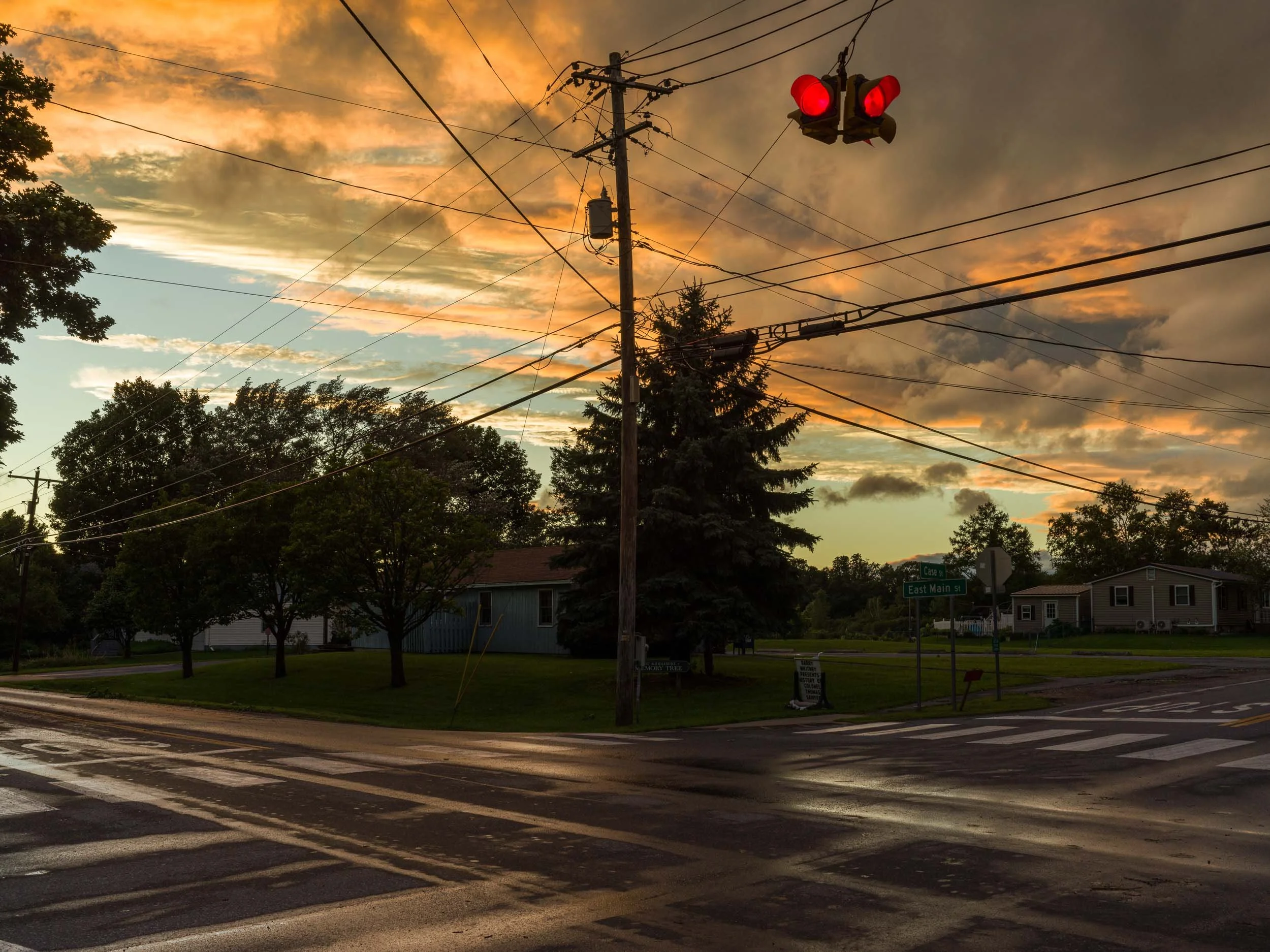
The intersection of Route 125 and Route 116 after a rain storm in East Middlebury, Vermont.
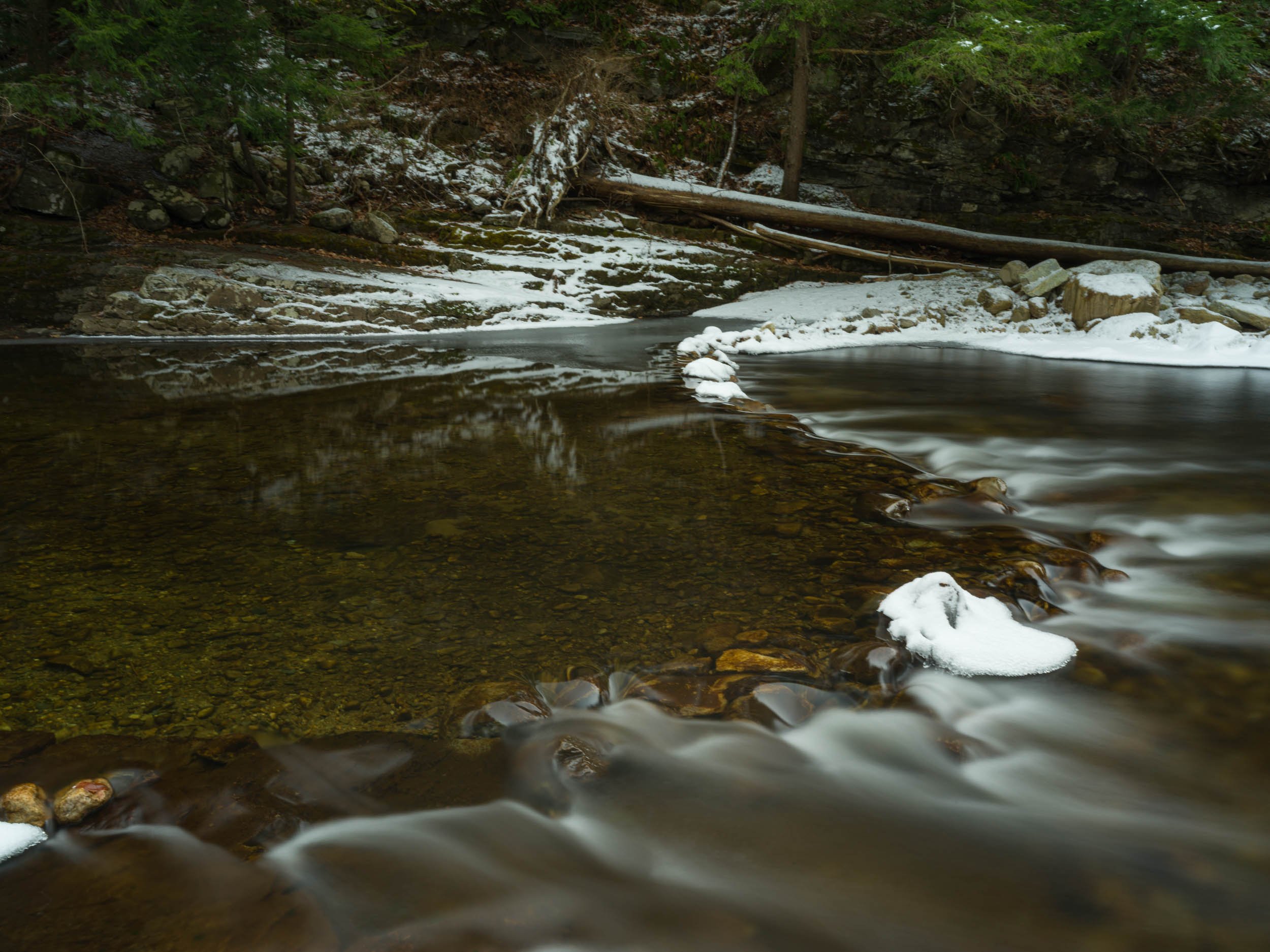
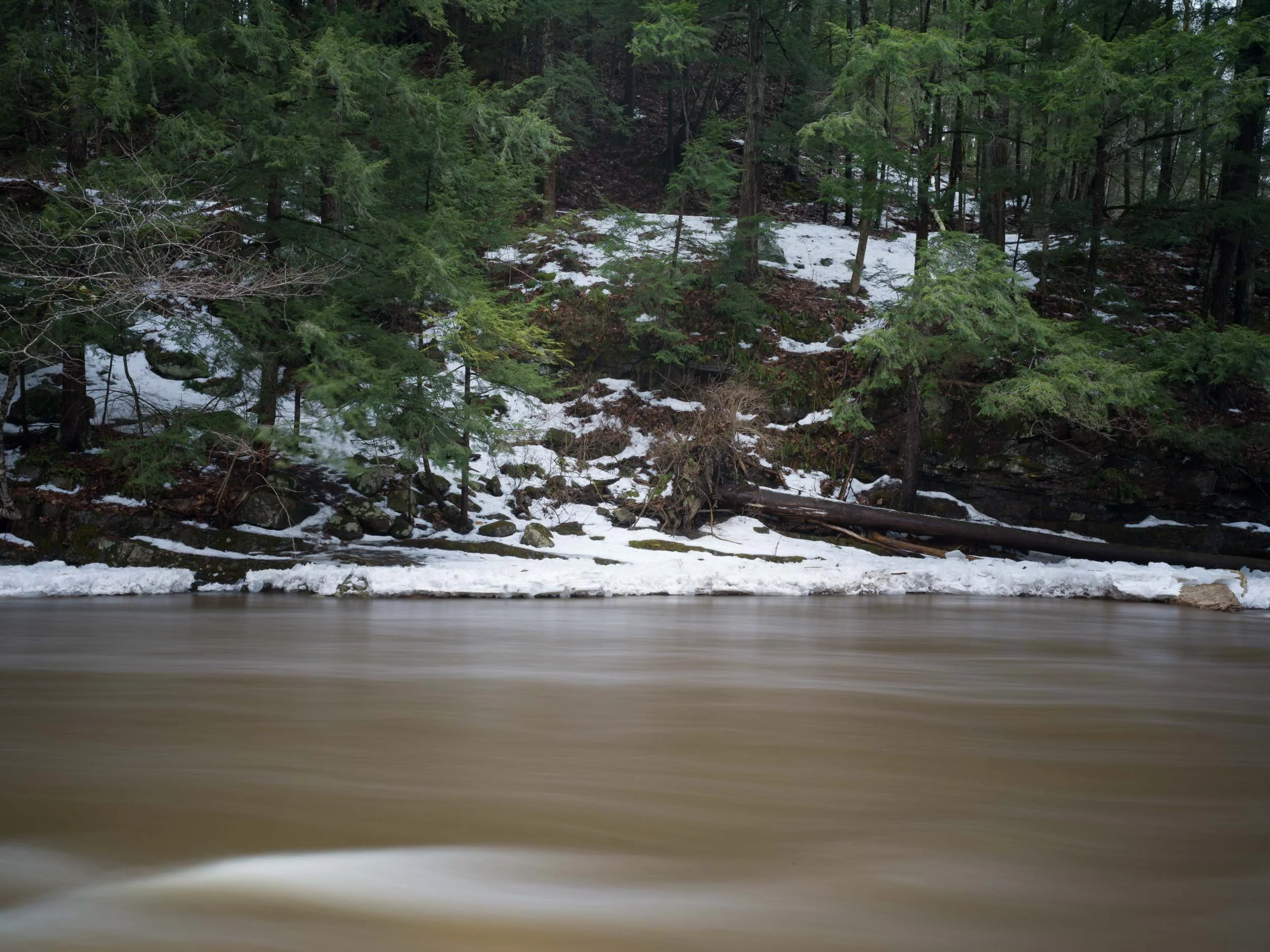
Jem Southam offers me additional inspiration: “I eschew grandeur for the sake of it, preferring to revel in a subtler scale and history. But there’s still an epic story to be told which exists wherever humans have made their homes.” In his book, Landscape Stories, Southam shows a series of photographs pulled from various long term projects. I find them fascinating and beautiful, but also somehow vulnerable. There is a sense that one's time here is fleeting, human life is a blip when considering the geologic history of a landscape. The introductory essay for his book was written by Andy Grundberg and he eloquently explains Southam’s unique work, “... its acceptance of the ambiguities of human interactions with the natural world, its preoccupation with processes of change…” It was instructive to find such a thoughtful way into these ideas, and contemplating them in conjunction with Southam’s photography motivates me to commit to documenting my place. In an interview from, On Landscape, Southam discussed the implications of creating place-based work, “I could in theory go and spend a winter in Sweden and select a place to work and make a series following the passage of a season there, in fact I would love to do just that. But the pictures would not be informed by a history of the generations living those long dark winters and as a result I think it would miss something, so my pictures come from my personal background and my own lifes living, and I believe I make better work that way.” This resonates deeply and it makes me consider how familiar I have become with my landscape, its mountains and rivers. There is incredible nuance in how they crest their banks, and all of the subtle variations associated with time of year. It is as if the landscape has a language, and the longer I spend observing it the better I become at understanding the season and this place.
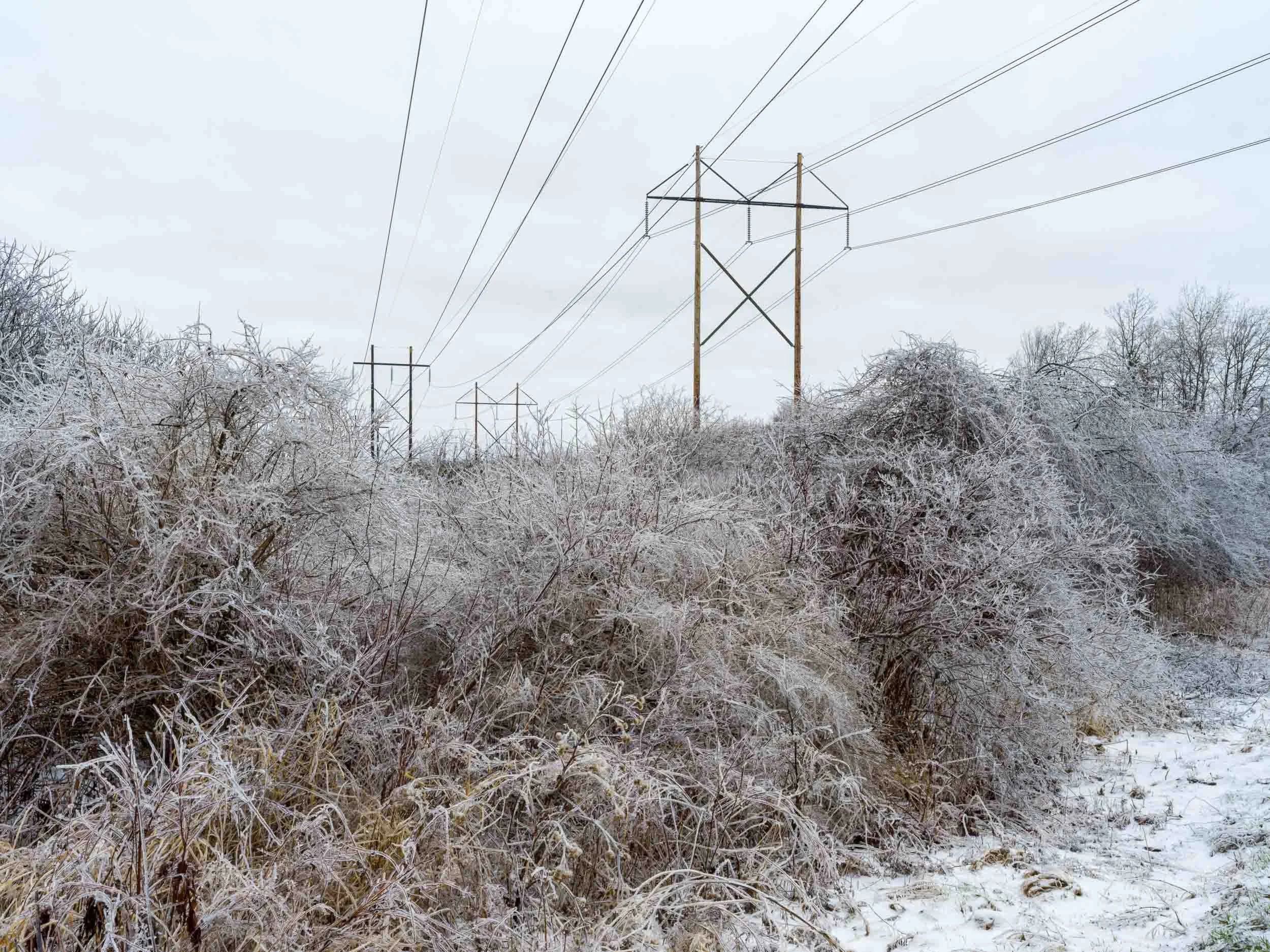
An ice storm coated the landscape in late March, East Middlebury Vermont.
When I began to pursue photography as a profession, it seemed the best approach was to venture out into the world and bring home exotic images. The success of the work somehow attached to the amount of contrast with home. It was fueled by a predictable current of adventure and escapism. “Go West!” is ingrained in American culture and an undeniable facet of growing up on the East Coast. It is all part of a well-documented, at times flawed, human tendency to roam. The pink bike helmet on the seat next to me symbolizes this desire to explore. My daughter is getting more comfortable creating distance from home, for now on a bicycle but soon she will be driving too. Her world will remain small for just a few more years. I find myself somehow meeting her while going in the opposite direction.