What we ask of a forest
There is something funny about having adults cram into a school bus. The narrow green seats, the watchful gaze of the driver, the one window left partially open… all of the details brought me back to childhood. Our destination was not school.
There is something funny about having adults cram into a school bus. The narrow green seats, the watchful gaze of the driver, the one window left partially open… all of the details brought me back to childhood. Our destination was not school. This was a guided forest walk that I had been hired to photograph for the Vermont Woodlands Association.
After grinding our way up Texas Hill, this small group of strangers disembarked and gathered for brief introductions. We were being led through the Hinesburg Town Forest by Chittenden County Forester Brandon Benedict, Audubon forest manager Steve Hagenbuch, and consulting forester Harris Roen.
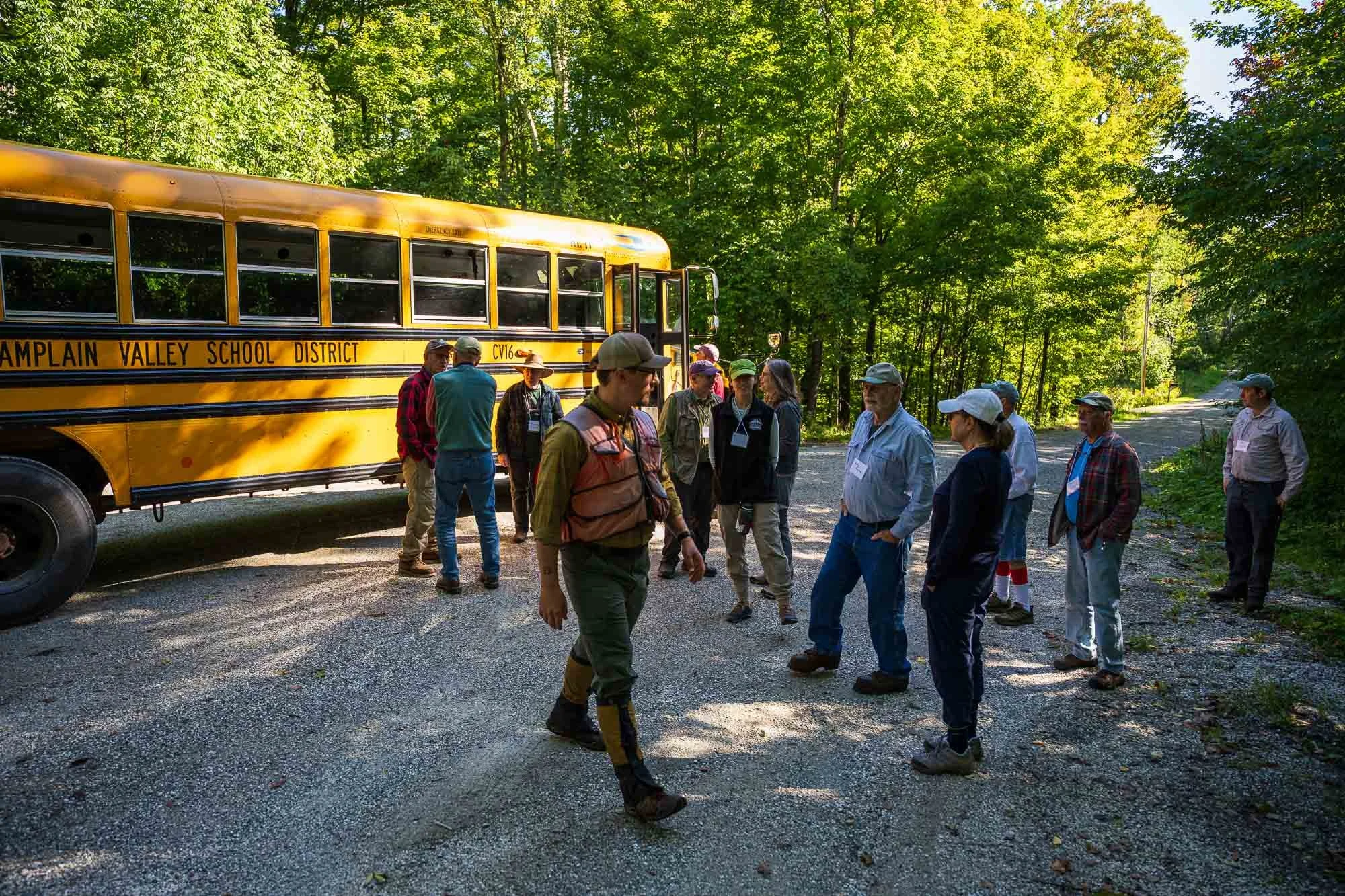
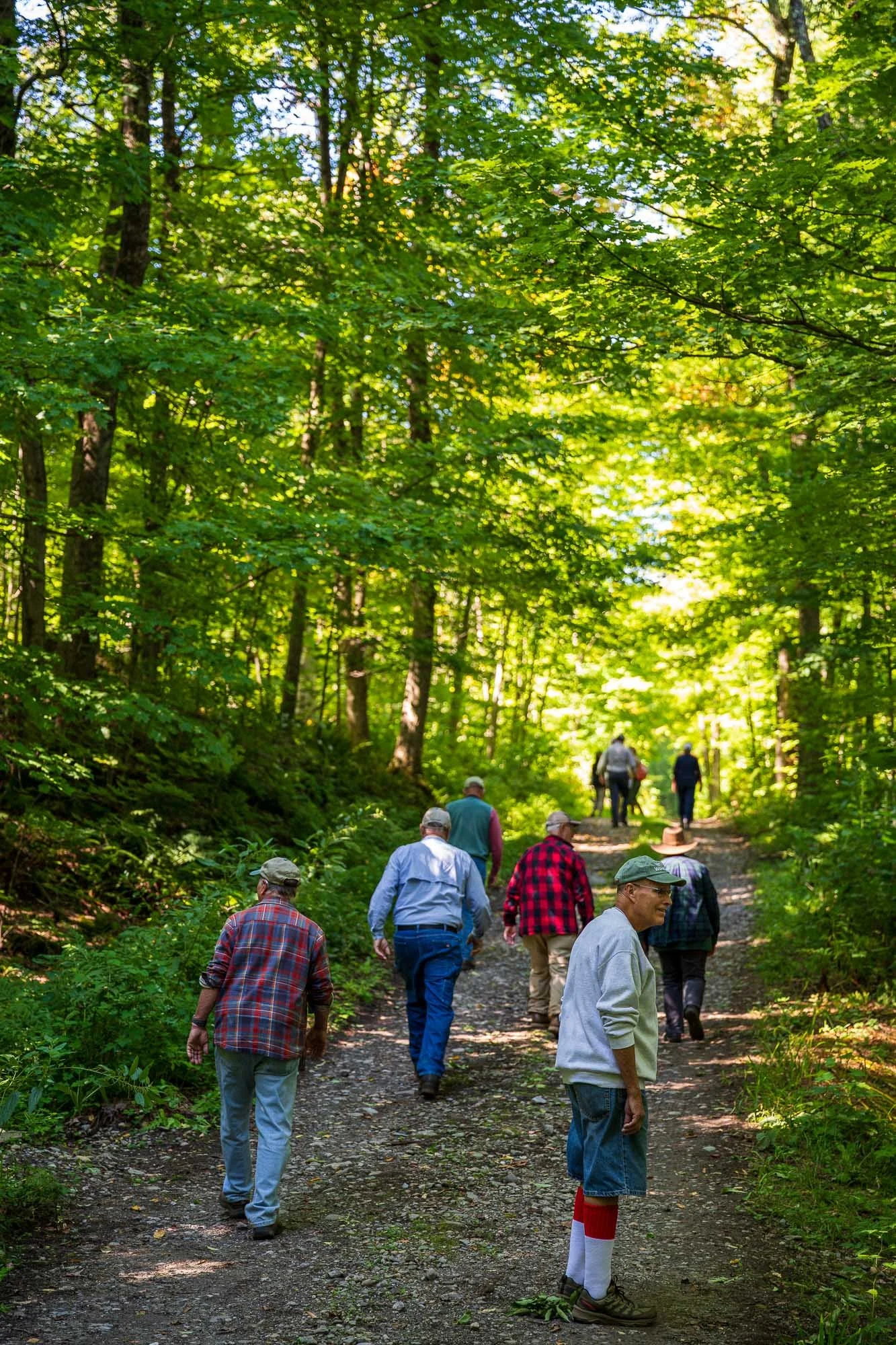
We ambled down a trail and began to share our observations of the forest. The American Tree Farm System considers four values in certified woodlands: wood, water, recreation and wildlife. From where we stood, the intertwined nature of these uses was clear.
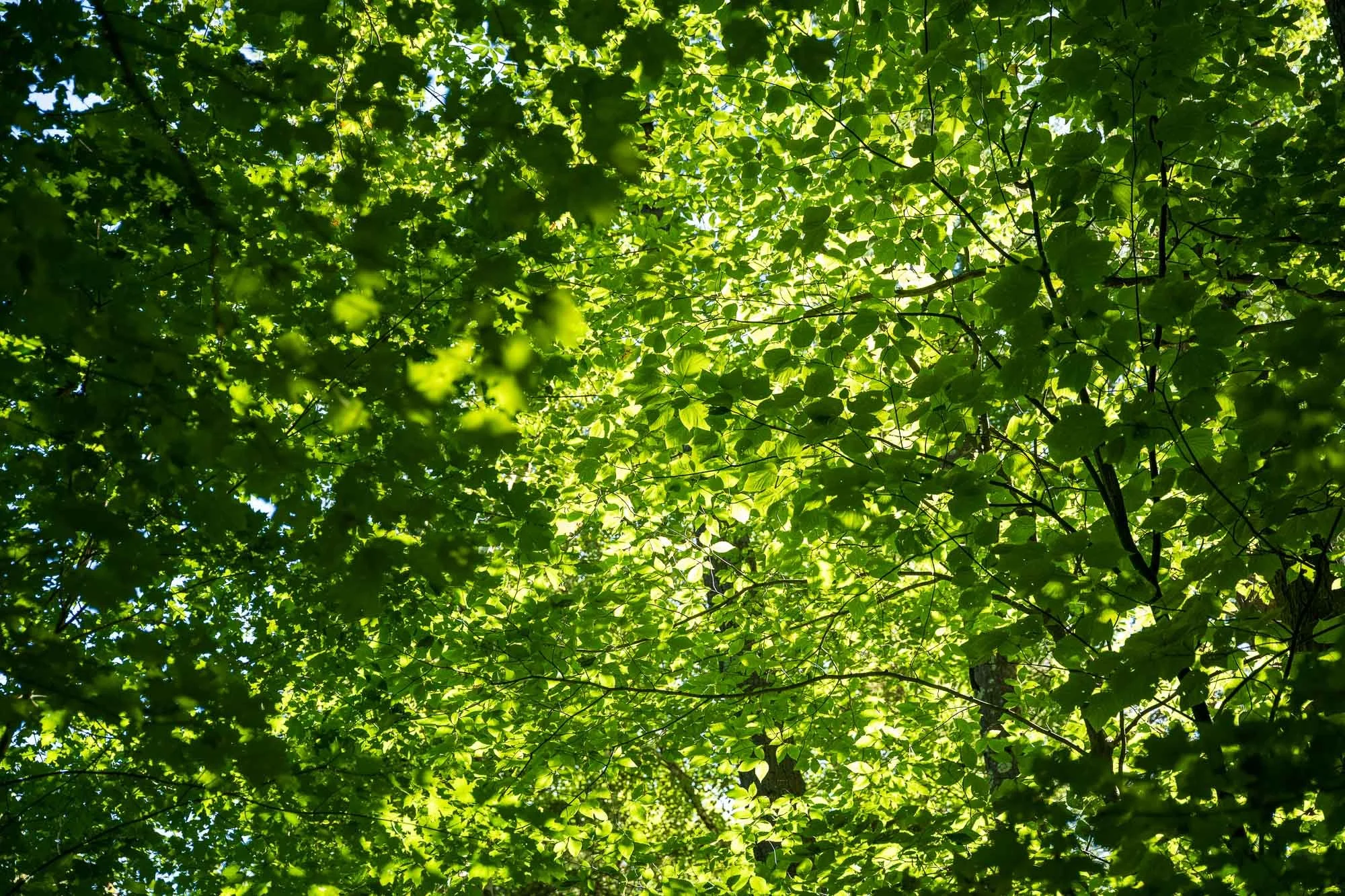
Steve pointed out how easily we were able to see through the woods, and what that meant for the birds that could utilize it. It is tempting to get stuck in a human perspective, where our natural comfort in an environment often means good visibility. Yet that same visibility can mean greater risk of predation for other animals.
As we moved on, the conversation shifted to our history with the landscape and how the woods we experience today are largely the result of a fairly destructive past. Vermont was deforested and farmed, the evidence still occasionally appearing in old cellar holes and traces of roads, now overgrown.
Fortunately, we try to manage our natural resources with more care now, but this can also create friction between those four uses. If one measure of forest health is diversity, then disruption is an important catalyst for more types of plants and different ages within those species.
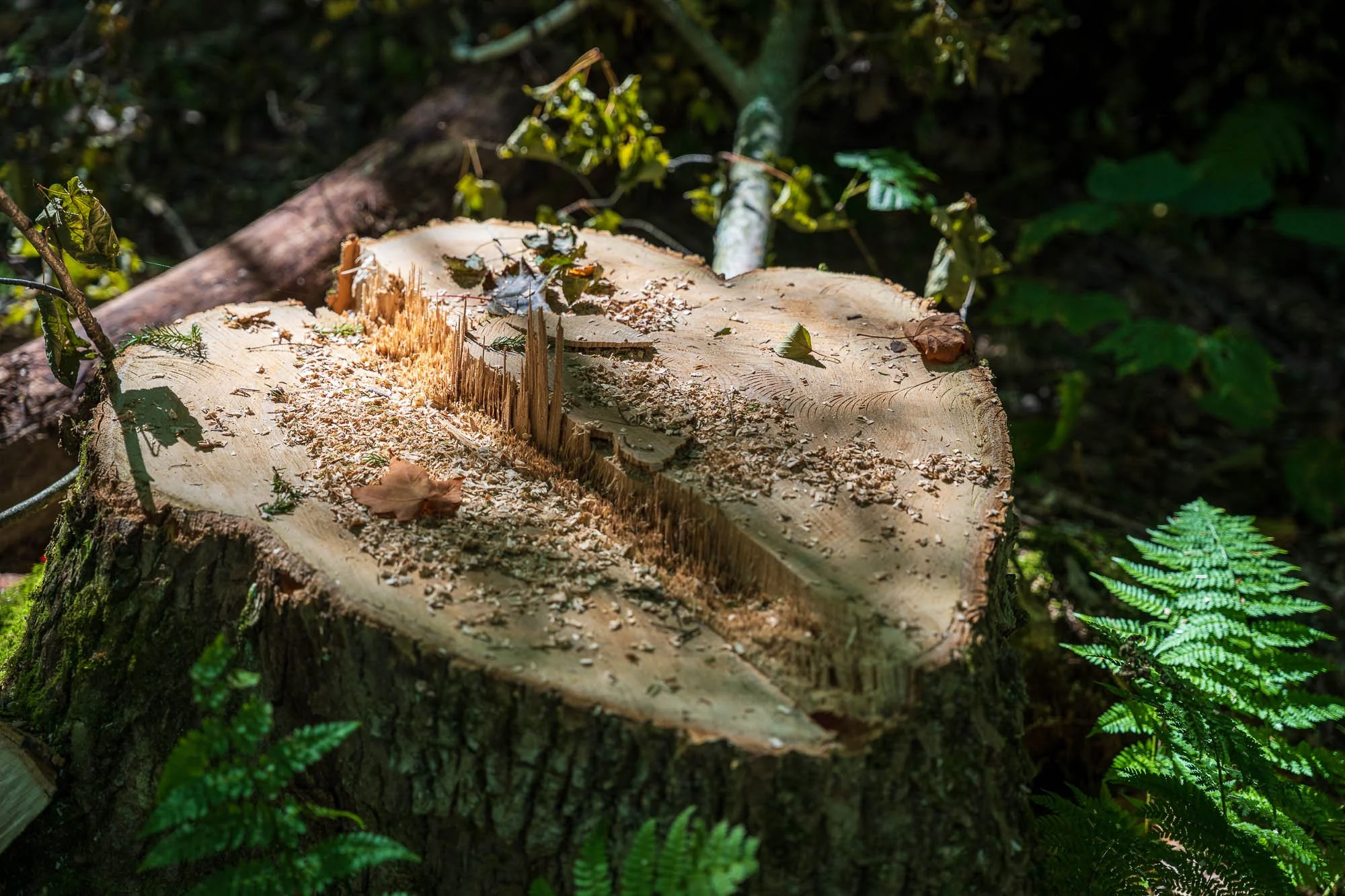
I know this. It was drilled into me years ago when I studied forestry. It is still hard to accept visually.
Harris spoke of the management plan, part of which was to generate more patches in the forest. The mess was desirable. Places that are hard for us to walk through serve an important purpose for animals that like to hide from us.
These disturbed sites can also mimic what occurs naturally at times, things like blowdown. Managing a resource like this requires thinking on a timeline that extends far beyond our own. The small seedlings growing under that brush will be trees when I am gone.
This is not necessarily an enjoyable mental exercise. It is easy to mistake what looks healthy to us for what a forest actually needs. It is a challenge to reconcile good forest management with what is commonly viewed as a beautiful forest.
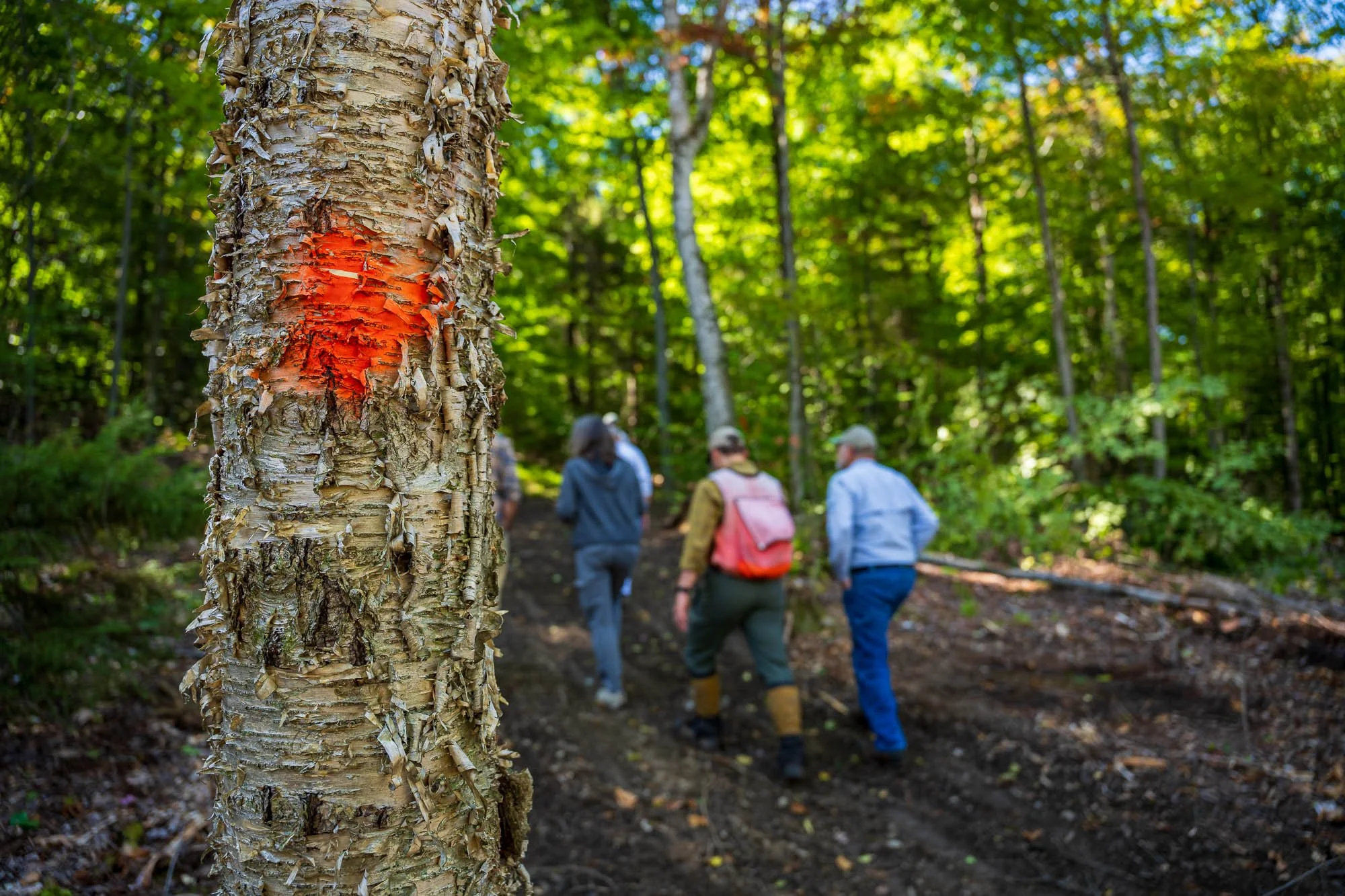
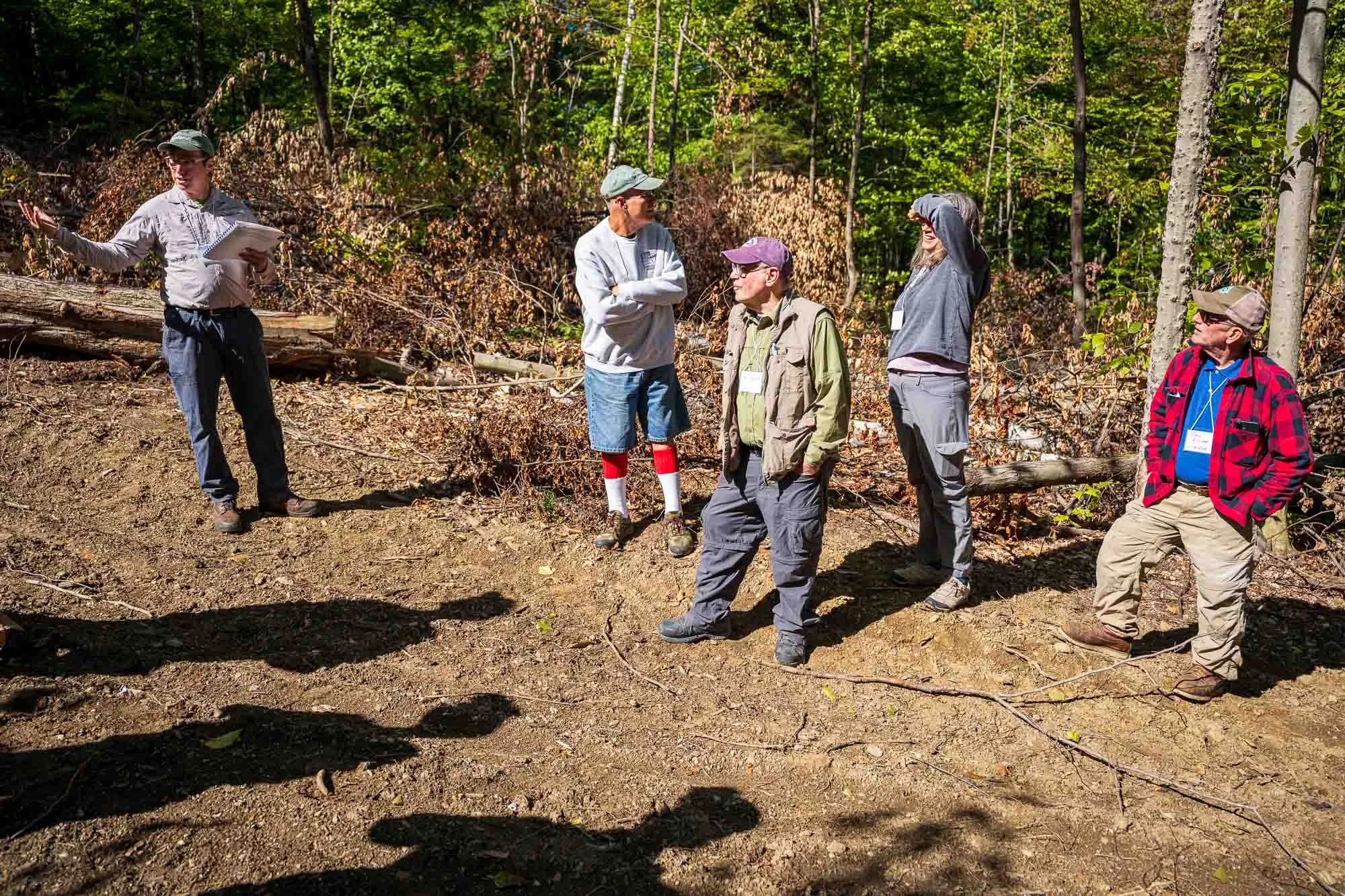
We hike to our last spot. My mind is churning through the dissonance of beauty and utility. The alternative to extraction is not necessarily absence.
I am struggling a bit to stay on the timeline of the trees. My whole life will be contained in just a few inches of their growth rings. But our choices have also changed the playing field for all of these dynamics. Climate change is a wildcard, another uncertainty these decisions have to account for, especially on land that belongs to all of us.
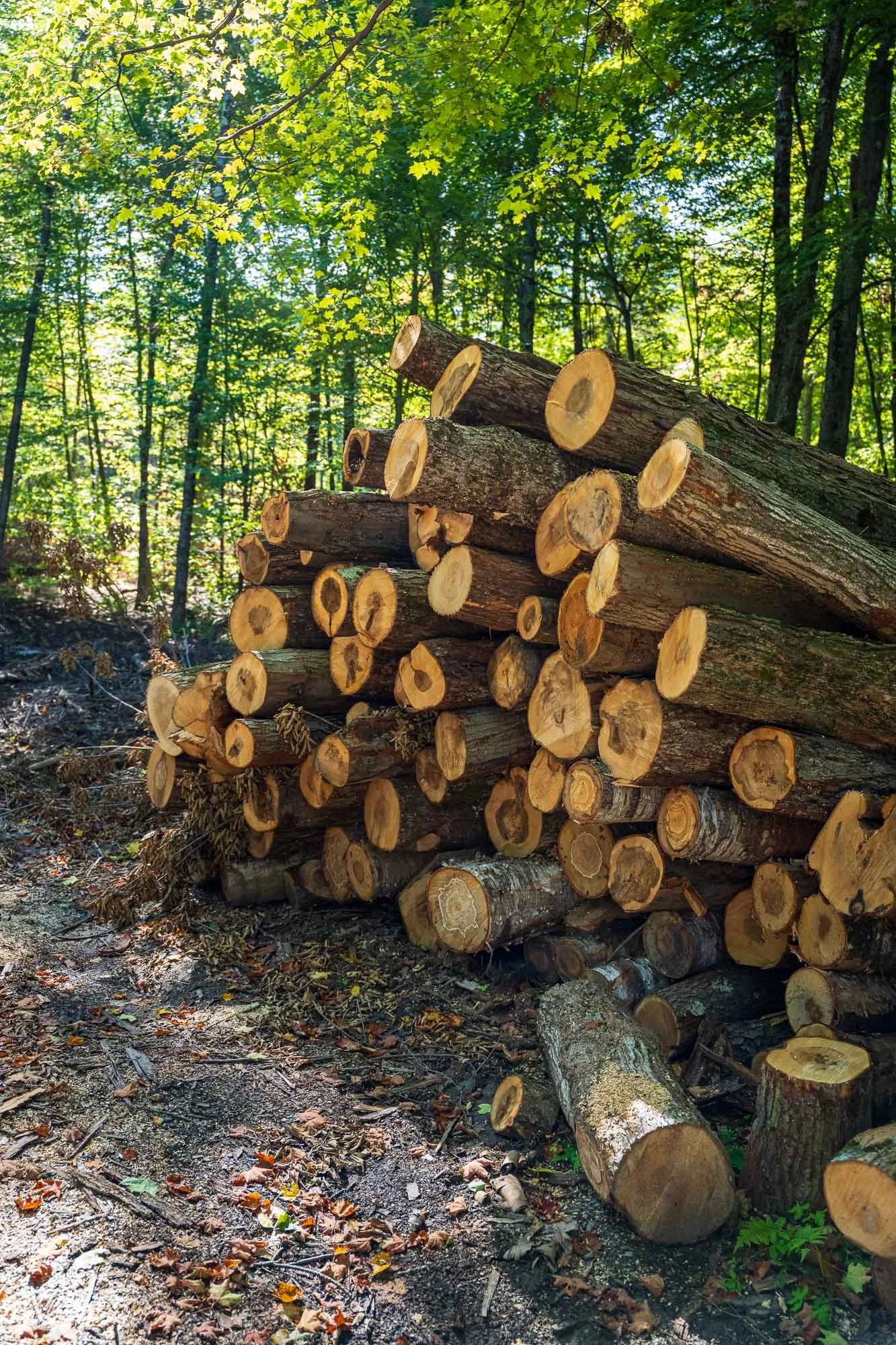
As the group looks into a dense thicket of regeneration, Brandon explains that this site was harvested only eight years ago. The trees that were removed were Norway spruce, a plantation of non-native species from when this landscape looked very different. The plantation itself was another human intervention, an attempt to replace what had been lost.
Steve looks at the site and sees bird habitat, which calls up yet another timeline. Their short lives will likely be encased in just a half-dozen rings of tree growth.
We shuffle back toward the bus. There is an awards ceremony to enjoy now. The Hinesburg Town Forest was recognized as Forest of the Year. These are not New York Times headlines, but there is a distinction worth noting.
This is a forest that belongs to the town, to many people, and it must accommodate many ideas of what a forest is for.
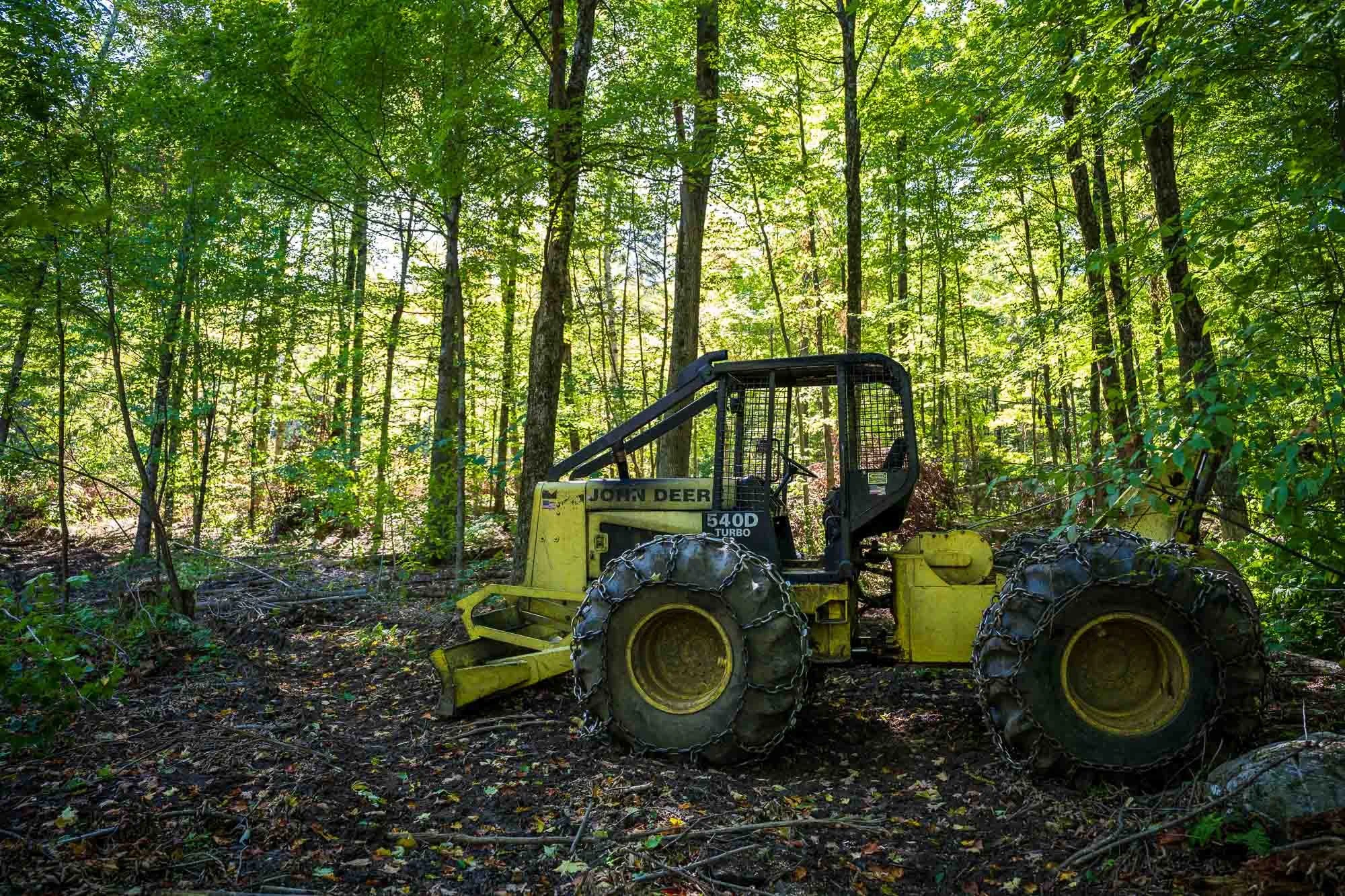
On our way back I see deer scat. Our group gets passed by a guy out trail running. We pass the logger’s equipment, and deep in the brush I see what’s left of an old stone wall.
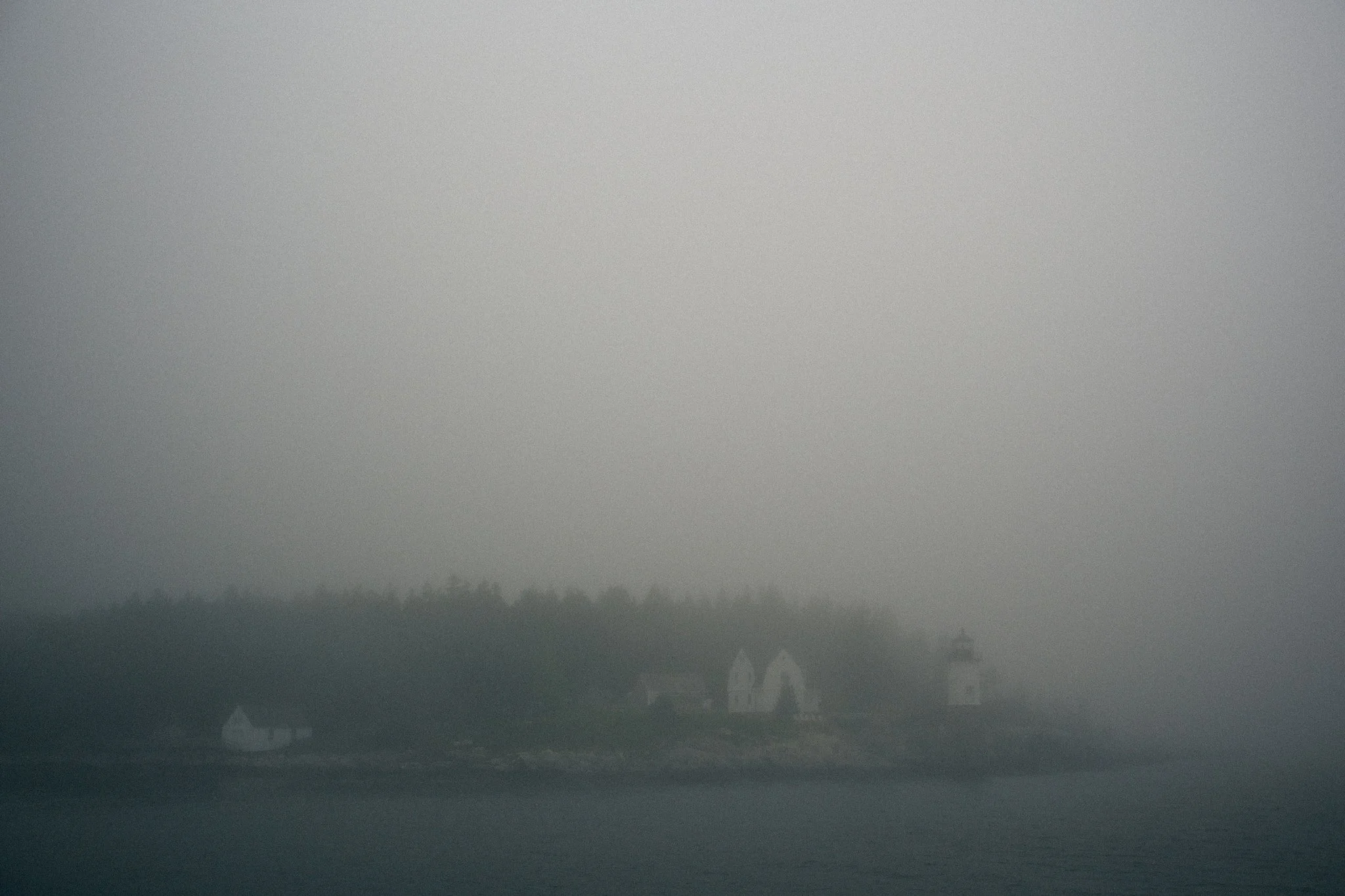
Isle au haut
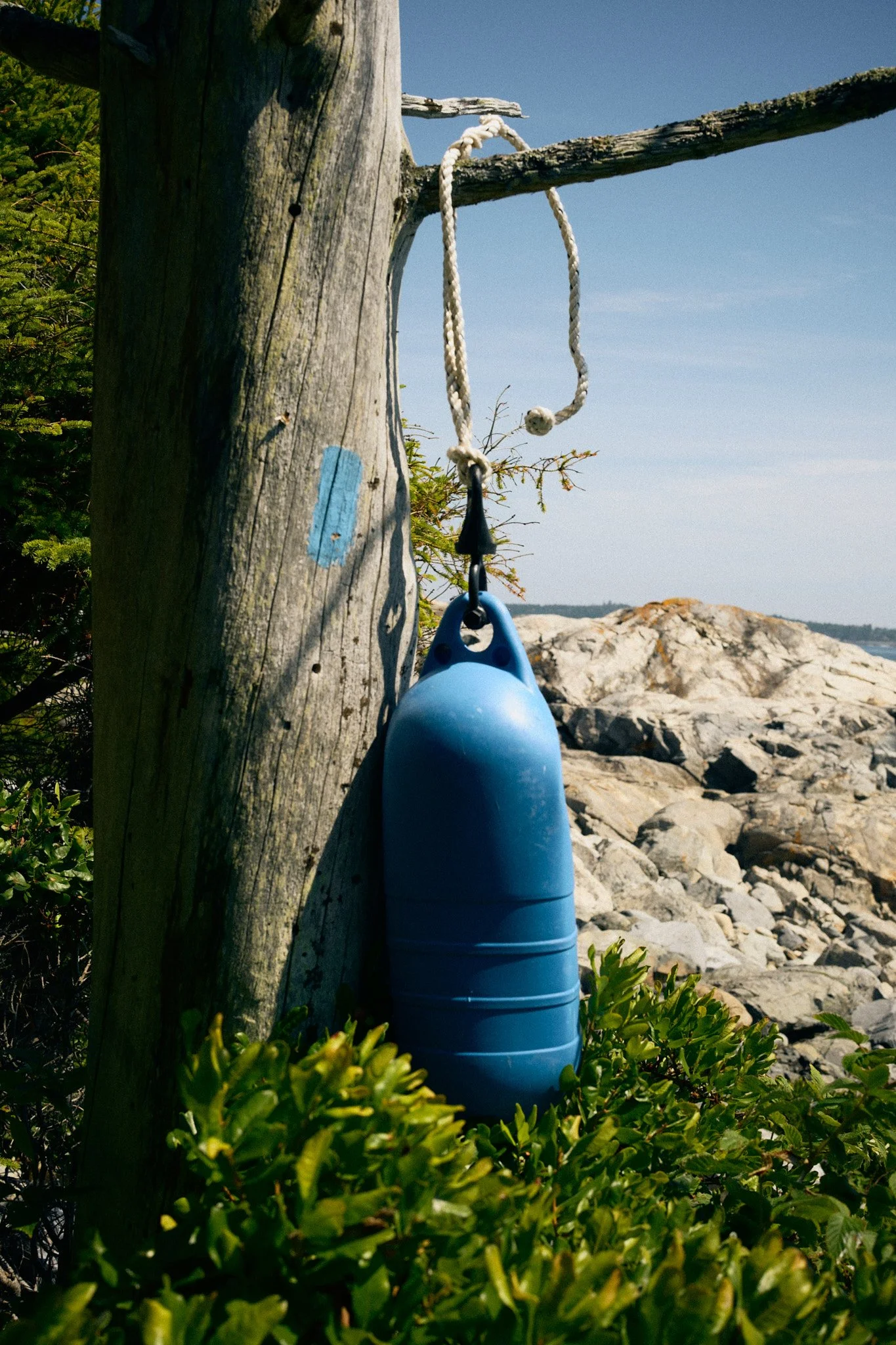
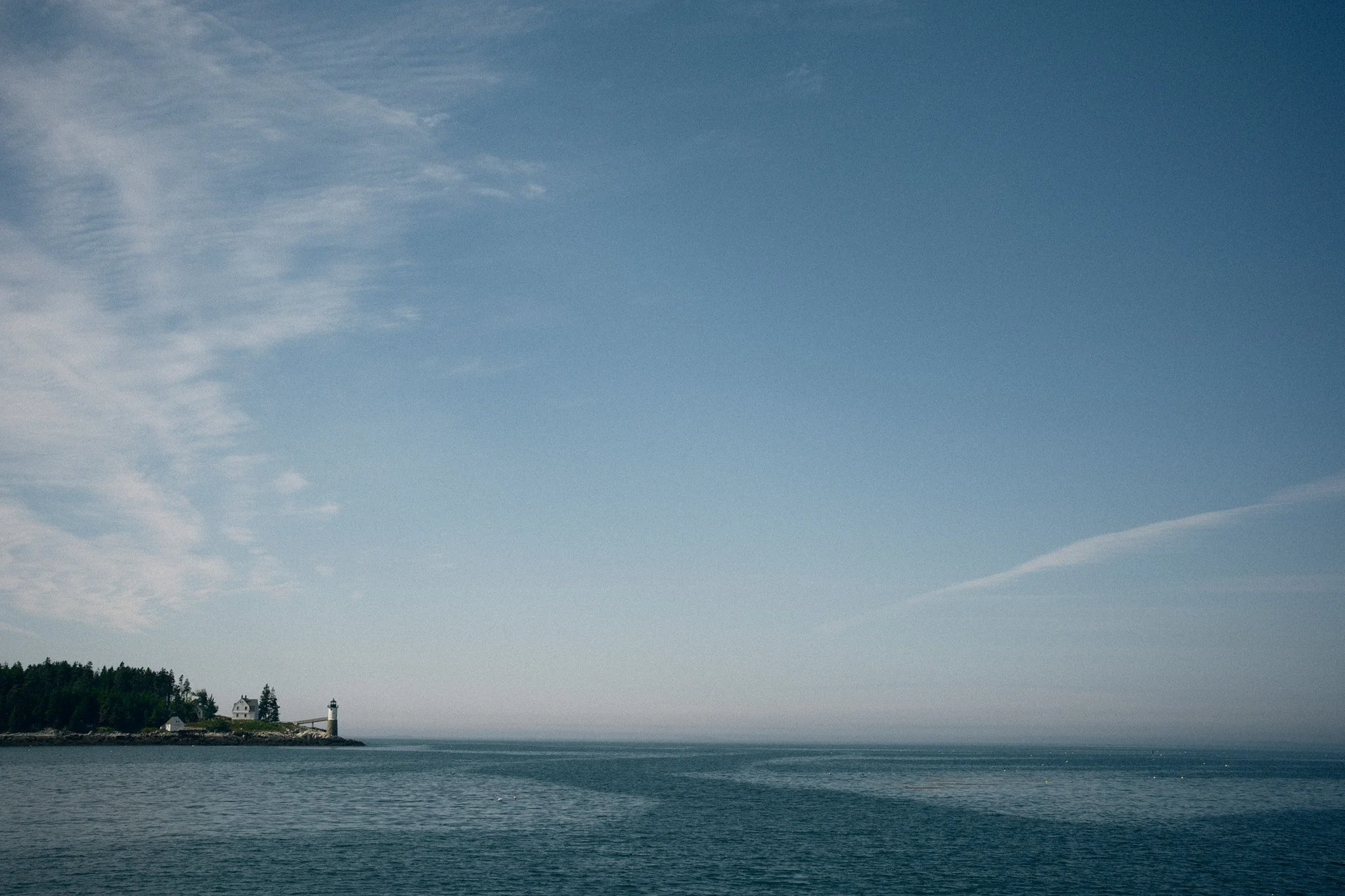
Moving between forest and coastline on Isle au Haut, as fog swallowed the landscape and lobster boats worked somewhere offshore.
We spent the day moving in and out of the woods along the coast of Isle au Haut. At times the shoreline seemed untouched, except for the occasional blue trail markers. Granite dropping into the ocean with no one else around. The trail meandered from rocky and rugged to quiet tunnels through the forest. Even when the sun was shining, it felt unforgiving and wild. Fog moved in, swallowing the landscape and narrowing the world around us. Somewhere offshore, lobster boats worked, their engines carrying across the water long before we could see them.






River time
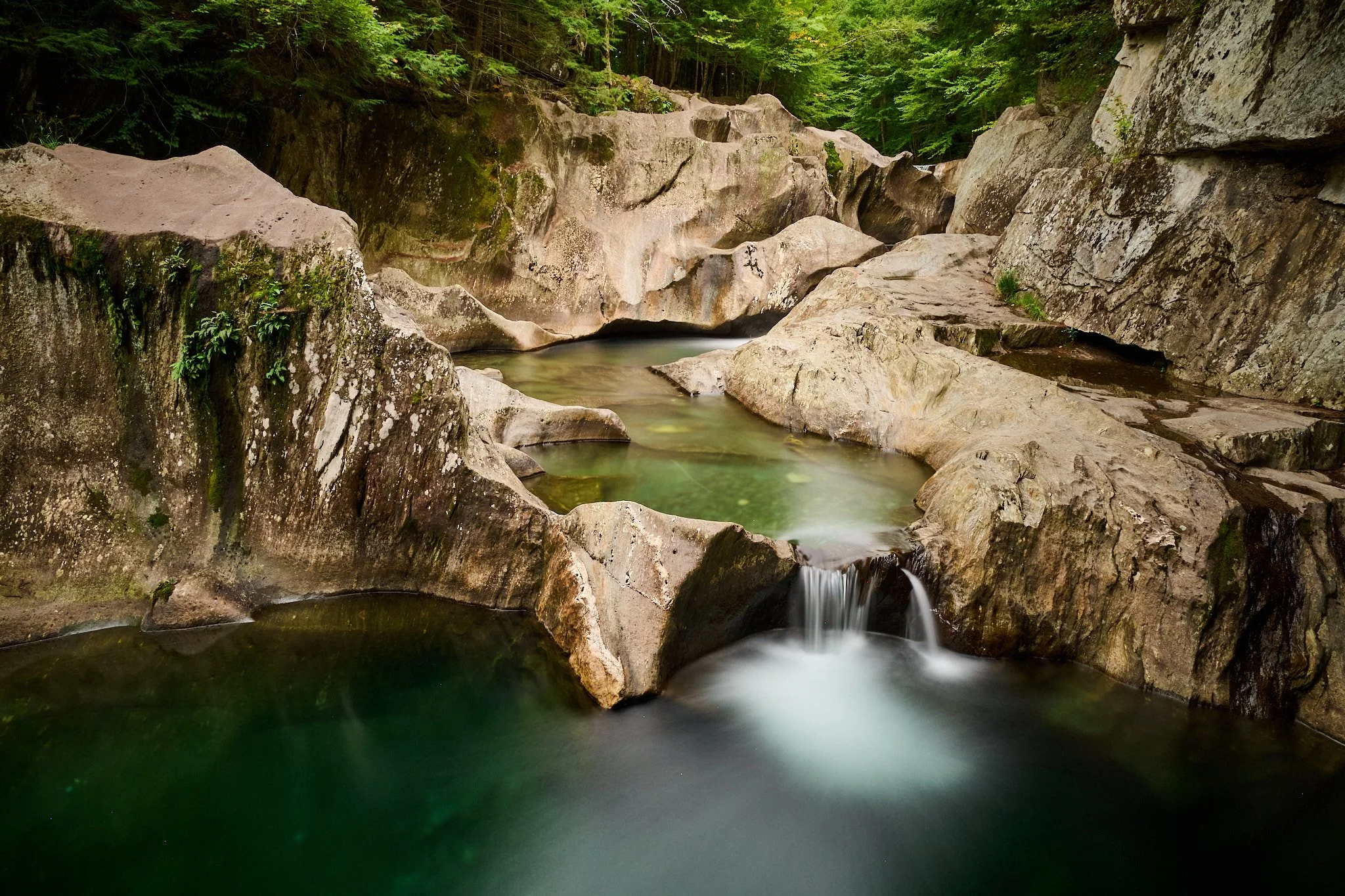
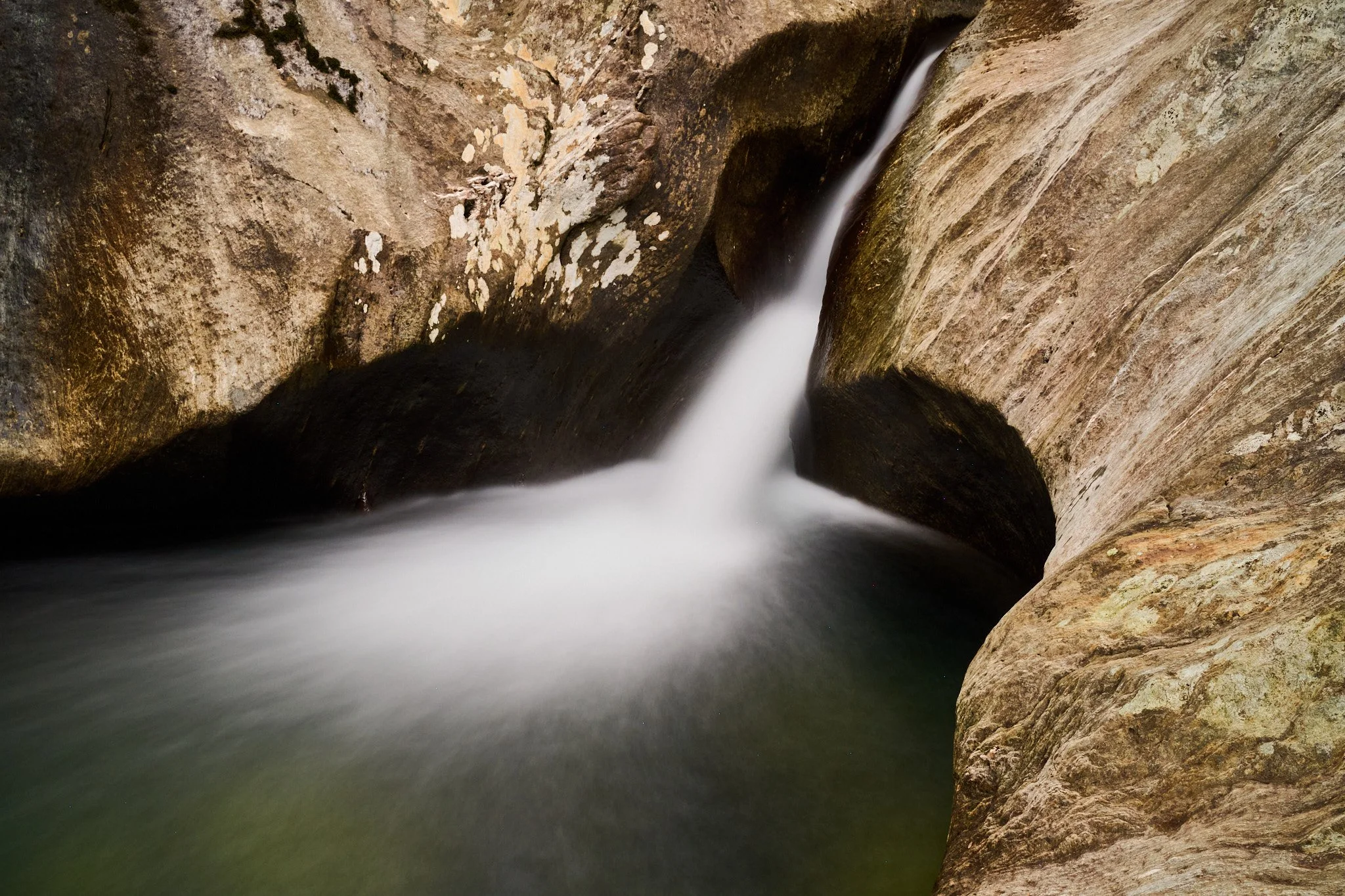
An empty swimming hole, an overcast afternoon, and an hour that disappeared beside the river.
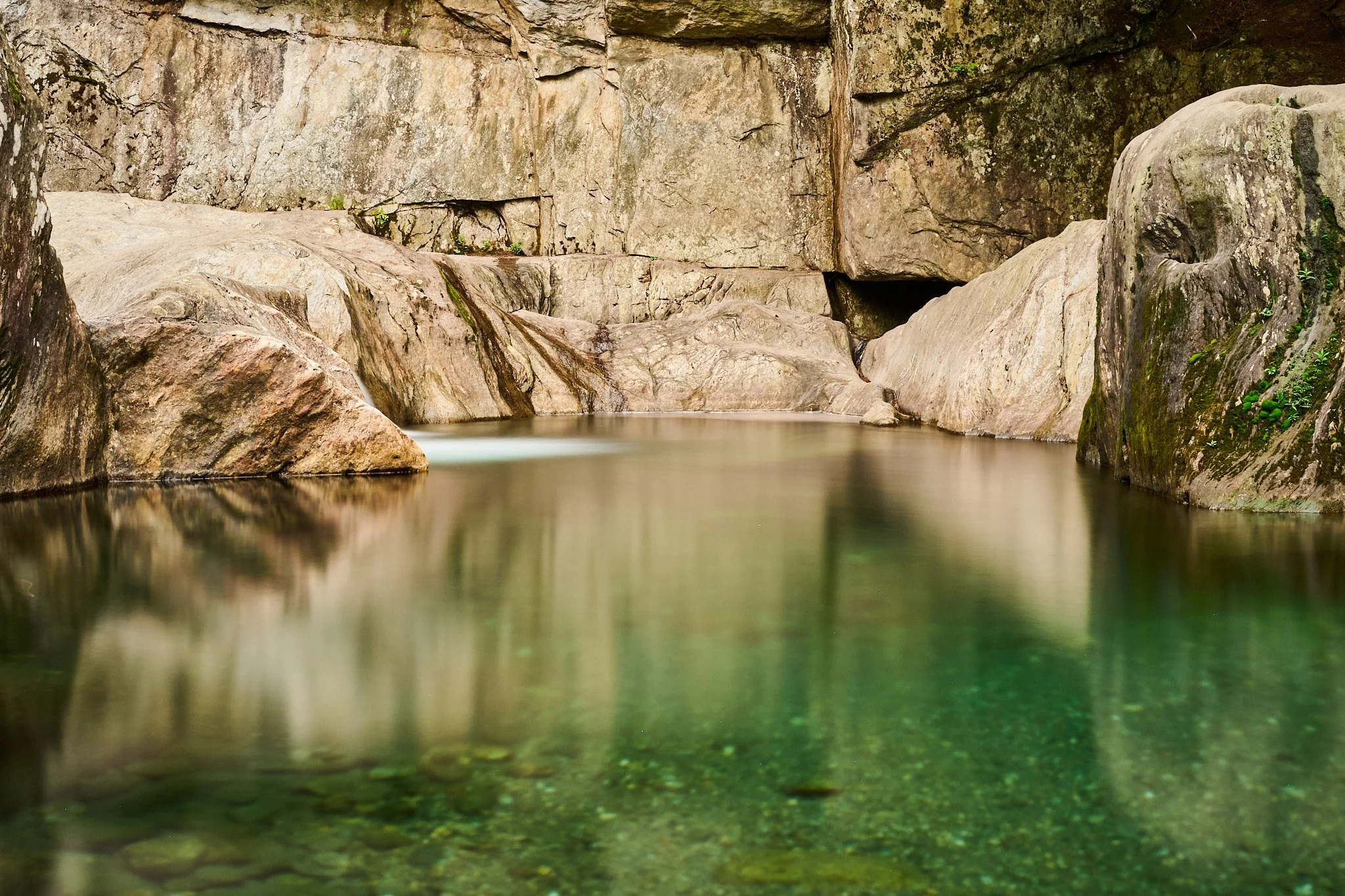
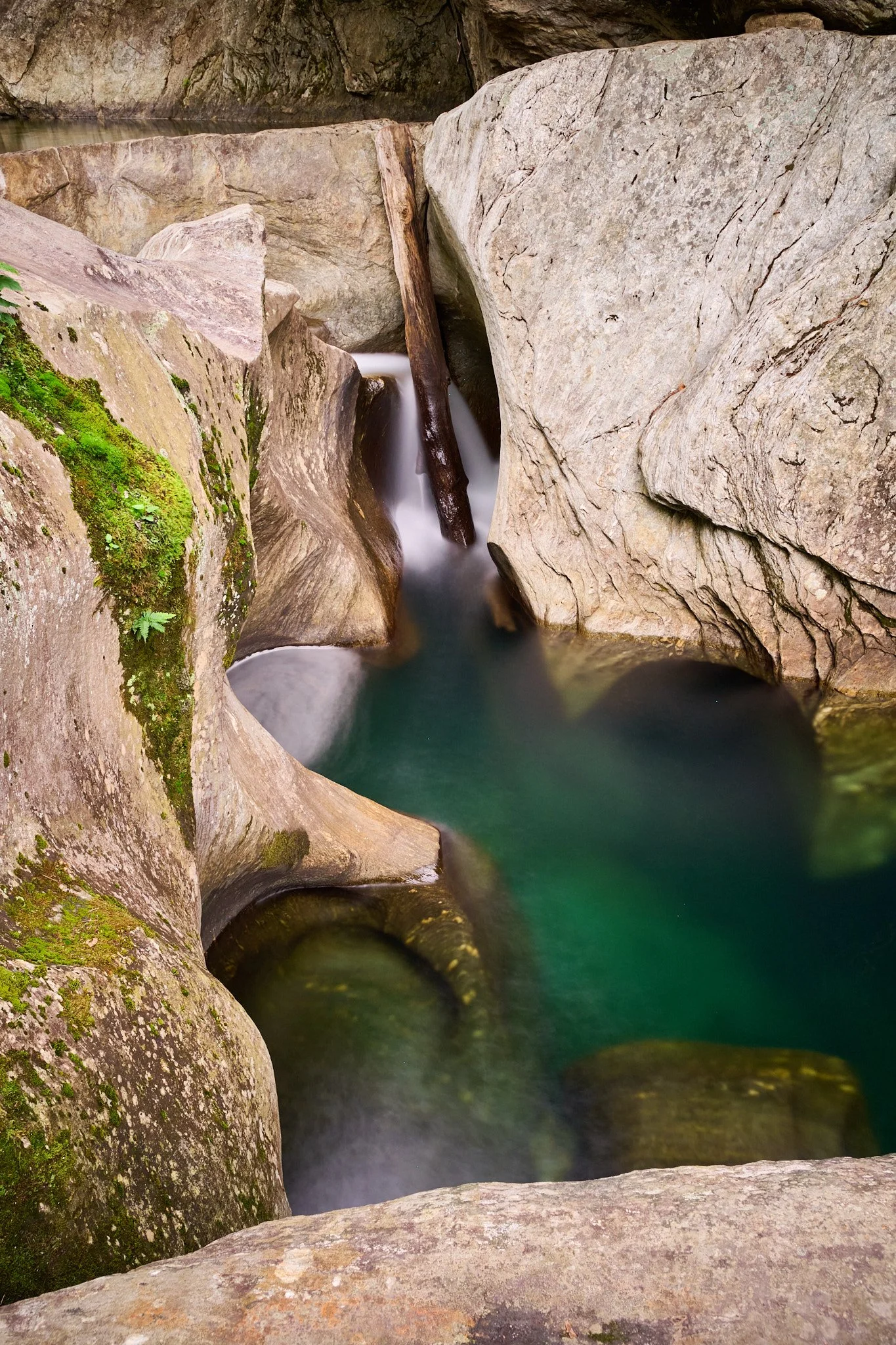
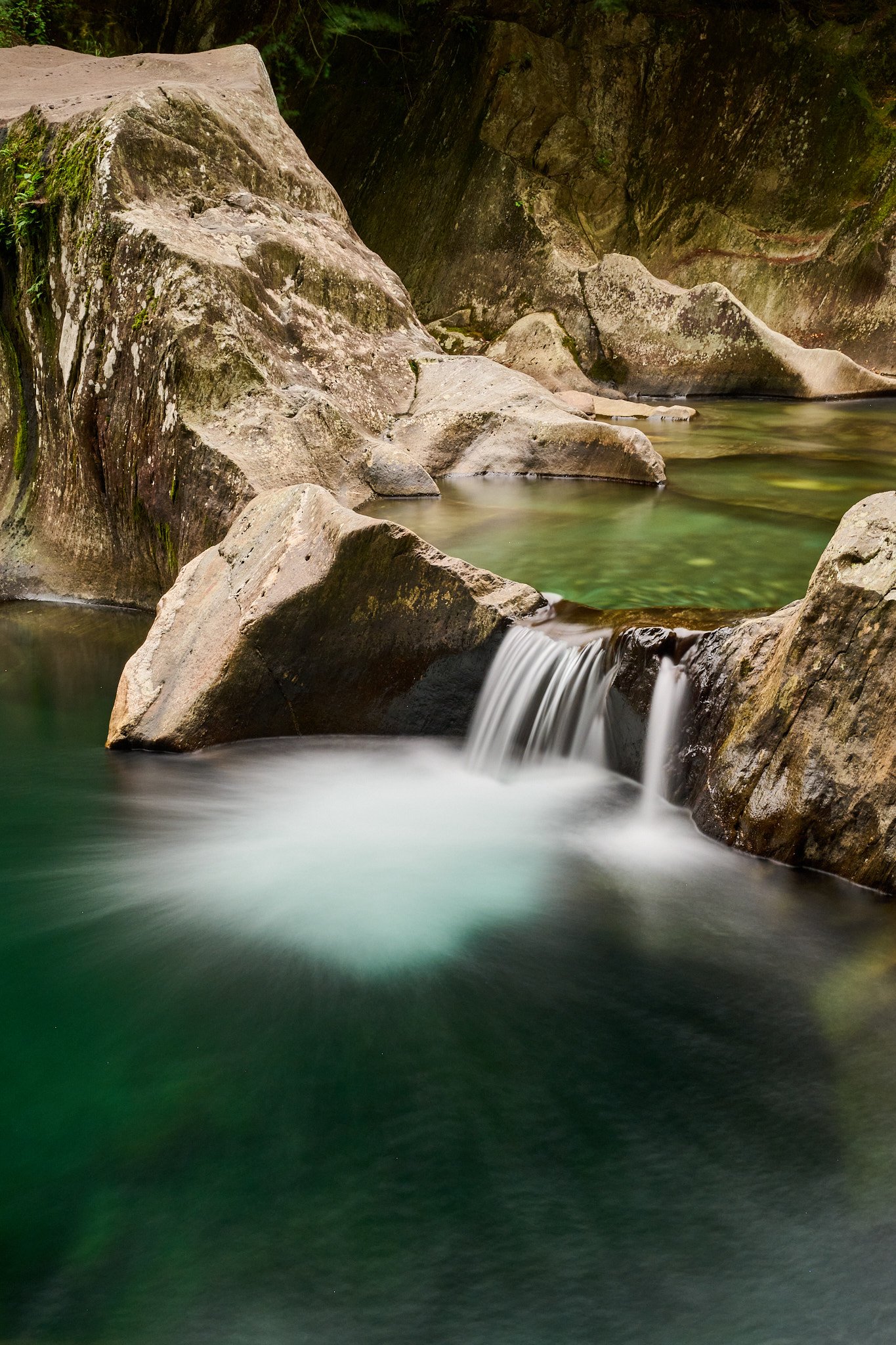
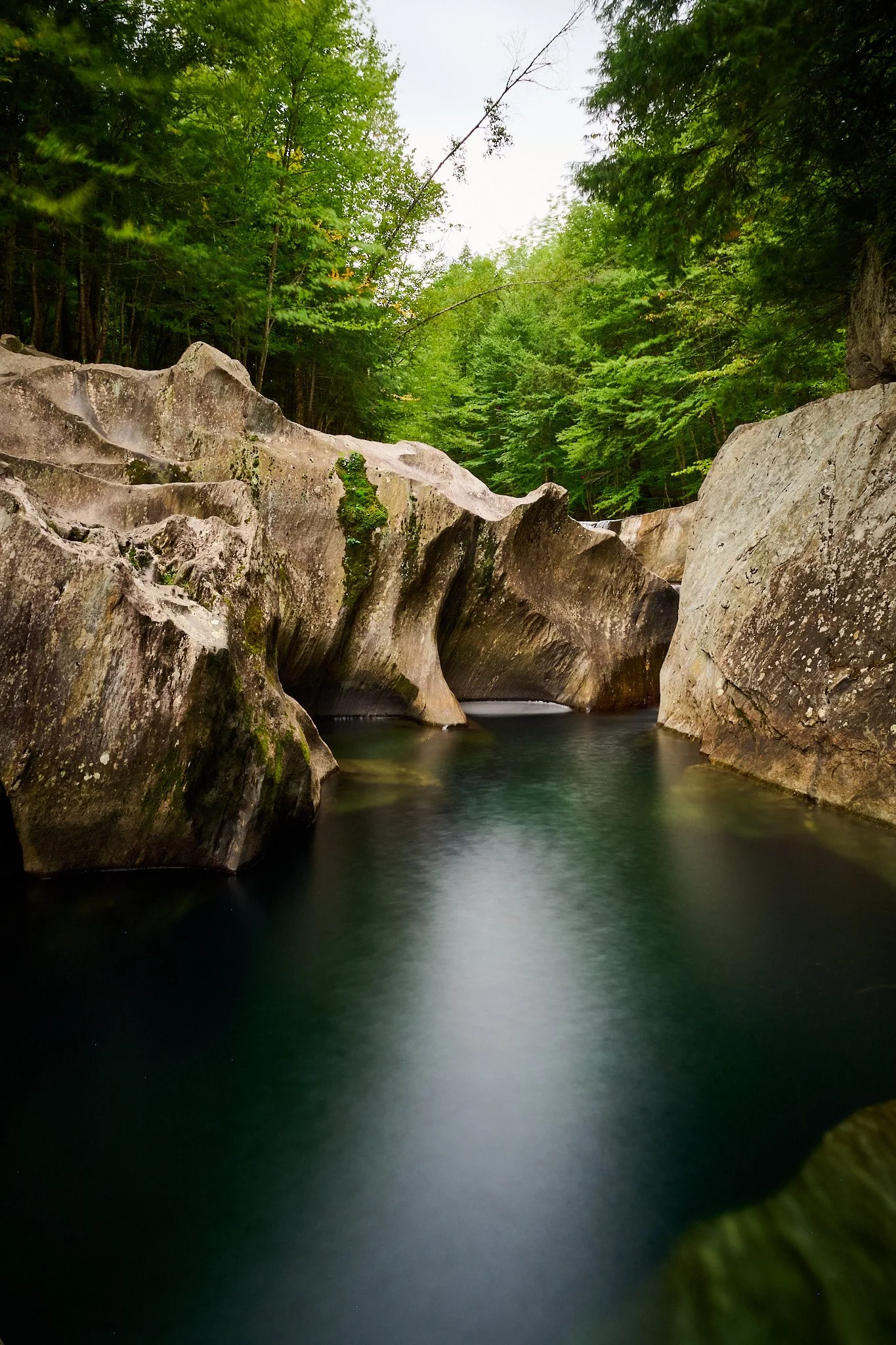
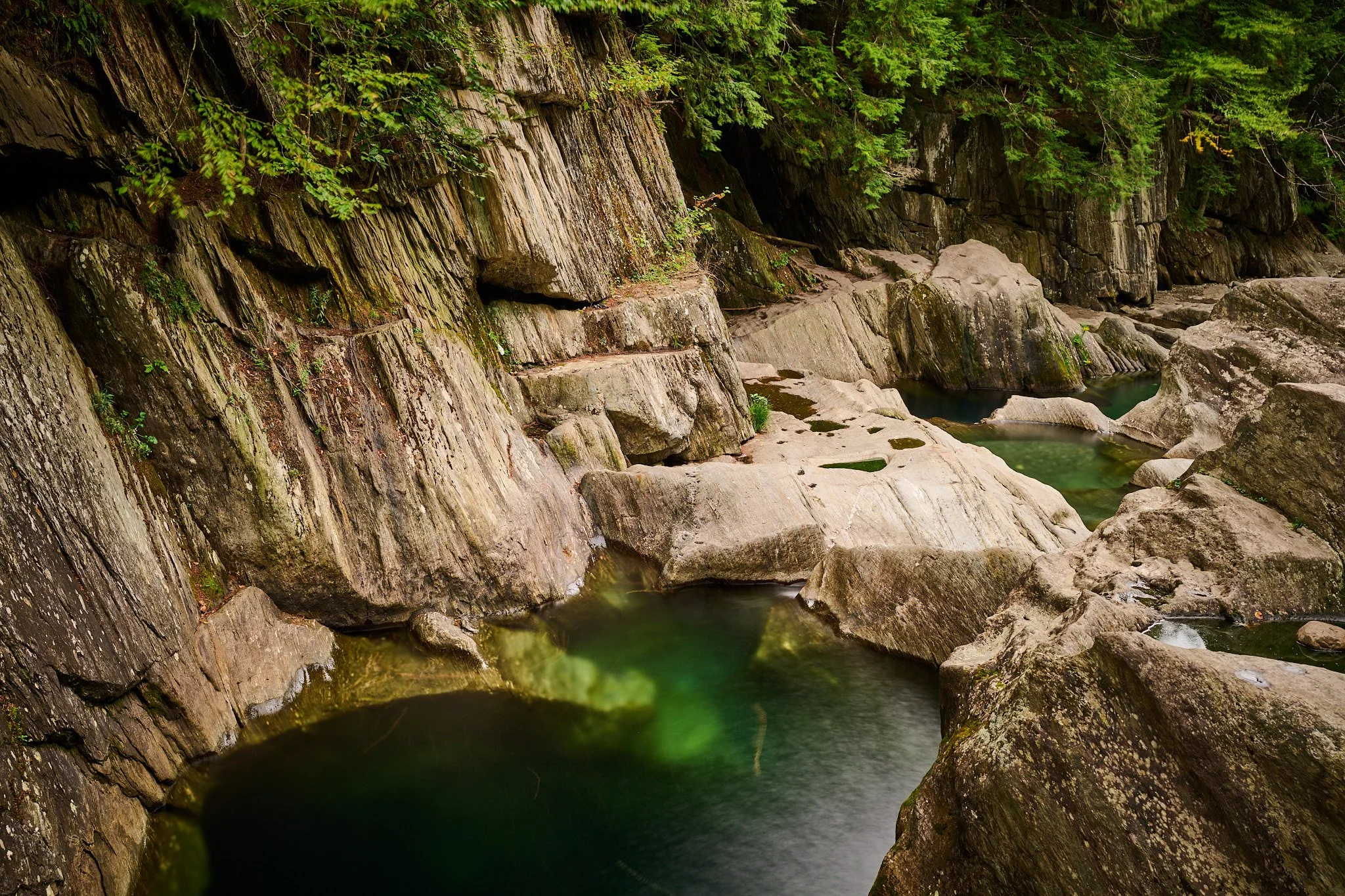
On my way home recently, I passed a swimming hole that only a few weeks earlier would have had cars lining both sides of the road, some of them precariously parked with two wheels in the ditch. This time there was no one. Just the sound of the river and a well-worn path leading down to the water.
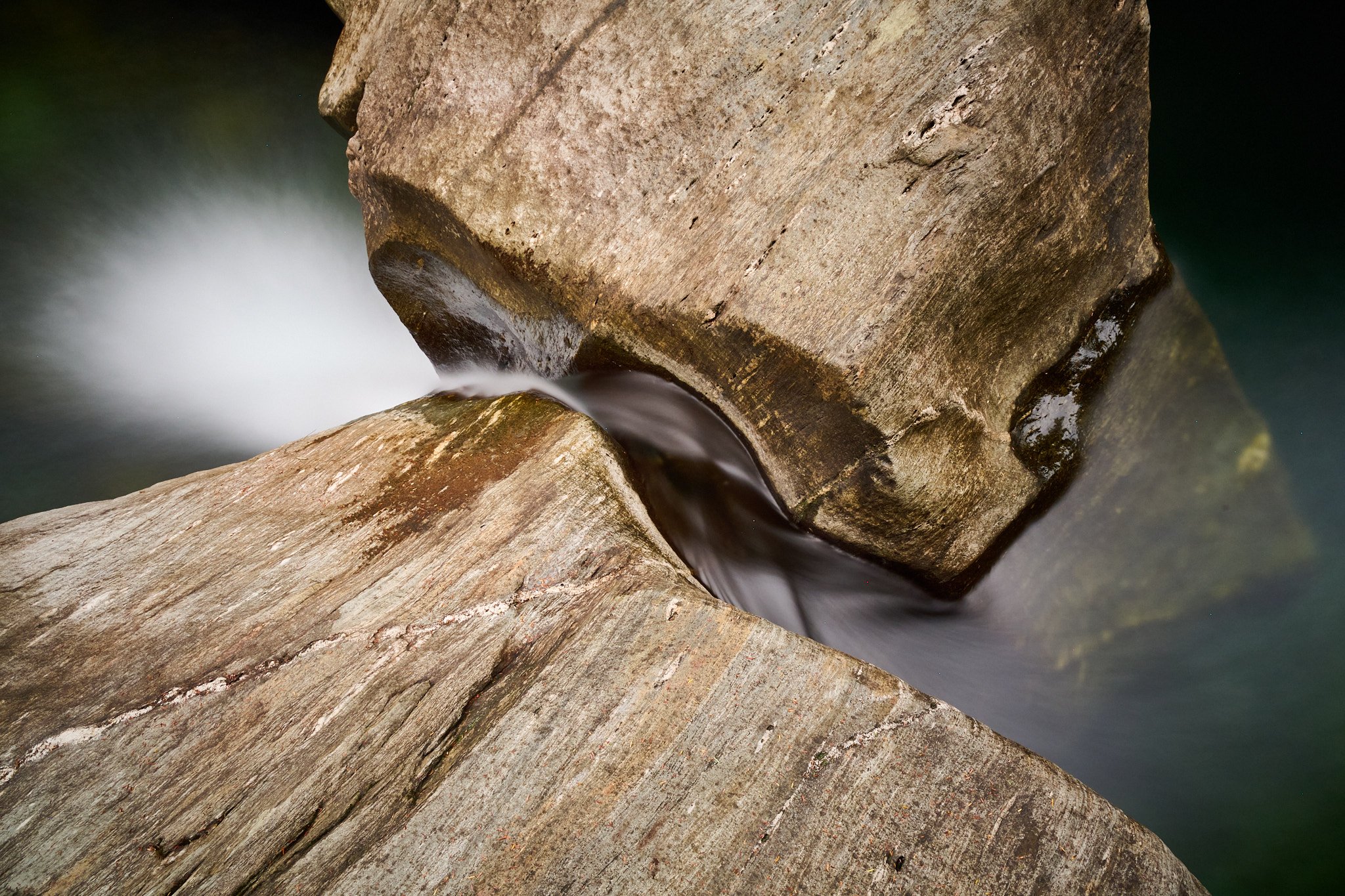
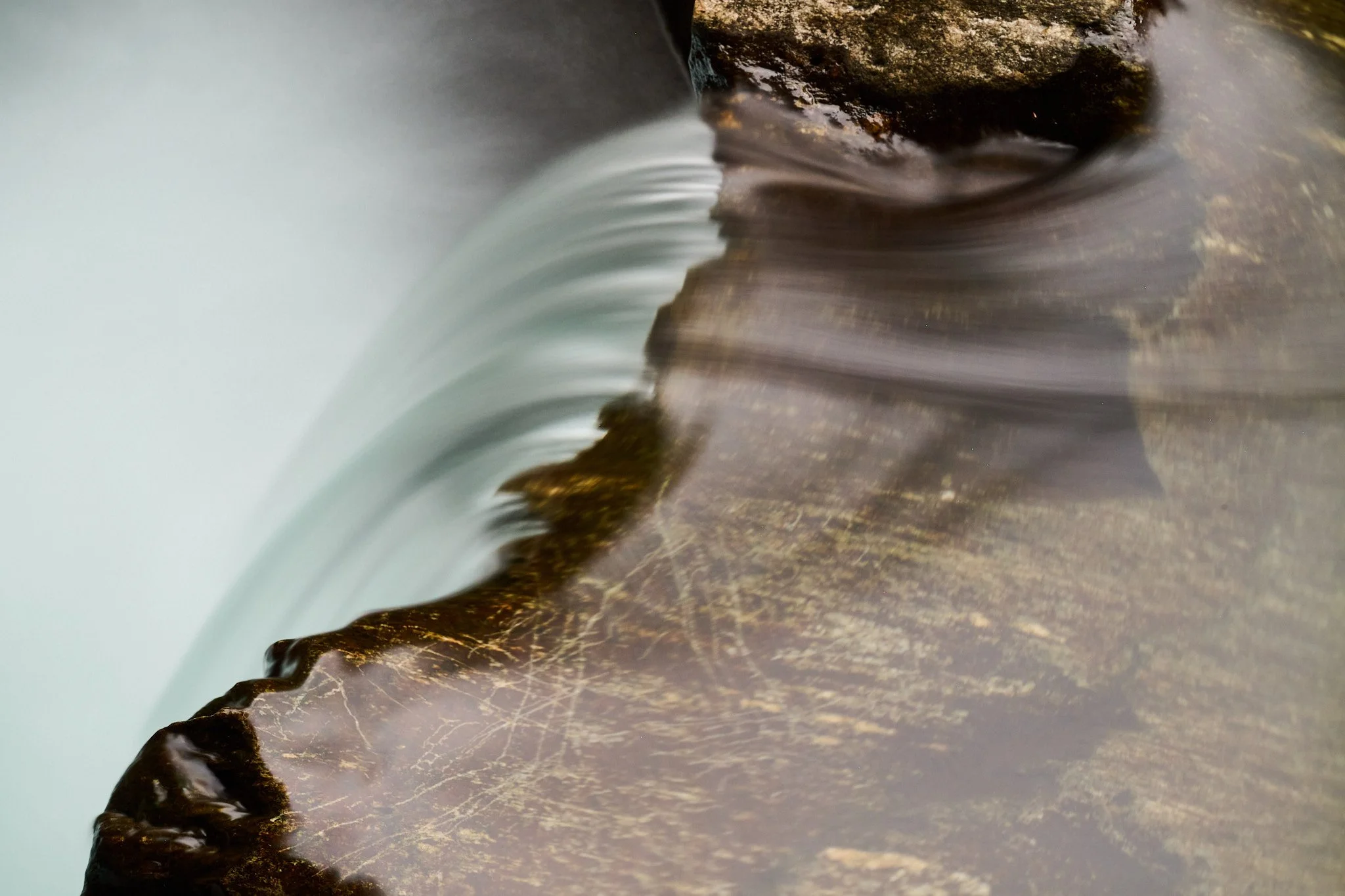
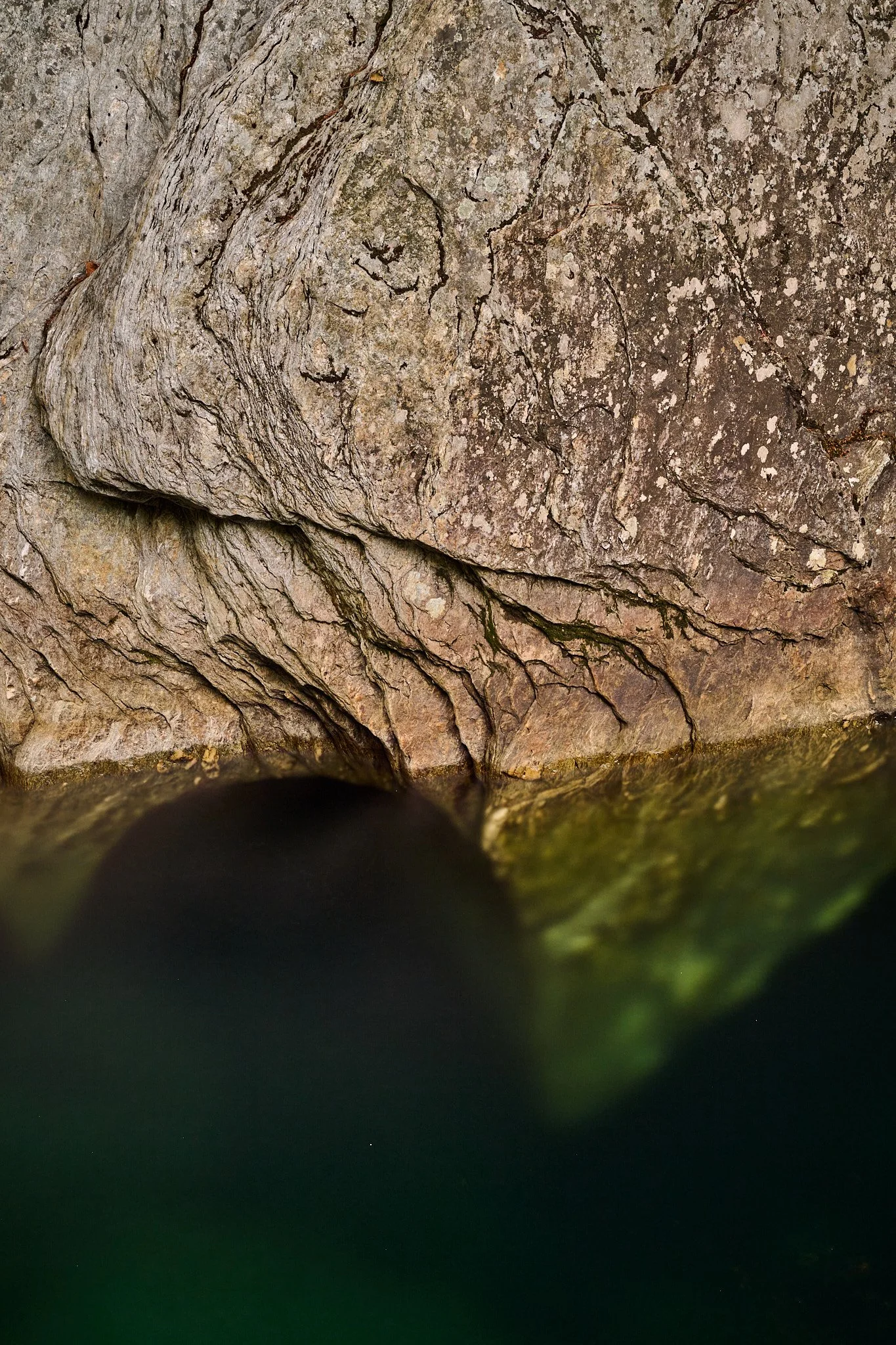
It was overcast, and the green of the water seemed especially vivid. I set up my tripod and started making long exposures. One of the things I like about working this way is that there's nothing to do once the shutter is open but look around. Time tends to disappear. You stand beside the camera and wait for that strange transformation, rushing water rendered into an accumulation of time that our eyes can never quite see.
At one point I noticed a pair of glasses on the ground. I instinctively checked my shirt pocket and was surprised to find mine still there. Someone else had been standing in this exact spot not long before me. Farther along I found a neatly folded shirt with a pair of flip-flops placed beside it. I wondered how someone thoughtful enough to leave their things so carefully could also manage to leave without them.
I worked my way around the falls, moving the tripod from one spot to another. Before long, an hour had passed.
Turning Your Head In Nellieville
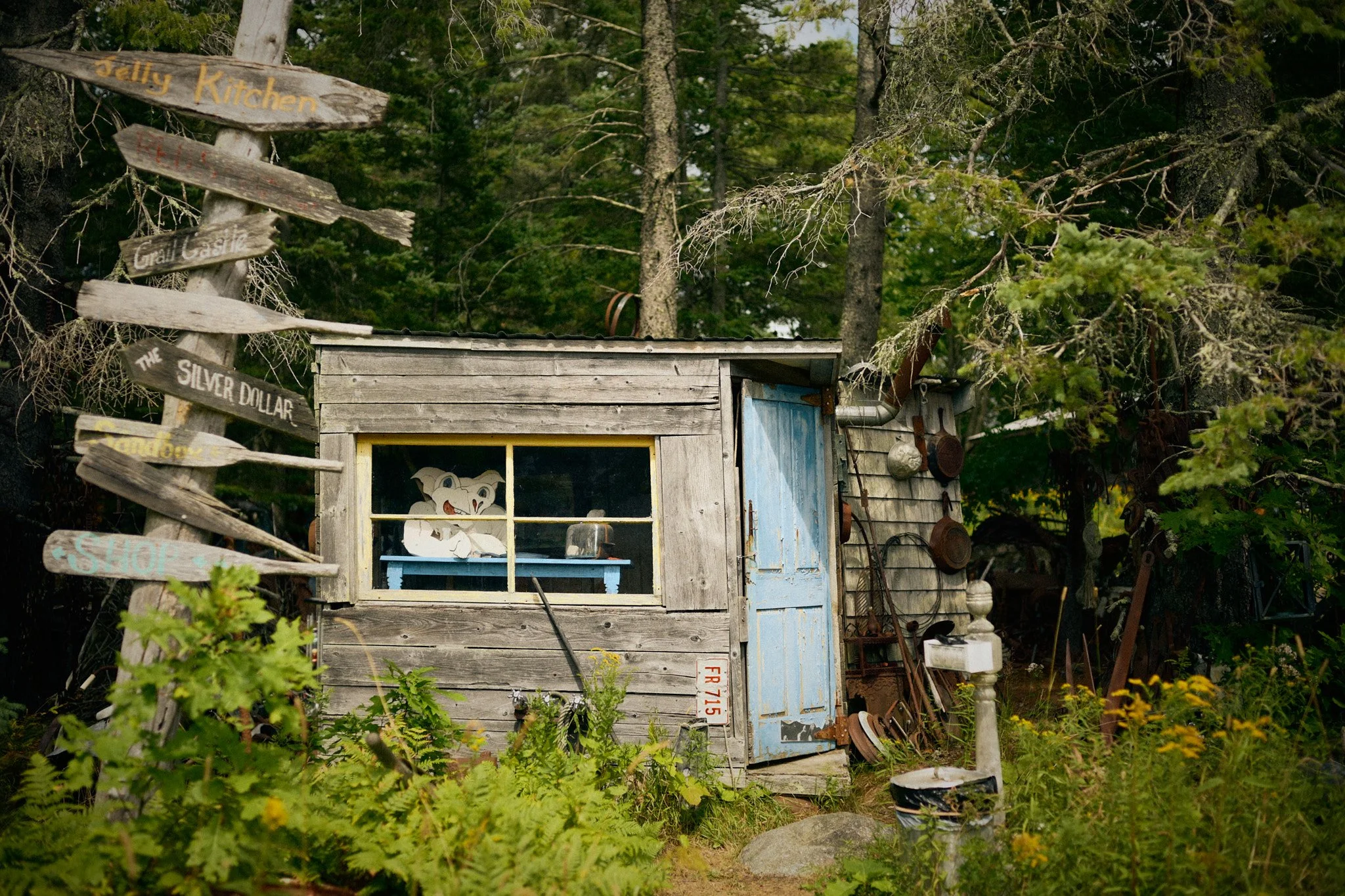
At Peter Beerits’s sculpture garden in Deer Isle, Maine, my kids knew exactly what to do. I was slower to catch on.
The kids knew what to do and as soon as the car door closed in Nervous Nellie’s parking lot, they were off to explore. I was slower to react, though forced to keep up. Fortunately, I did steal a glance at the welcome sign and noticed that exploring the spaces was encouraged. I think it also said touching the art was okay, but I kept that to myself.
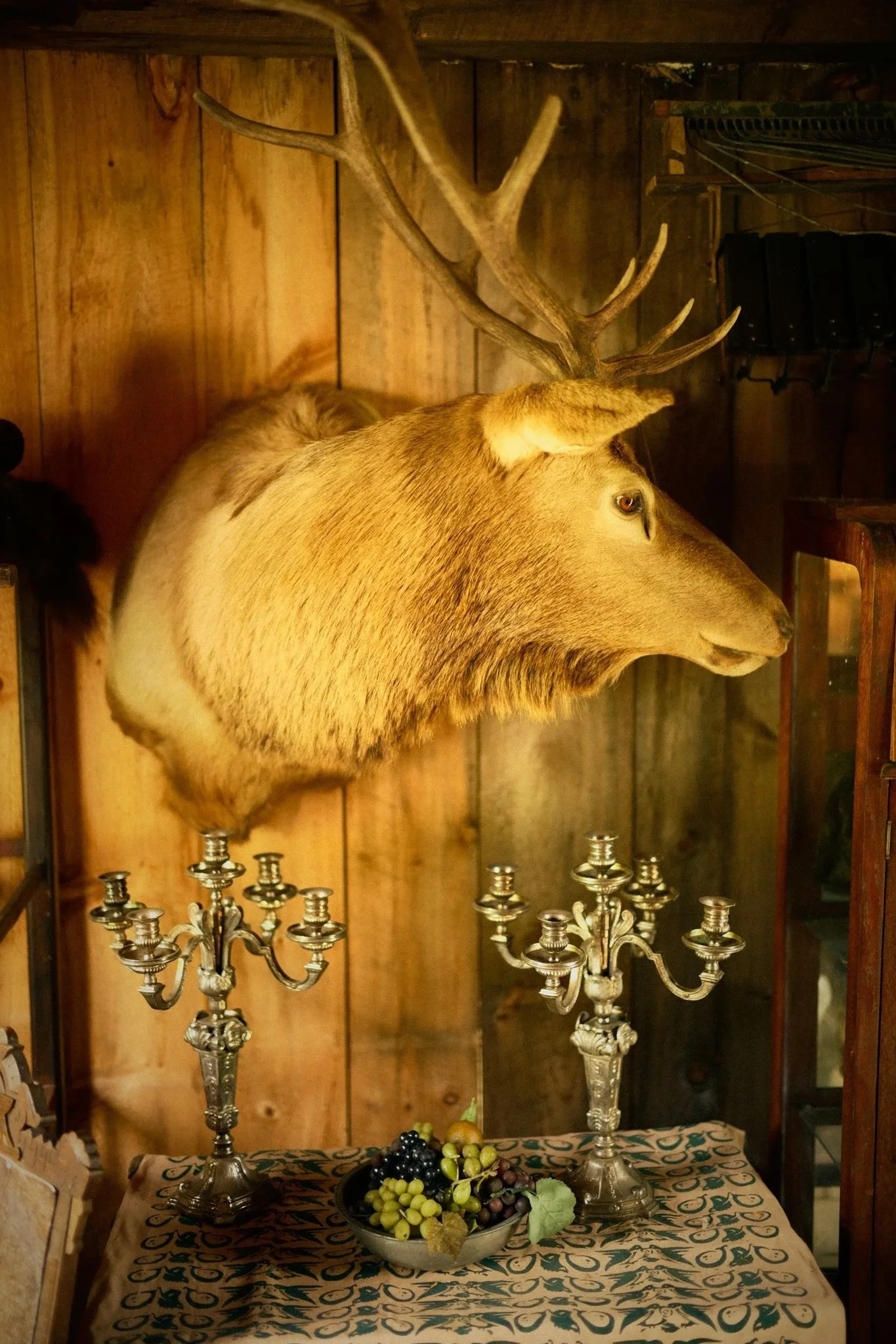
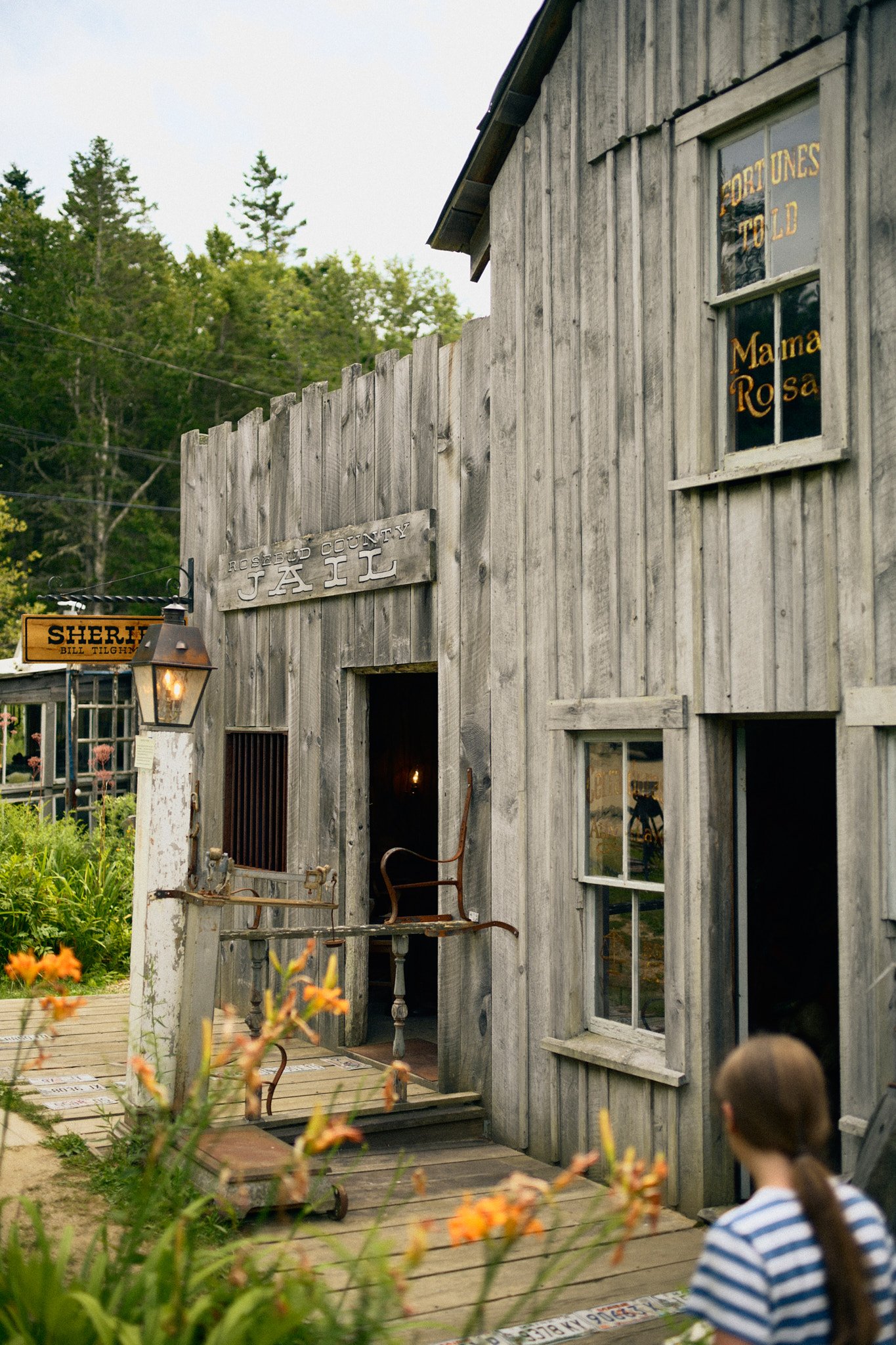
We started with the Western town. Interiors were decorated with all manner of interesting ephemera, including a lot of taxidermy, but it was the people sculptures that began to transport me. We were entering their world, rooms with themes ranging from a jail to a juke joint. My son's initial reaction to the people-like sculptures was fear. They had a presence, and there was something about their stillness that filled the spaces. What struck me was their eerily fixed gaze.
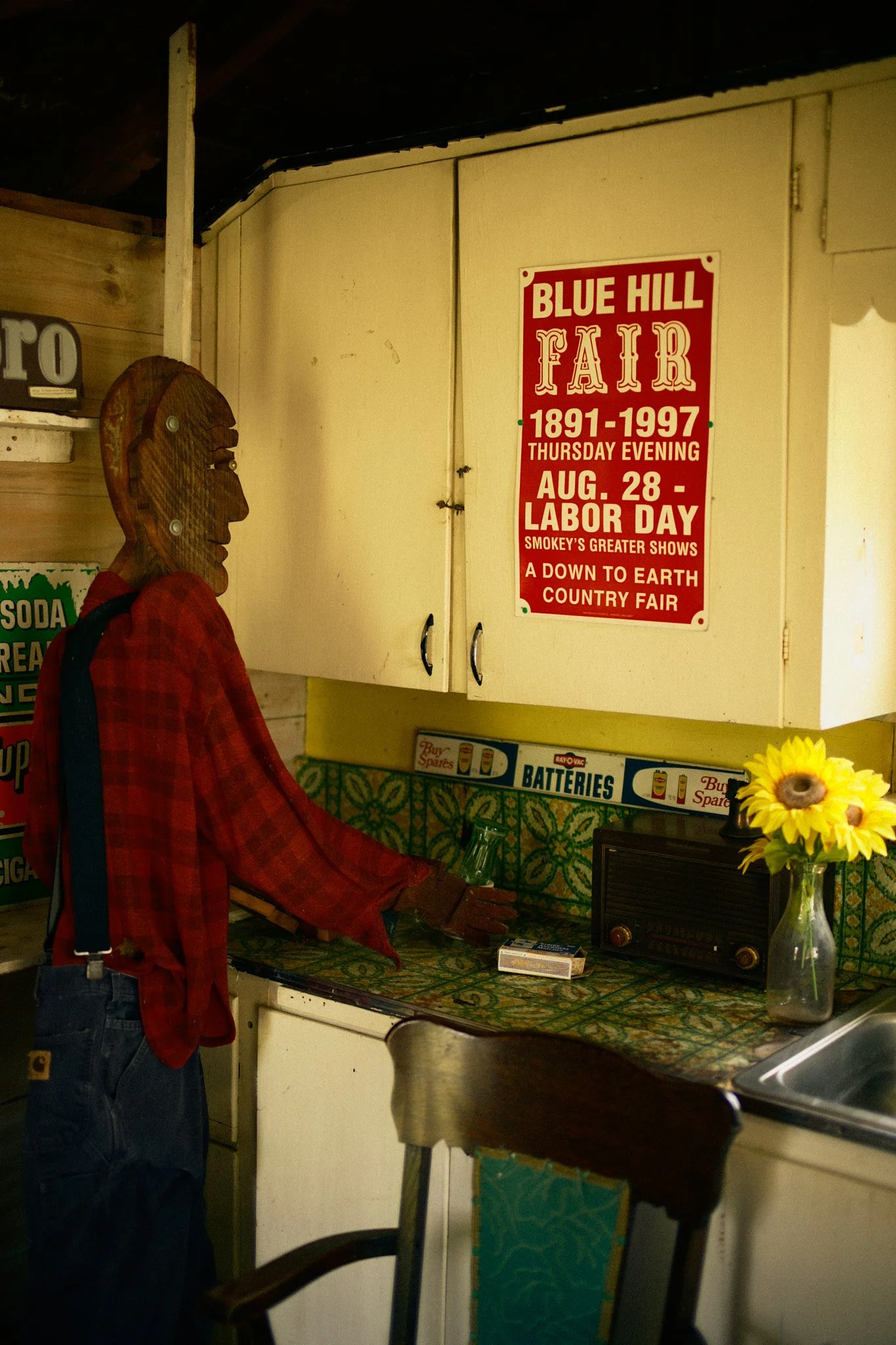
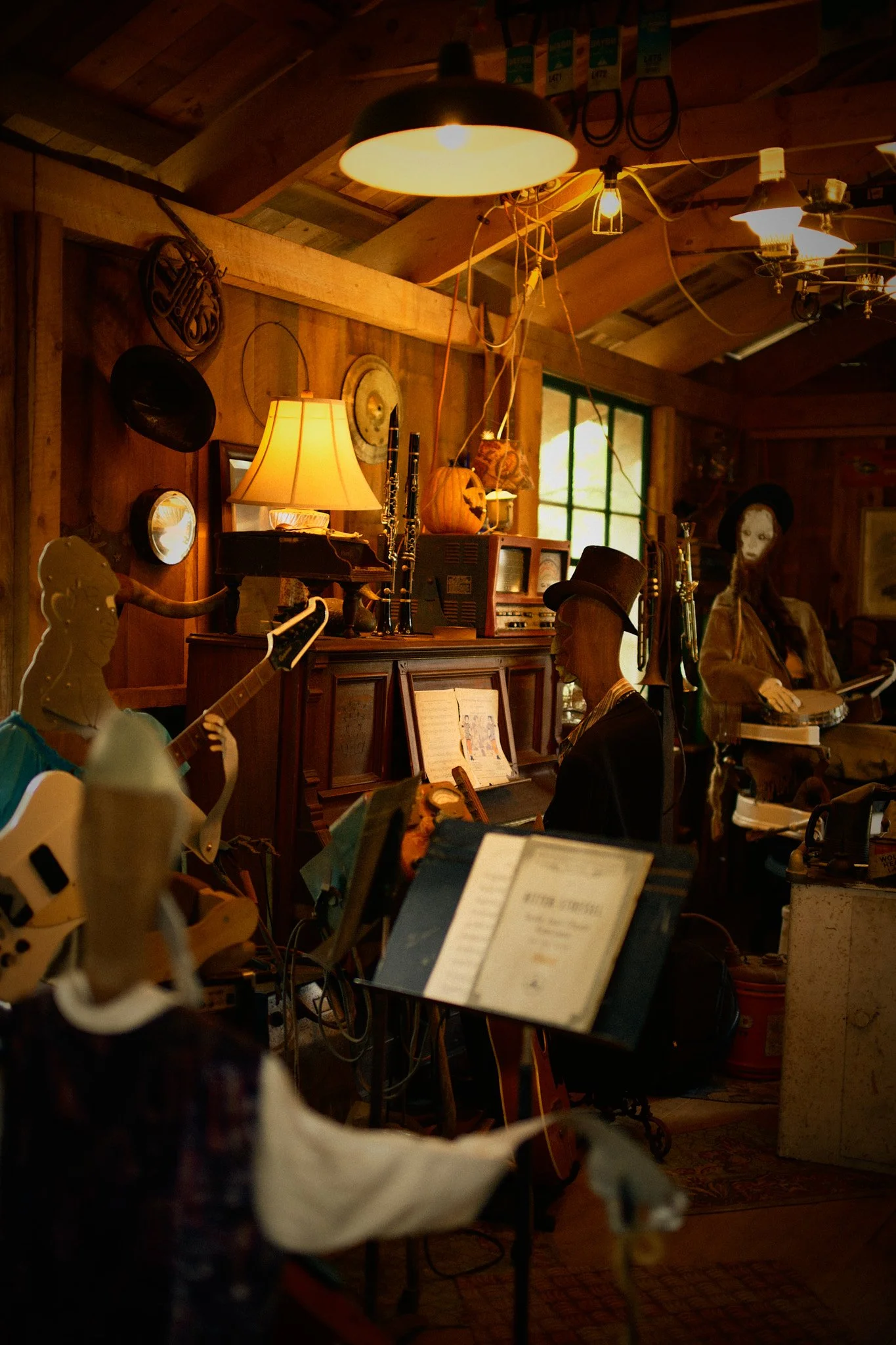
Exploring the various buildings felt more like entering a sculpture, being inside the art instead of observing its surface. It was thrilling, and there were rewards for looking carefully. My daughter even noticed an installation on a second-story window ledge, only visible to those who craned their necks. My eyes roamed eagerly, searching for what was next, a stark contrast to the figures who all looked straight ahead.
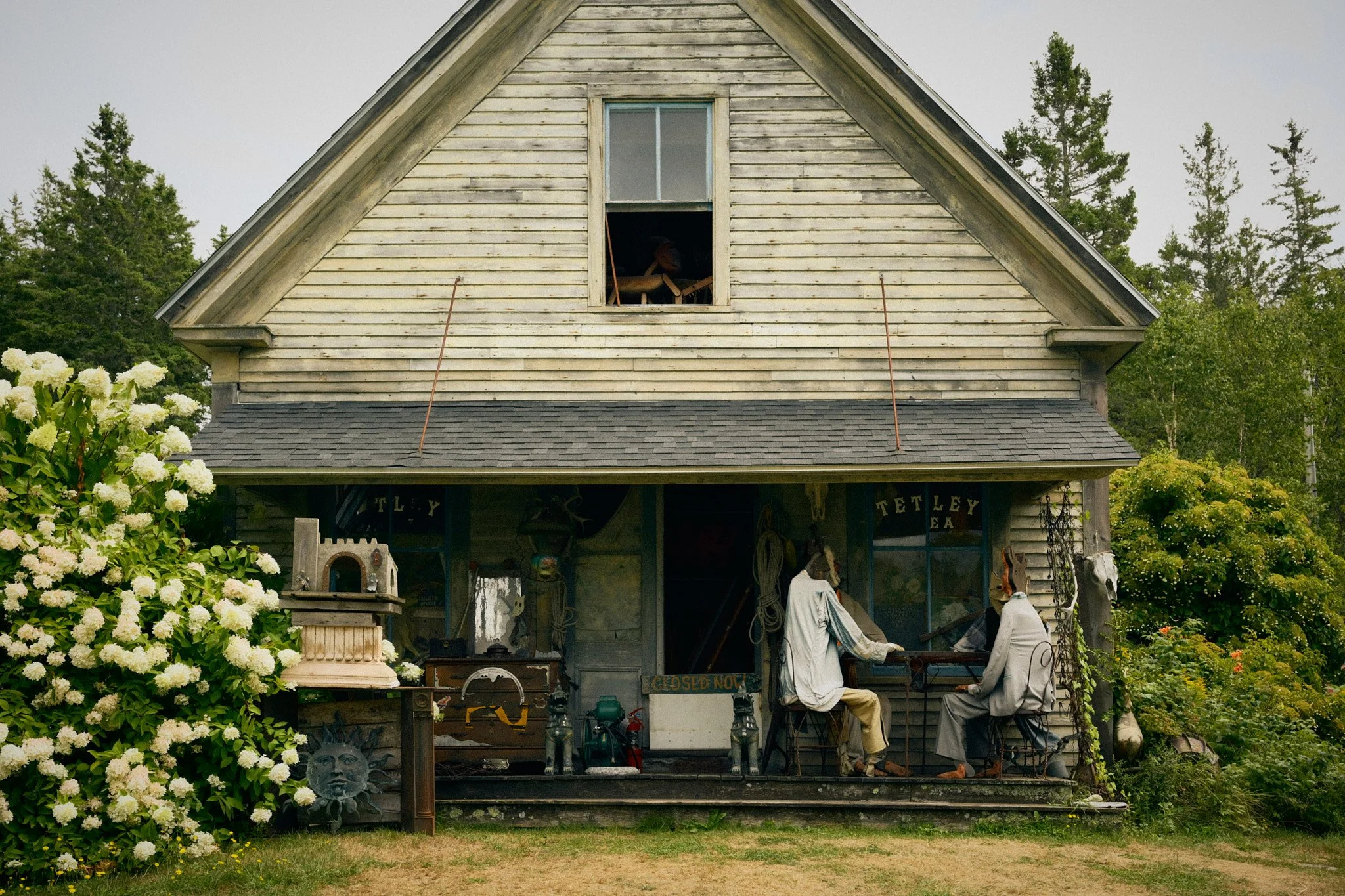
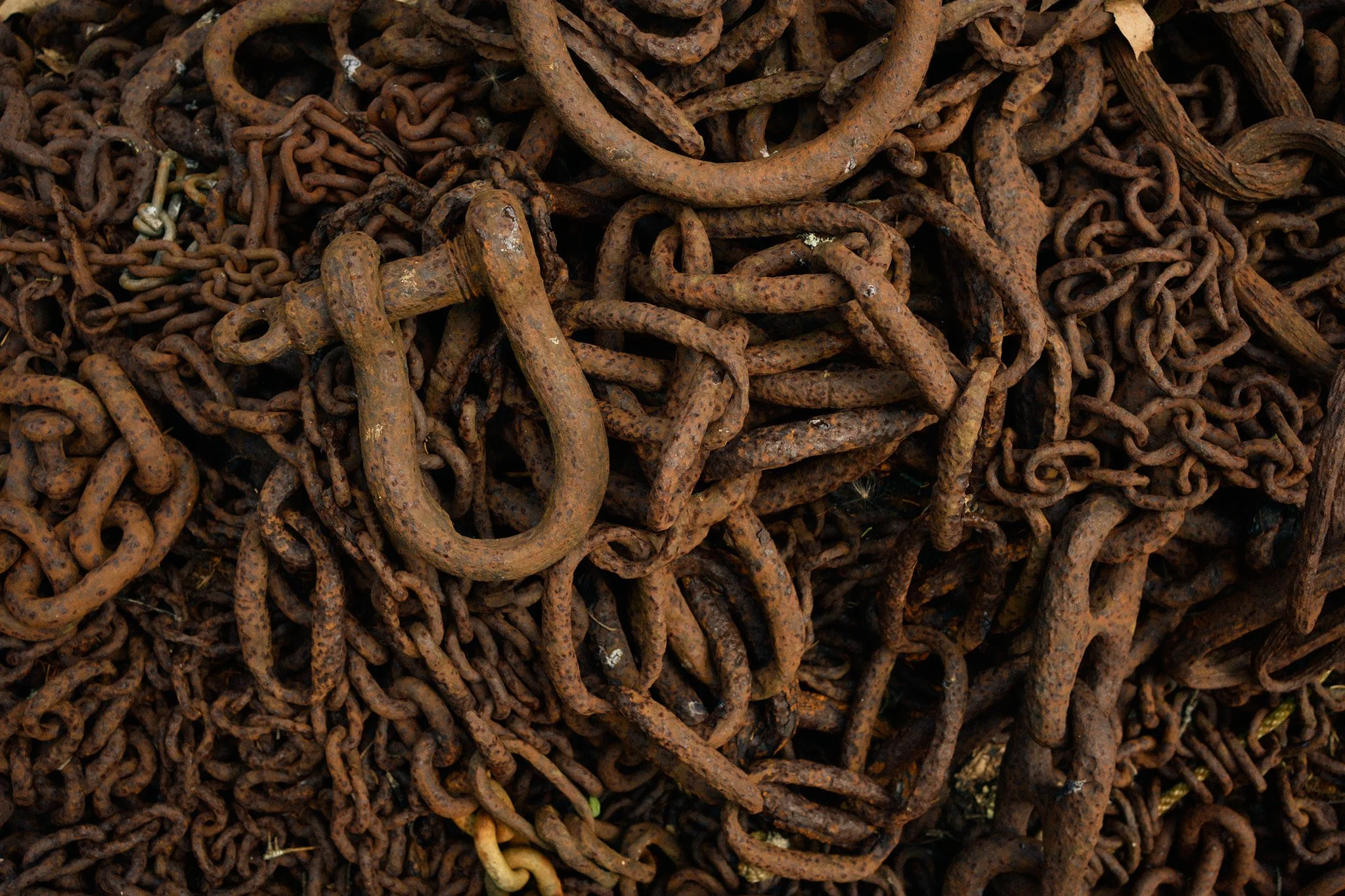
As we moved through the sculpture park, the urge to capture it was overwhelming and I knew it was impossible. There were sculptures within sculptures, a fractal of creativity. The artist, Peter Beerits, seemed able to create anything he wanted, making something as simple as a rusty pile of chains into a form worth considering.
I began to feel uneasy with the way he rendered the faces of the “inhabitants.” They felt labored, and while composed of an interesting variety of materials, the faces remained estranged from the overall feeling of playful artistic freedom. Their unchanging field of view began to feel torturous in a place that rewarded looking in every direction.
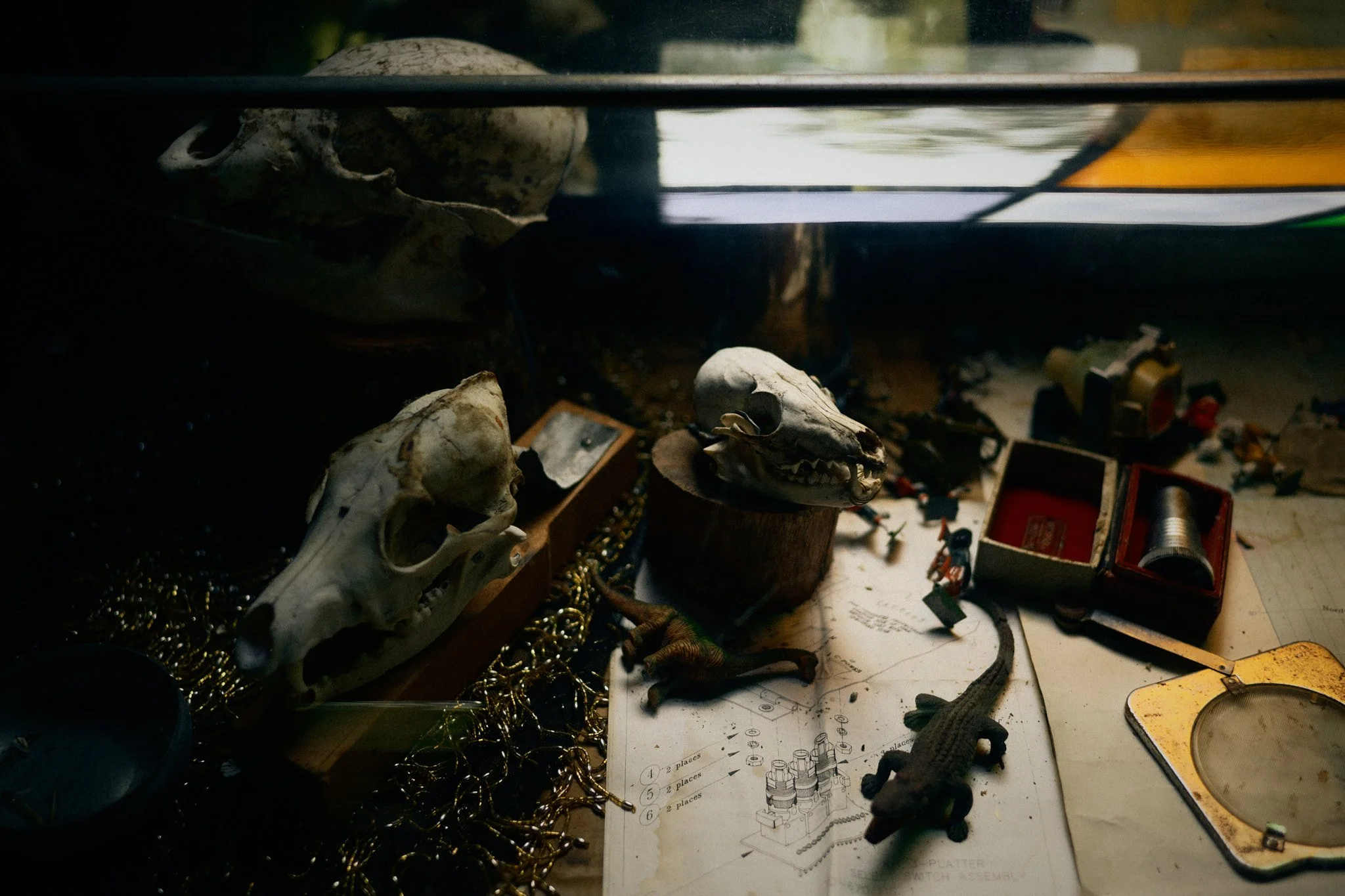
There was a distinct point during our walk when I was forced to simply surrender my analytical sense. It was a struggle to free objects from their known utility and just revel in their form. It was overwhelming, maybe like a return to a child's view of the world where much is unknown but shapes, textures and sounds are that much more enticing. That this heightened way of seeing could be sustained struck me as an achievement, hard to describe, but it felt like mastery.
I felt melancholic staring at a damaged but very shiny outdoor gas grill. It was actually beautiful, a form I had only a second earlier labeled as junk. How could one exist in the world on this wavelength of aesthetic intoxication, the beauty of our industrialized mess becoming too much to bear? Maybe it was easier to see things as they are intended, to be adult-like and practical.
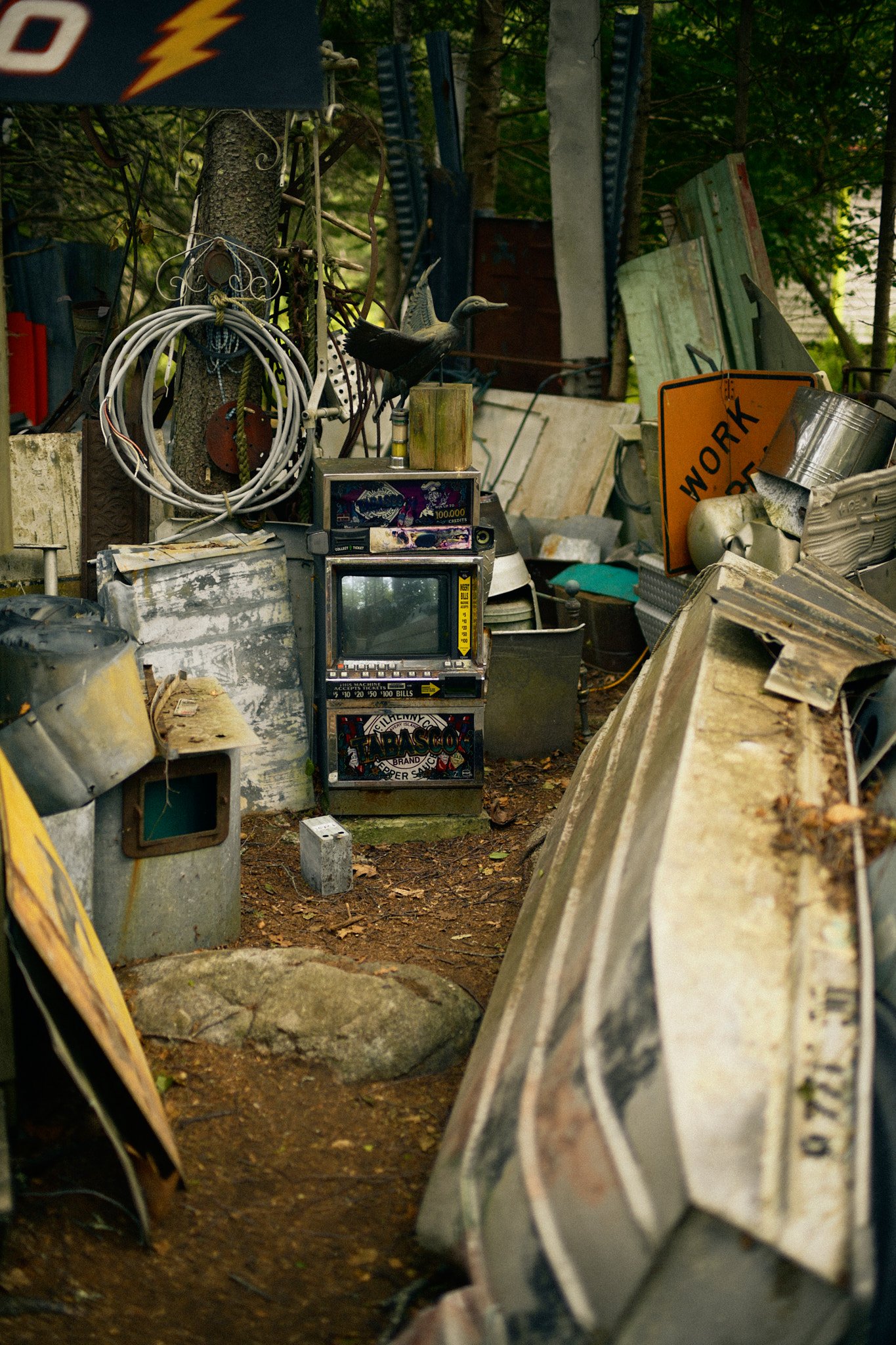
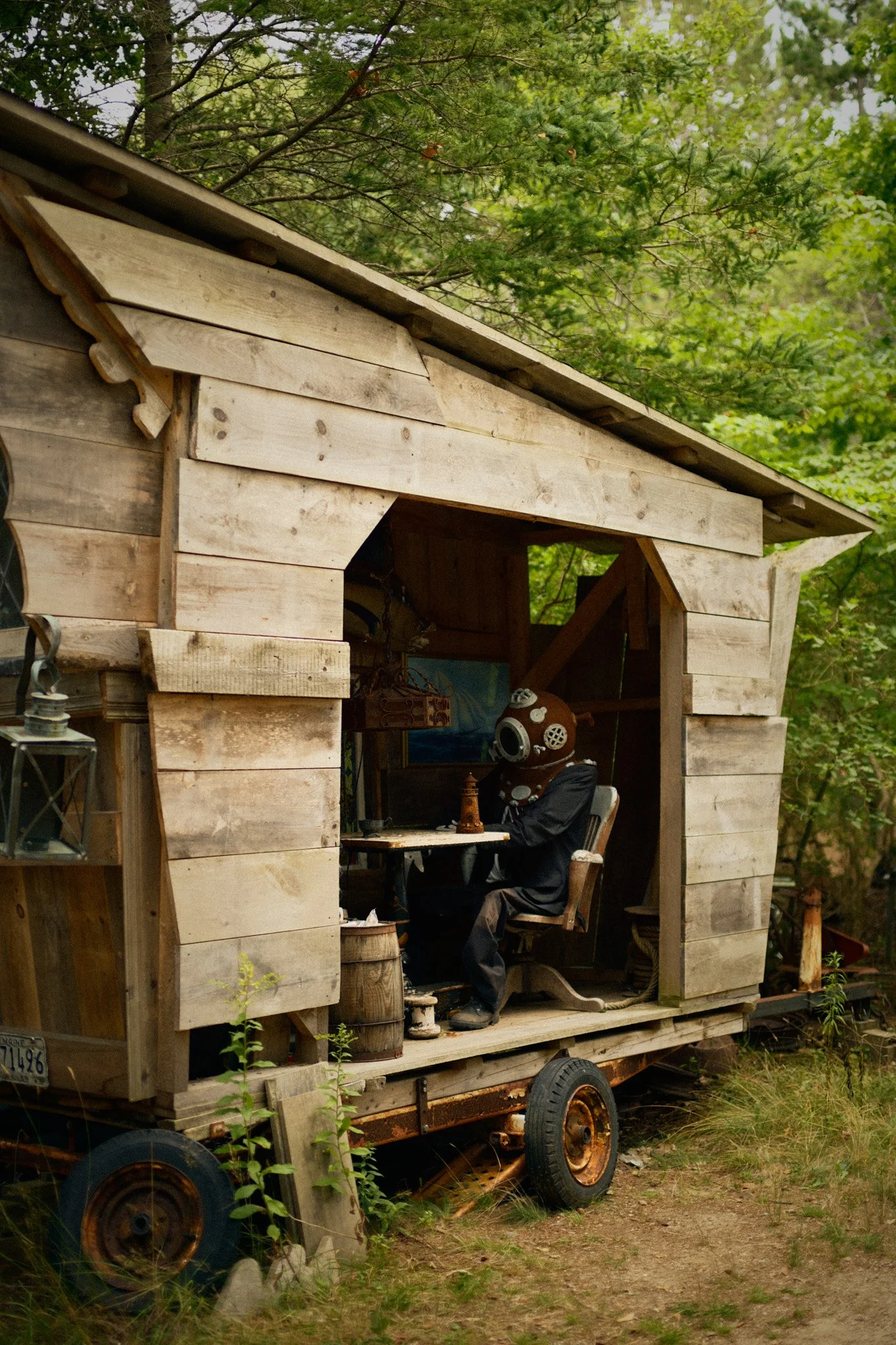
We walked further into the park, and the scale of the pieces changed when we encountered giant knights and a castle structure. It was like my desire to keep this childlike vision had shrunk me down to child size. The wonder mixed with sadness when we walked toward a collection of broken-down vehicles gathered in the woods, apparently watching an invisible film from an old, busted-up projector operated by an elf. To be an adult felt like losing the ability to view these films, to no longer see the magic of these mechanical beings playing together.
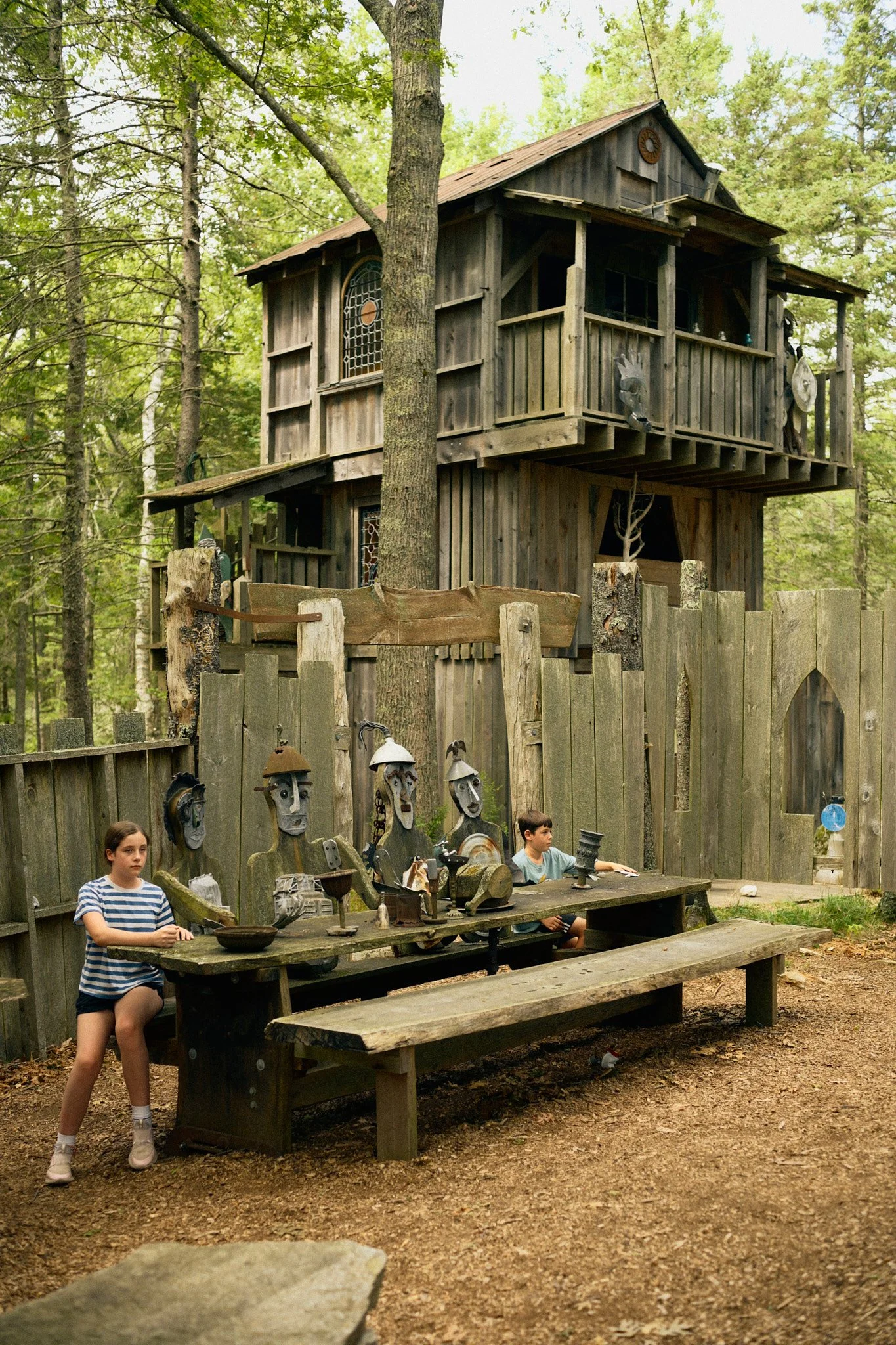
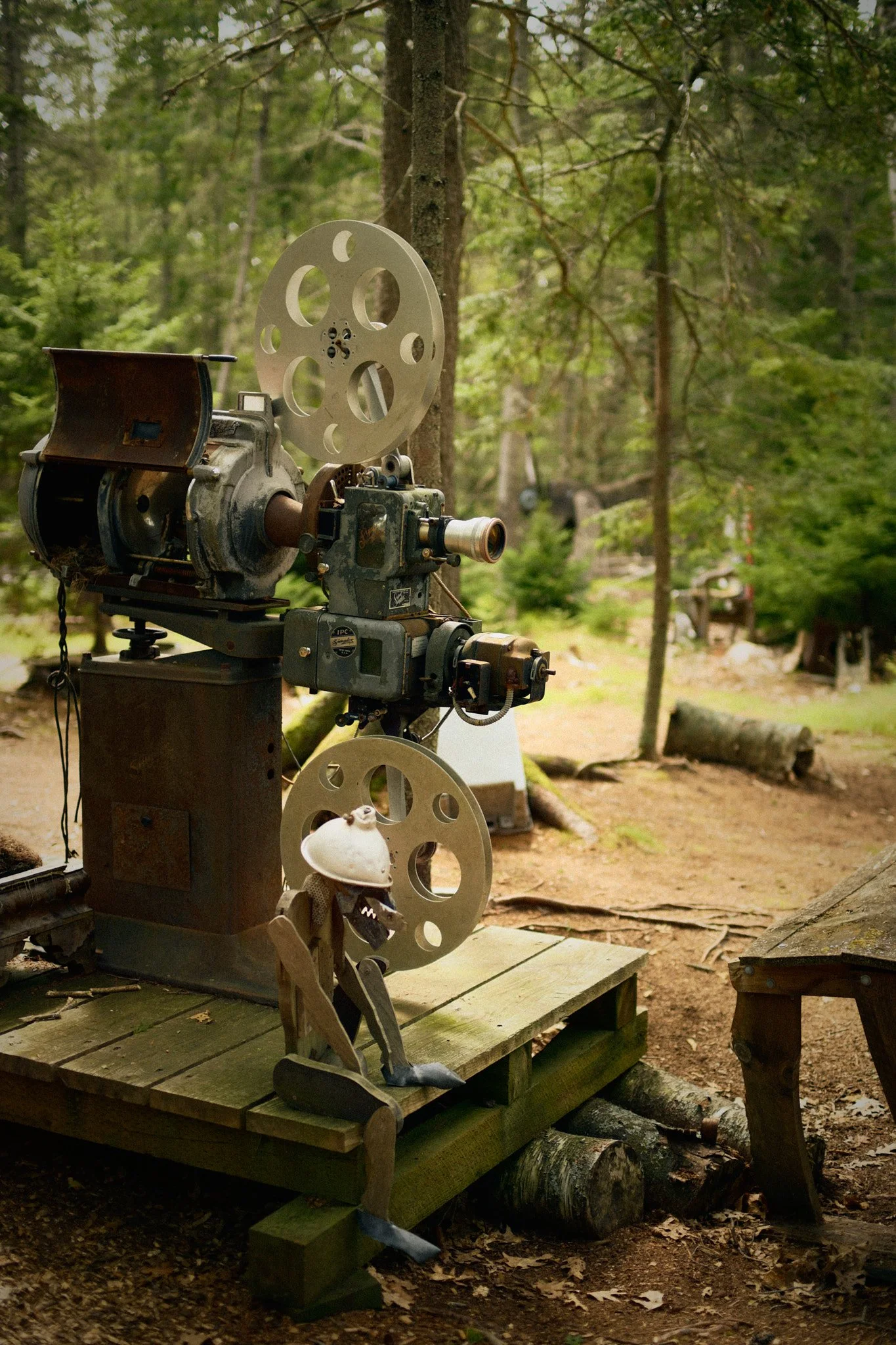
The kids continued to devour the structures, and I struggled to photograph what I was feeling: what is the point of photographing sculpture anyway? A place like this needs to be experienced in three dimensions. My mind came back to the faces and they suddenly felt like a mirror.
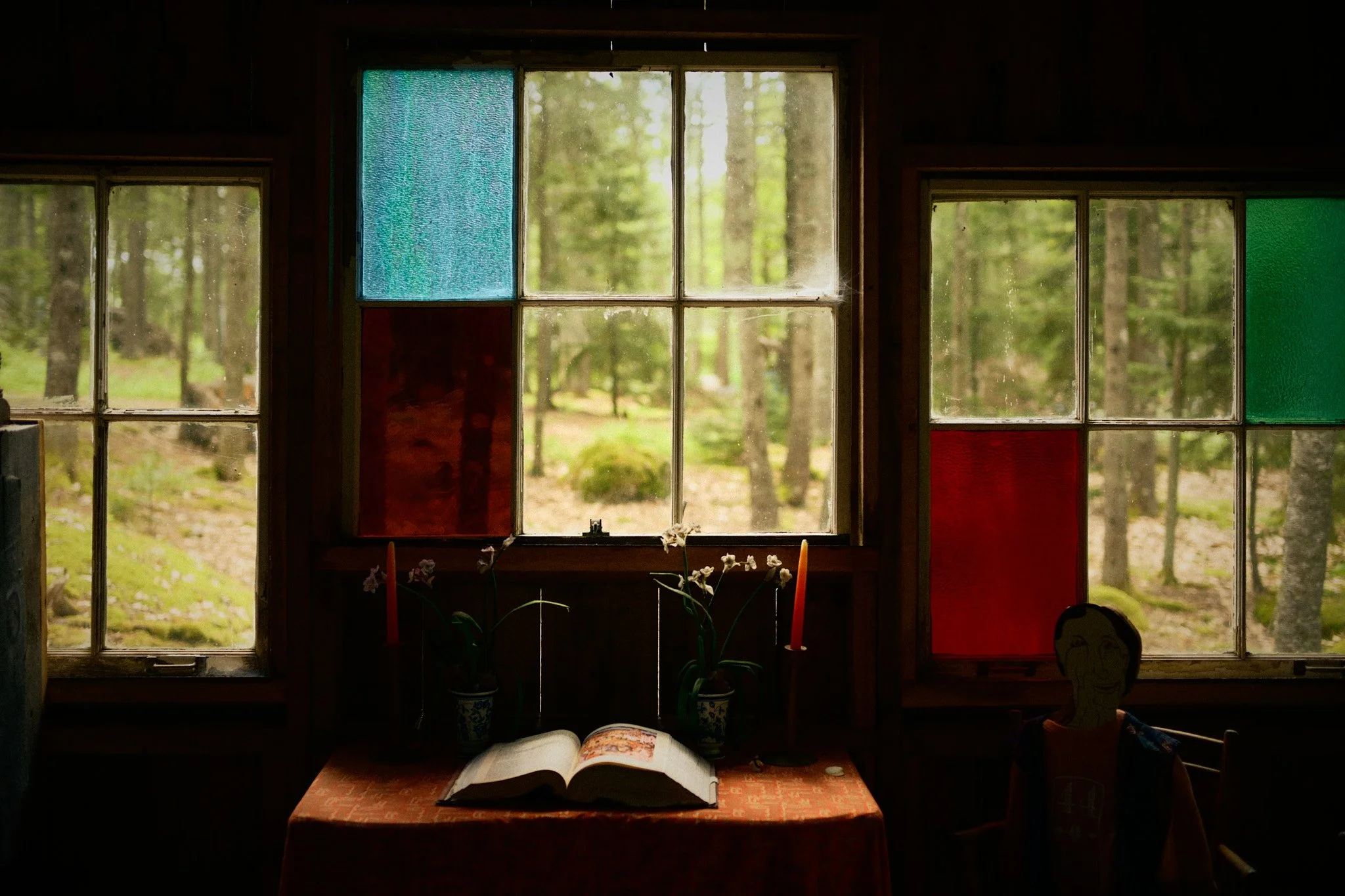
On our way out, we stopped to read the welcome sign. Peter Beerits has been building Nellieville for the past thirty years, and I hope he never stops.
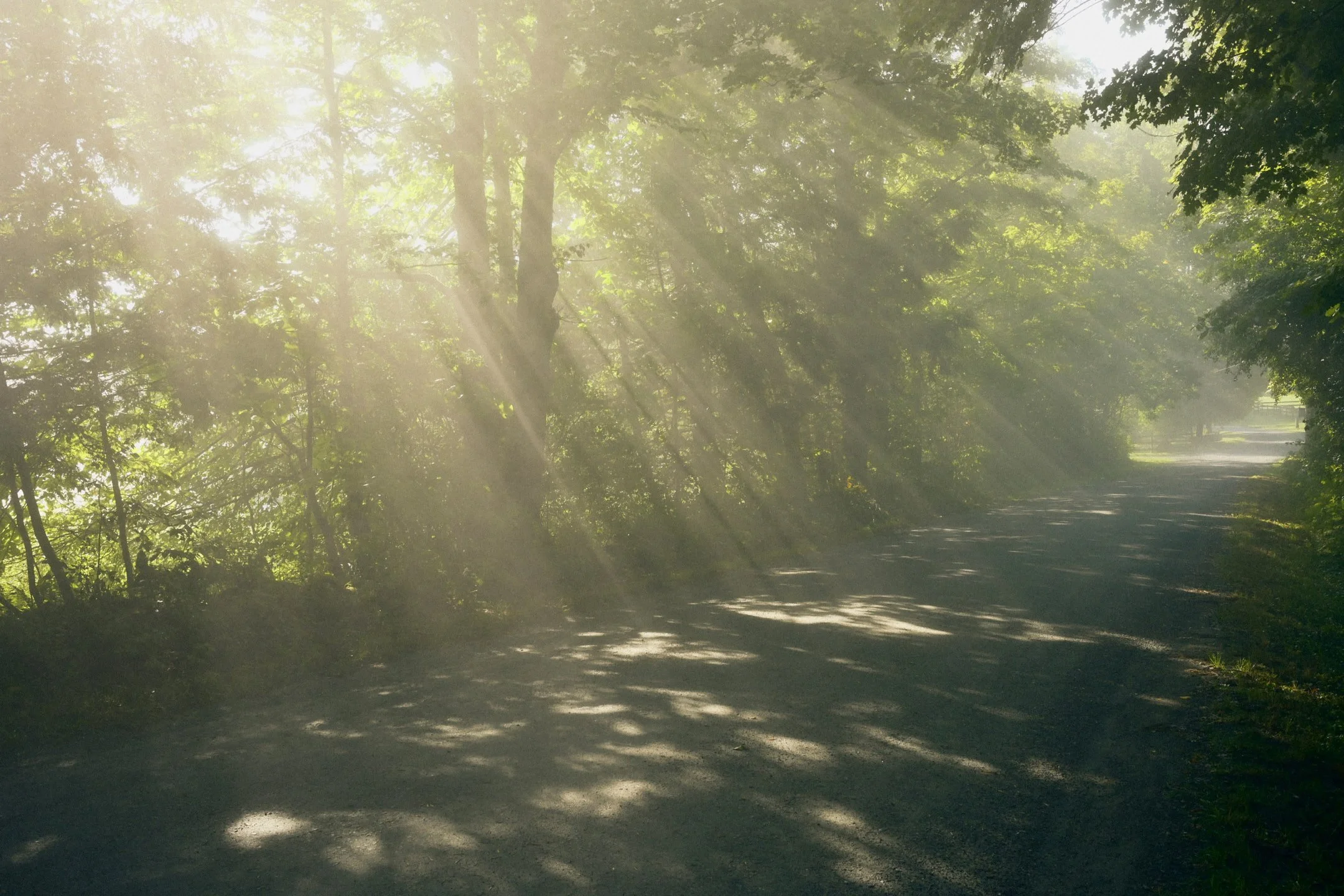
woodstock fog
A lesson from the fog about accepting what is given, and rediscovering the joy of wandering with a camera.
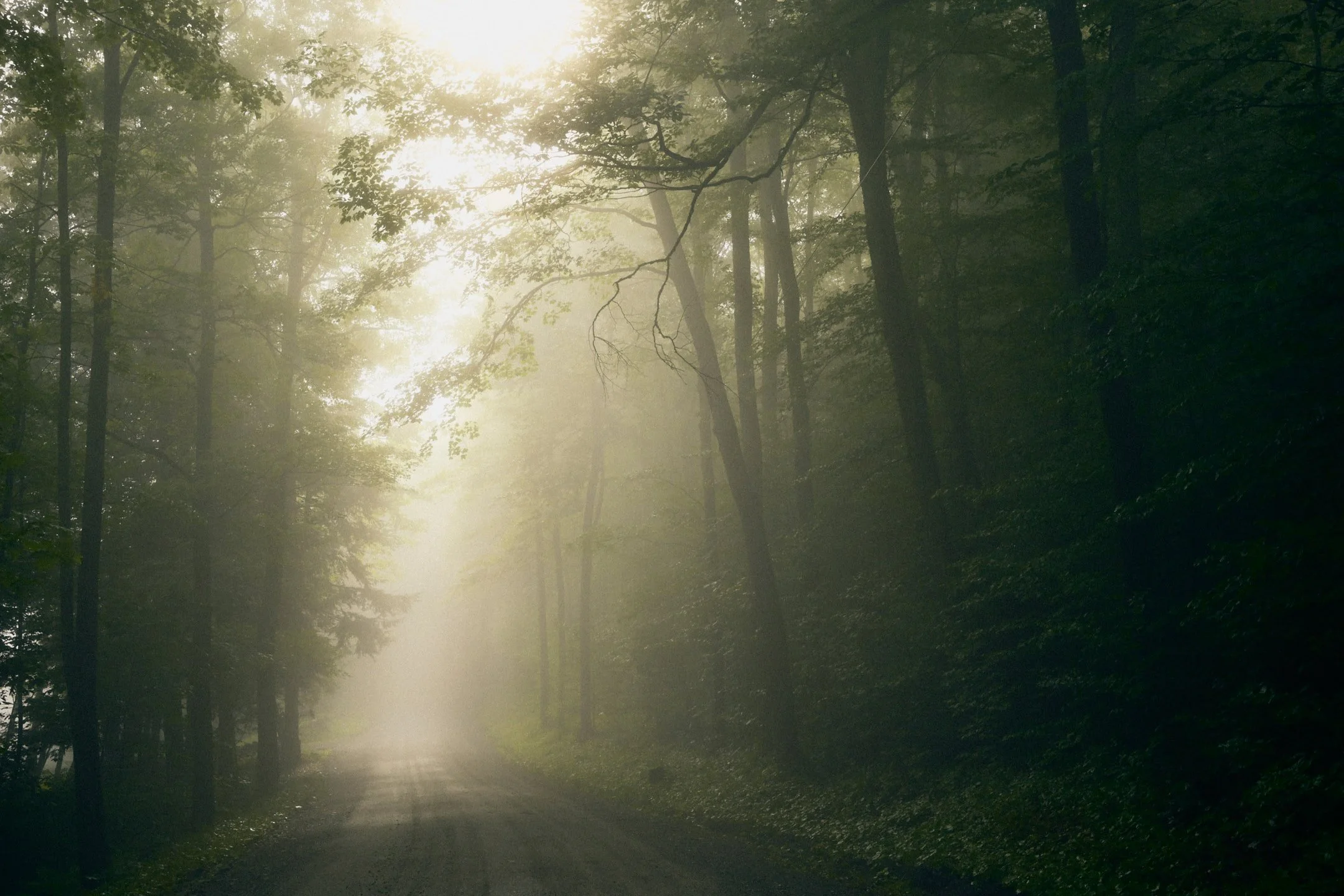
Valley fog is more prevalent now, an early sign that the seasons are beginning to shift from summer towards fall. On some hillsides I see a subtle change in the green canopy, nothing dramatic, just a slight change in the overall hue. Dusk is creeping back towards dinner time. Less time for an evening walk or a late-day swim now.
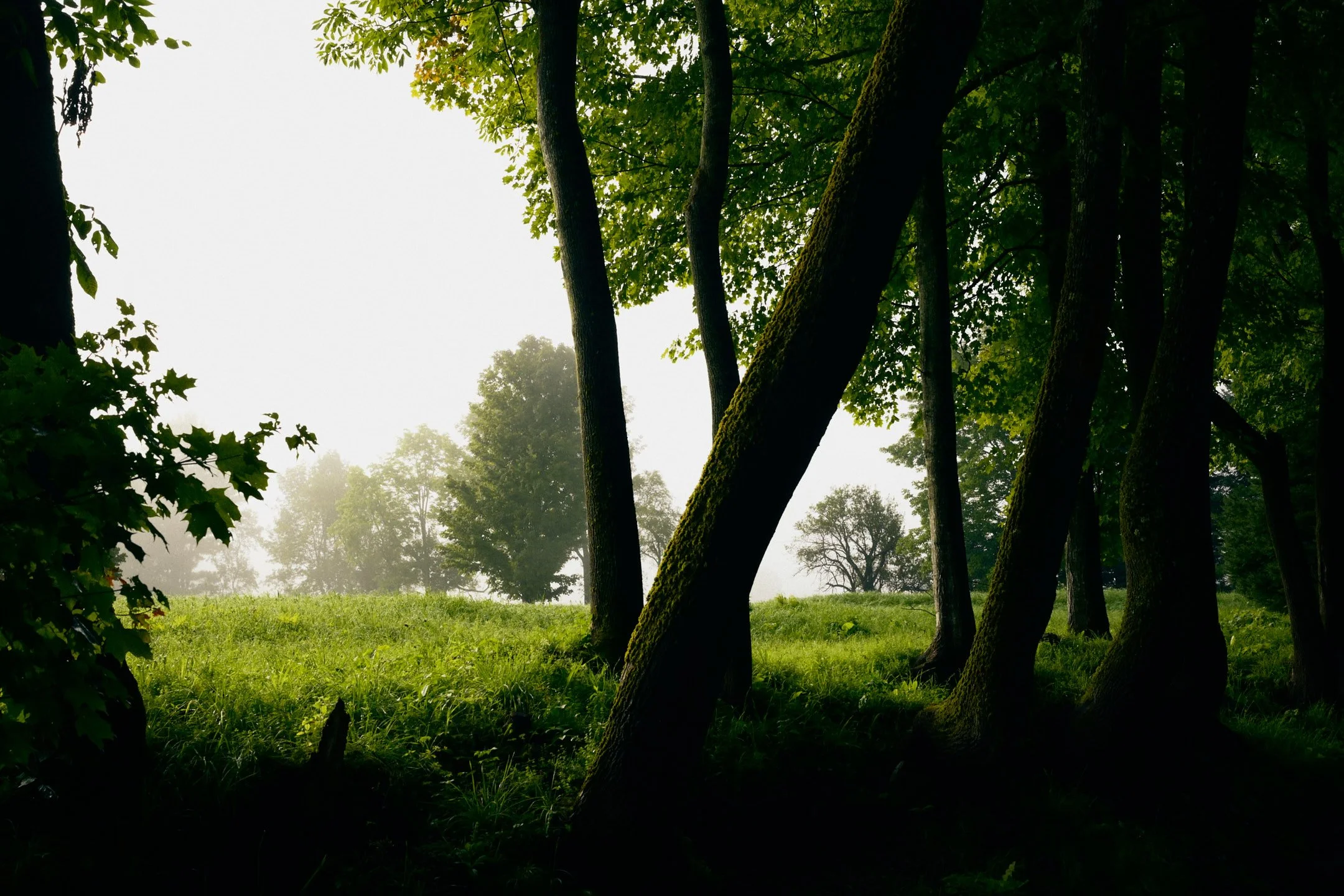
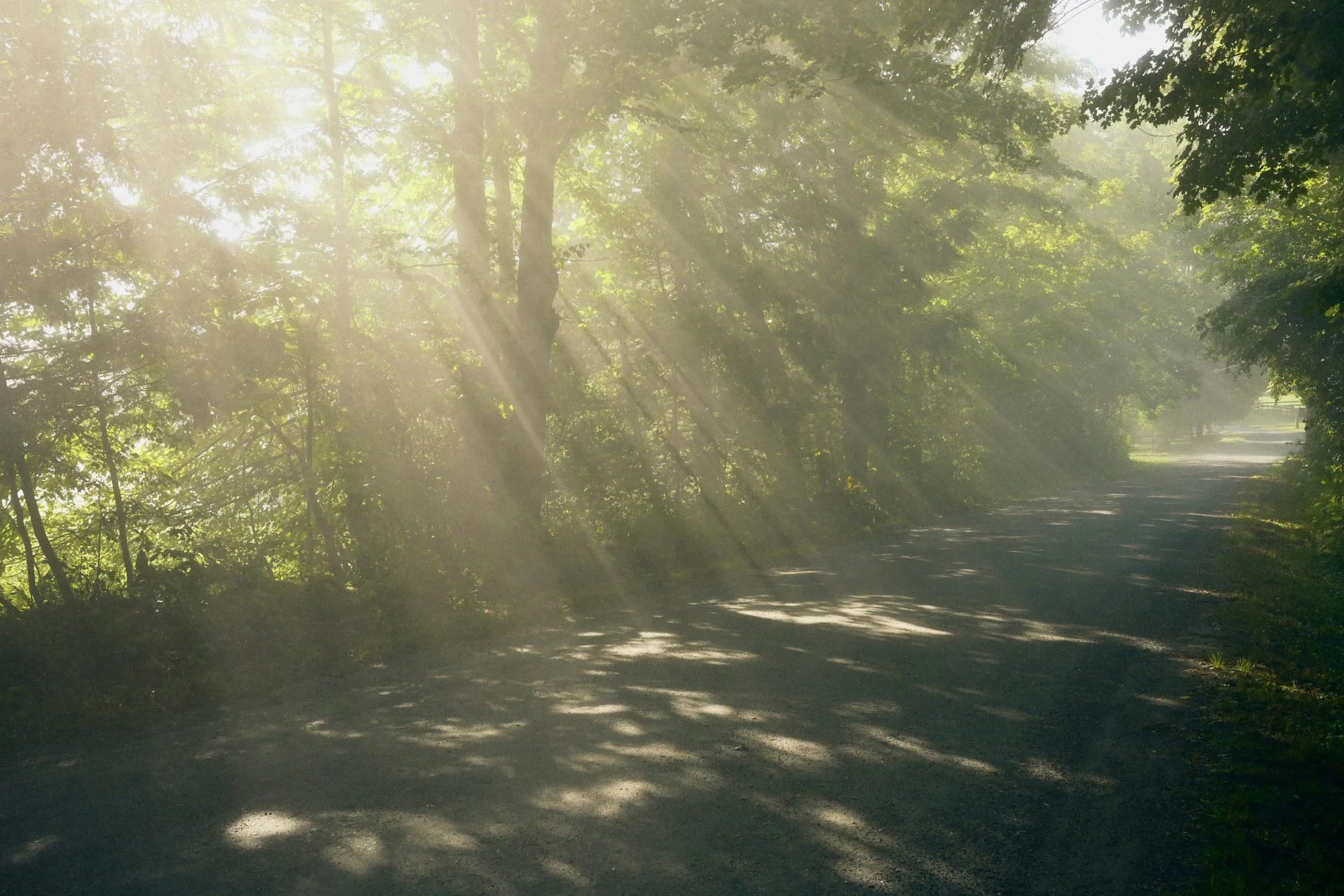
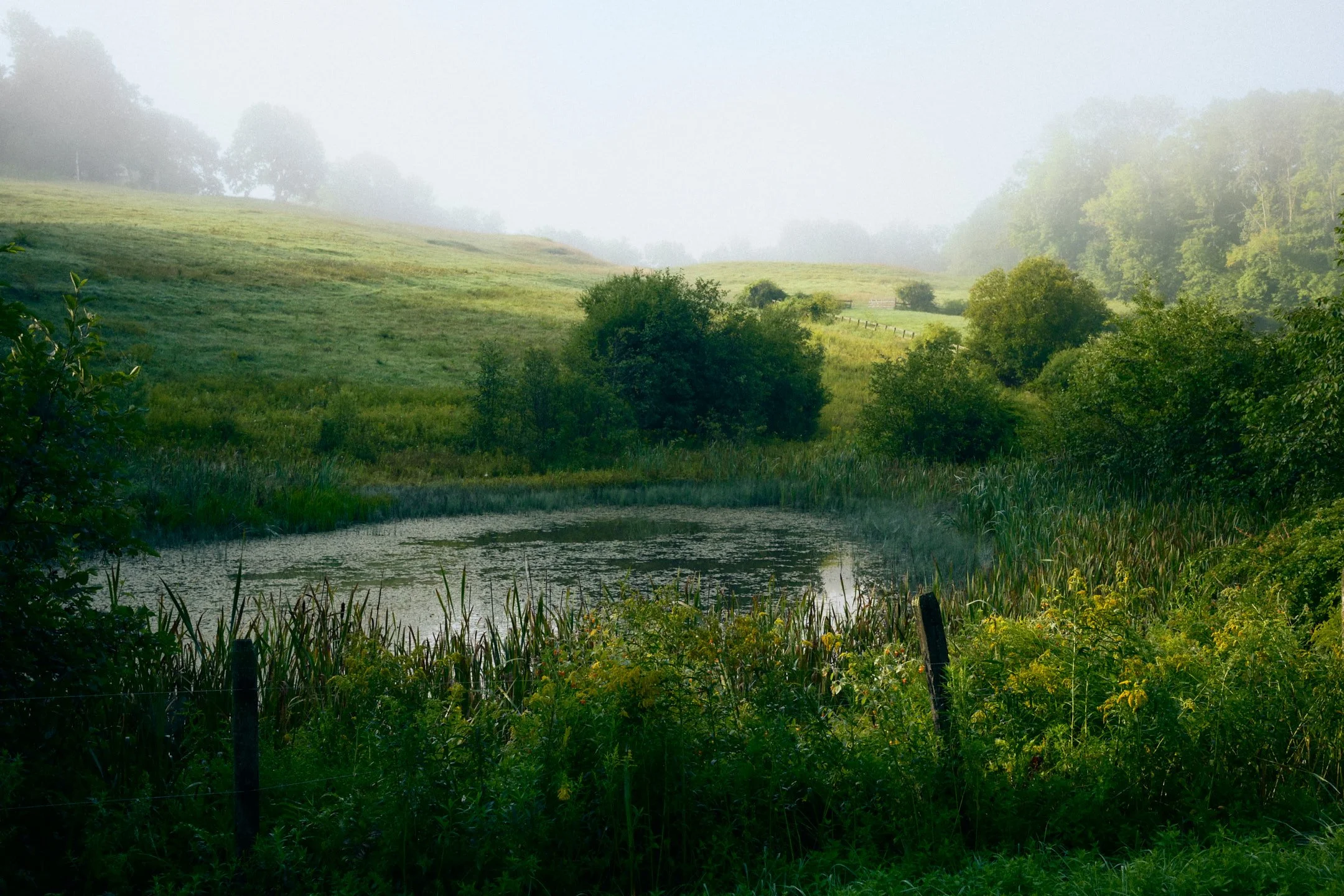
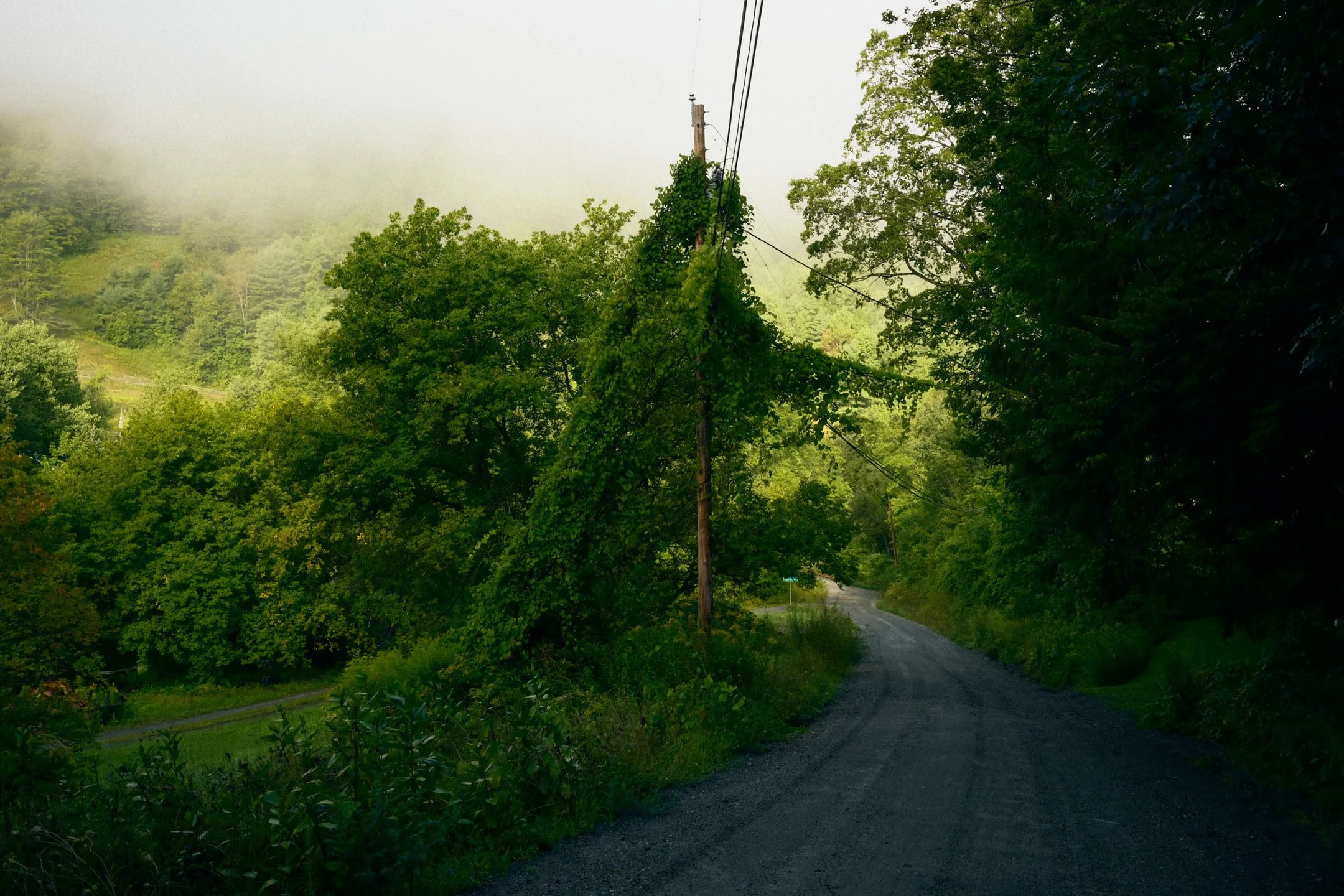
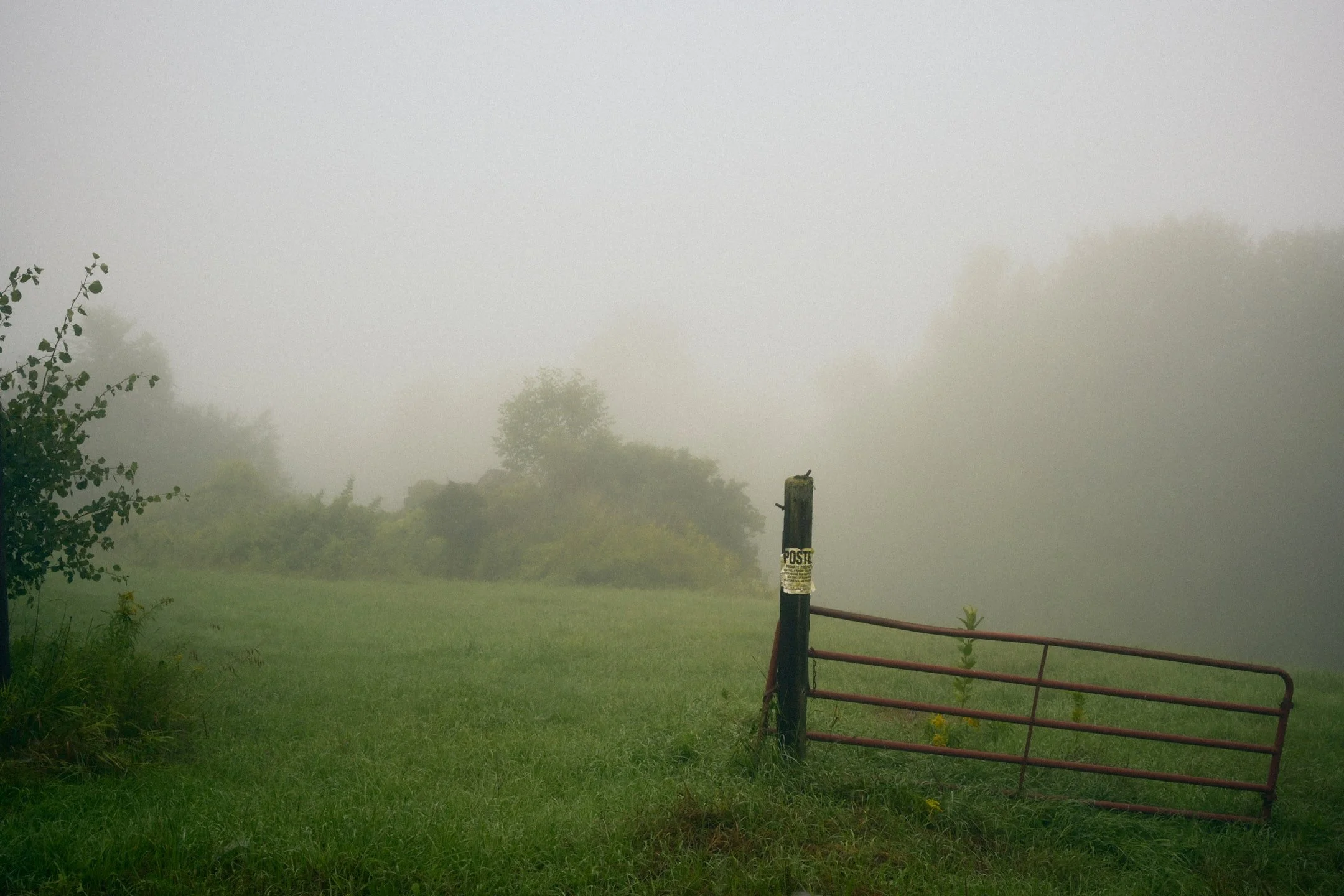
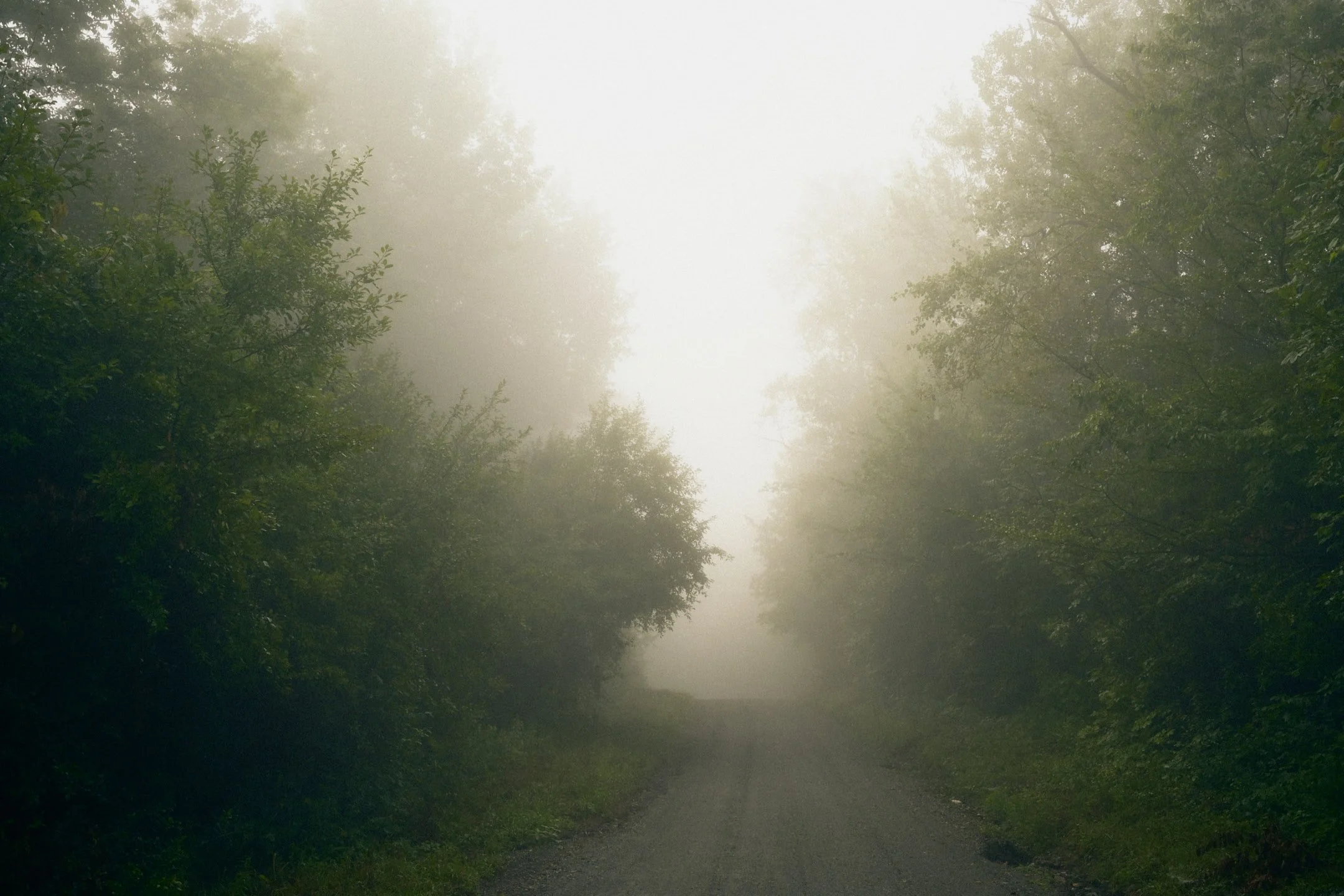
I was down in Woodstock to get a few pickup shots for a client. A last-ditch effort to capture a summery landscape. The fog was thick and at first it felt frustrating... a waste of time to have gotten out of bed so early. For some reason, I just figured I'd take a drive and explore. Most days it all burns off by 9 or 10 A.M. It sounds exceedingly simple, but it was a revelation. Before having kids I used to love roaming the hills, finding dirt roads and just seeing where they spat me out. So, I did exactly that and chased the light for a couple of hours.
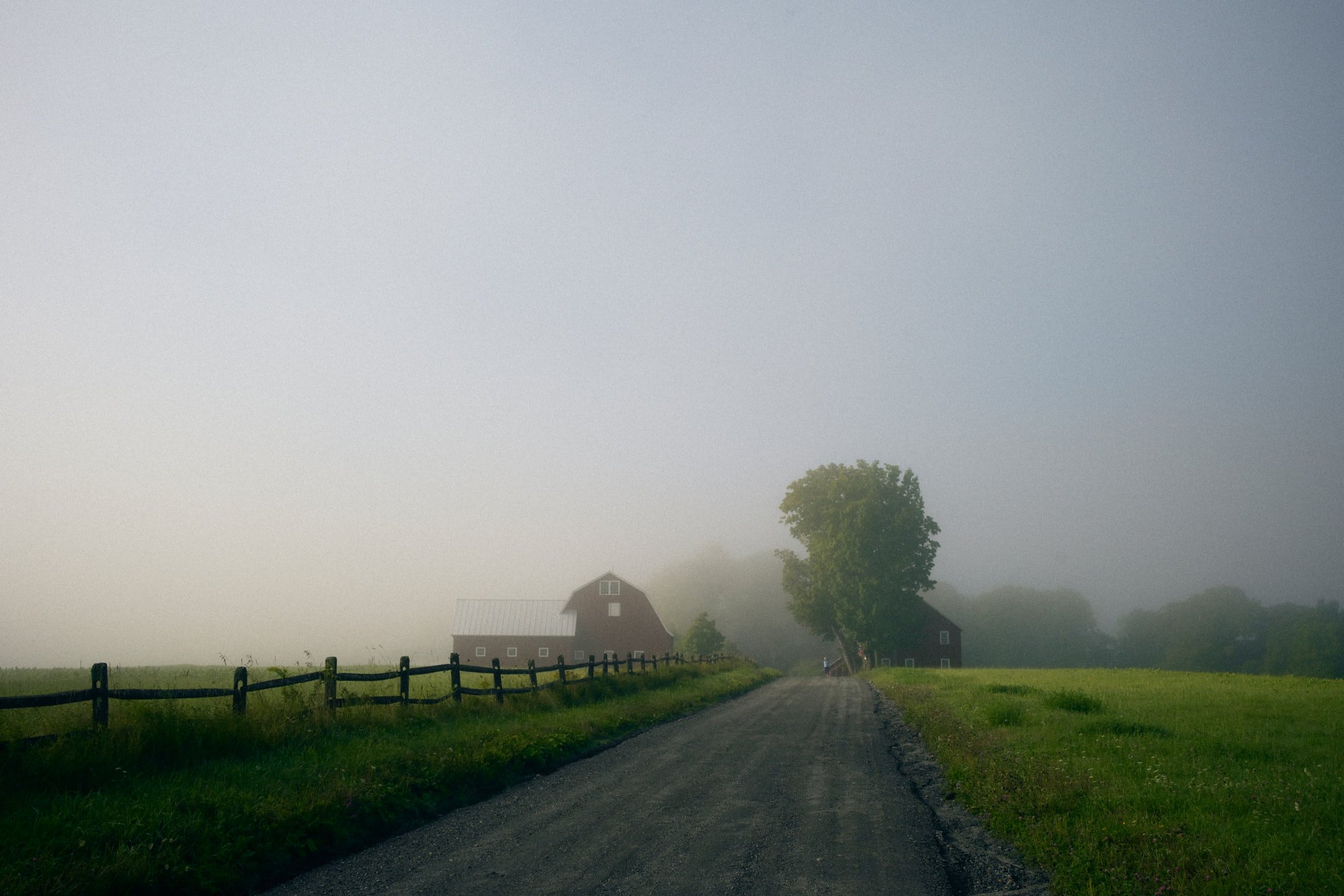
I checked back in a couple of times, and the fog was more settled into the valley bottom. It seemed like a bust, but as I was heading home it appeared to just vanish. I turned the car around and ended up getting the client work done too. As the days get shorter, I'm trying to hold onto that a little longer: get up, go look, and let the morning decide what it wants to give you.

Postcards from Maine
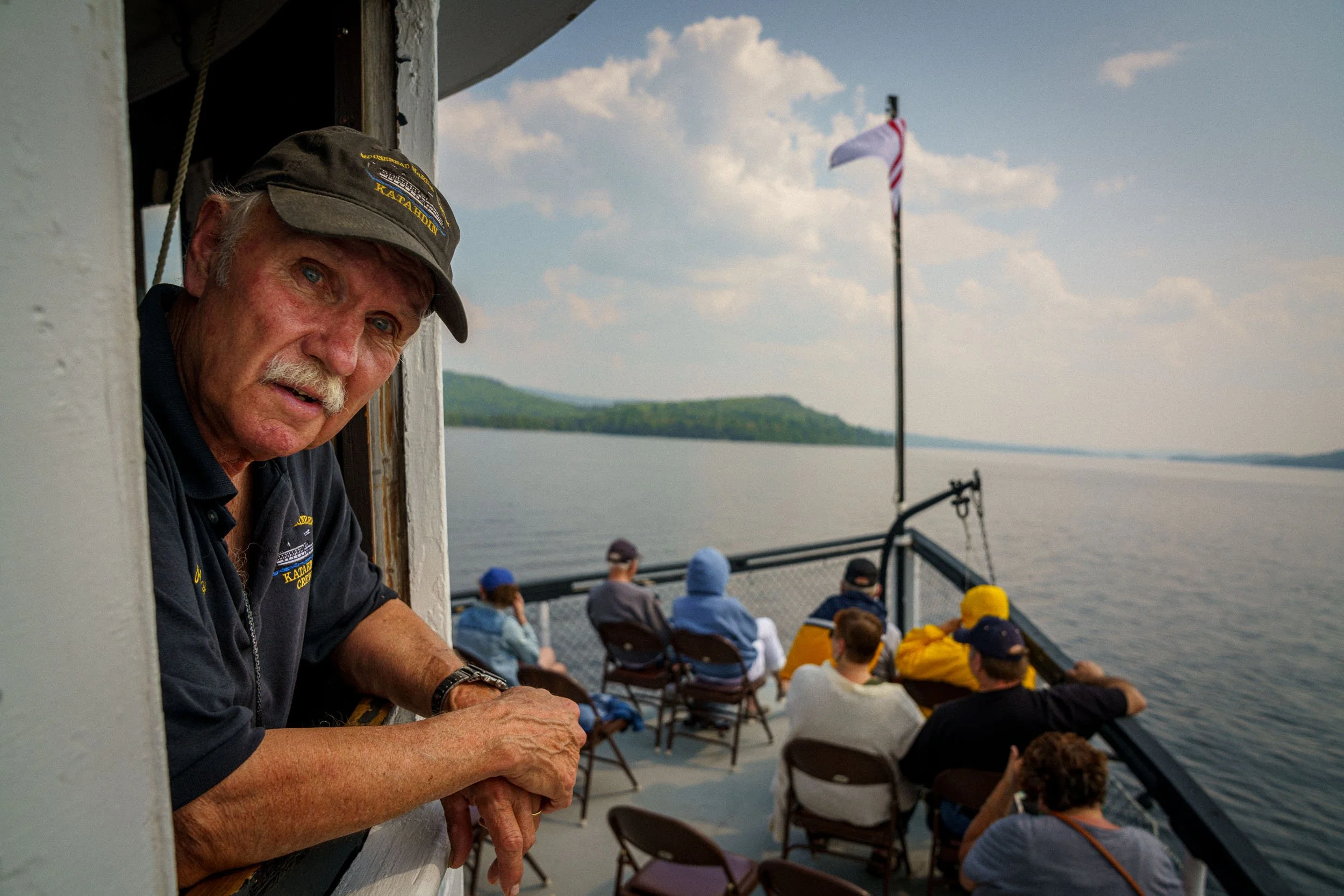
I returned with a Forestry degree after college and spent a summer working in the North Maine woods. I remember my boss, at the time, giving directions, “Drive to the top of New Hampshire, head North through Canada for two hours and then take a right into Maine” Needless to say, I saw many more bears than people that summer. In the years since, I have been fortunate to film and photograph for Yankee Magazine from Kennebunkport to Lubec. One winter I explored Caribou by snow machine, followed by a summer voyage on Moosehead Lake with Captain Rocky aboard the steamboat Katahdin.
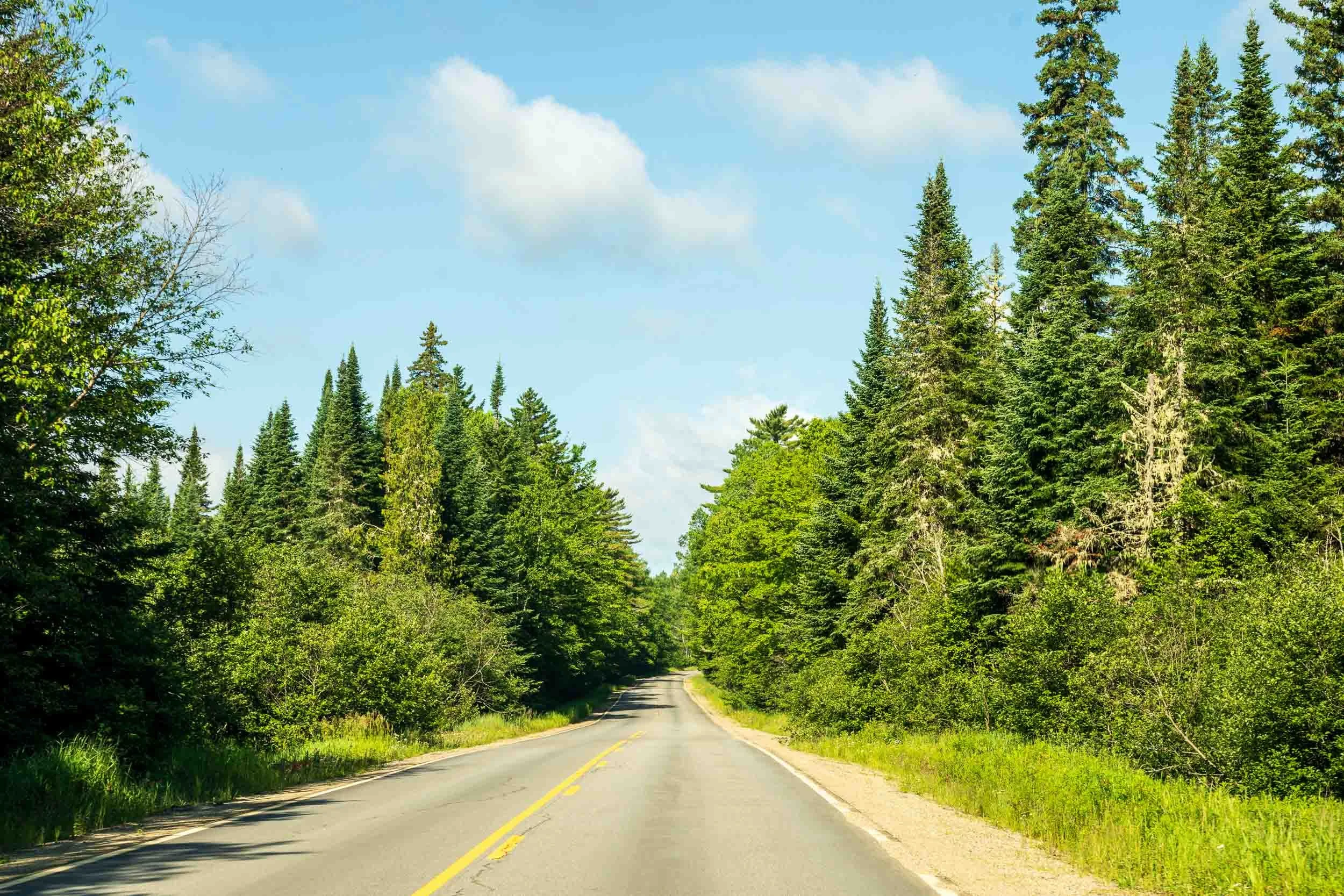
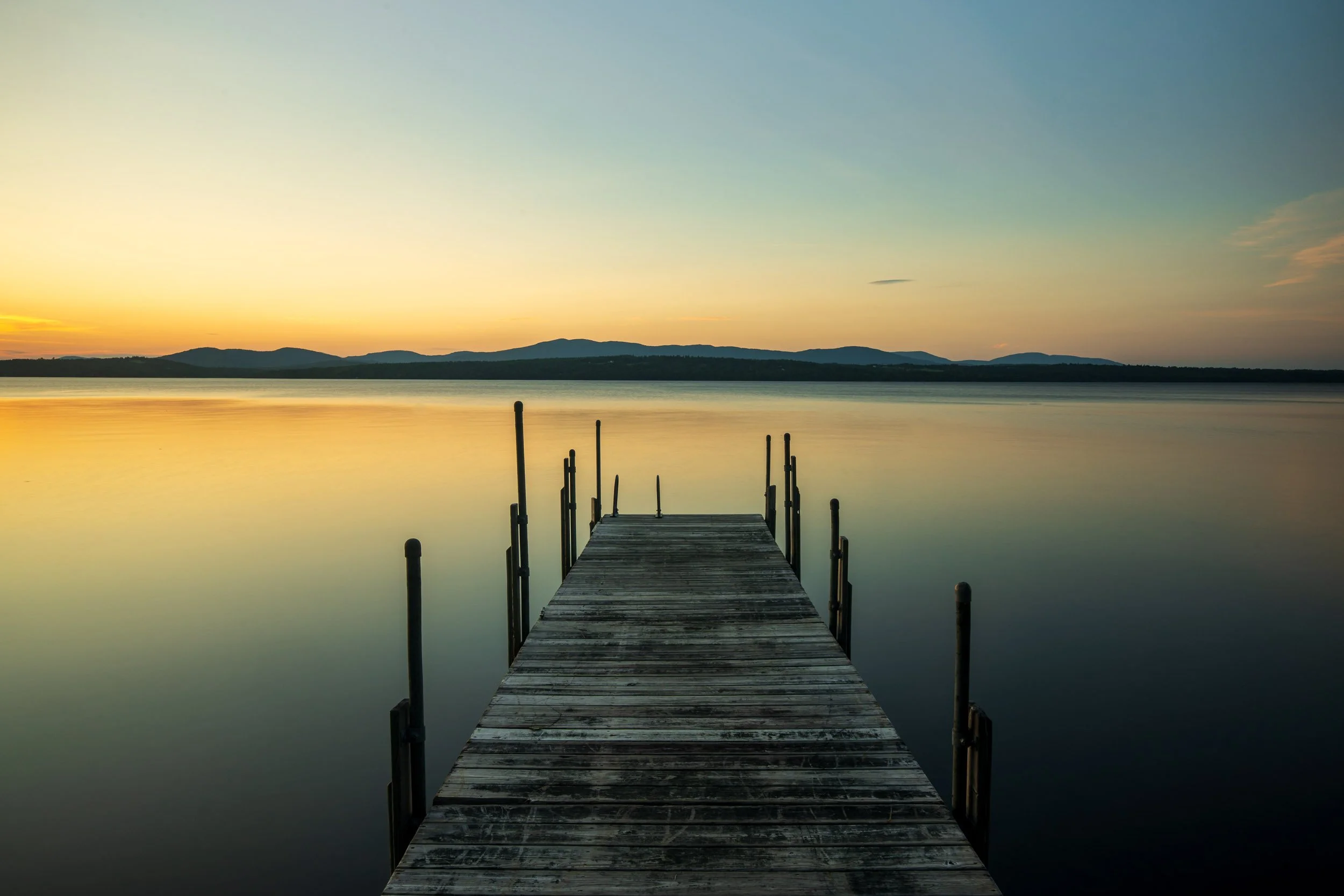
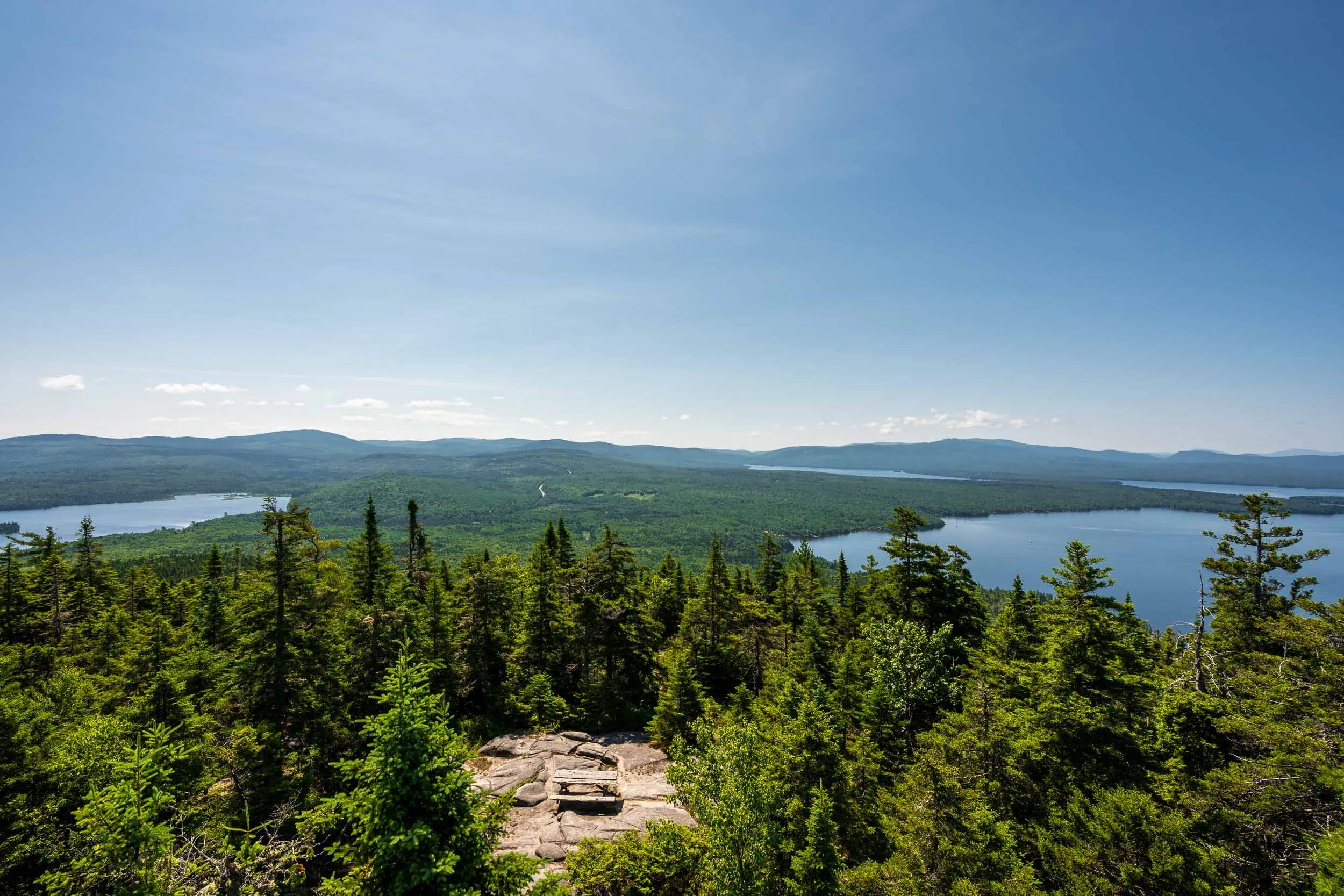
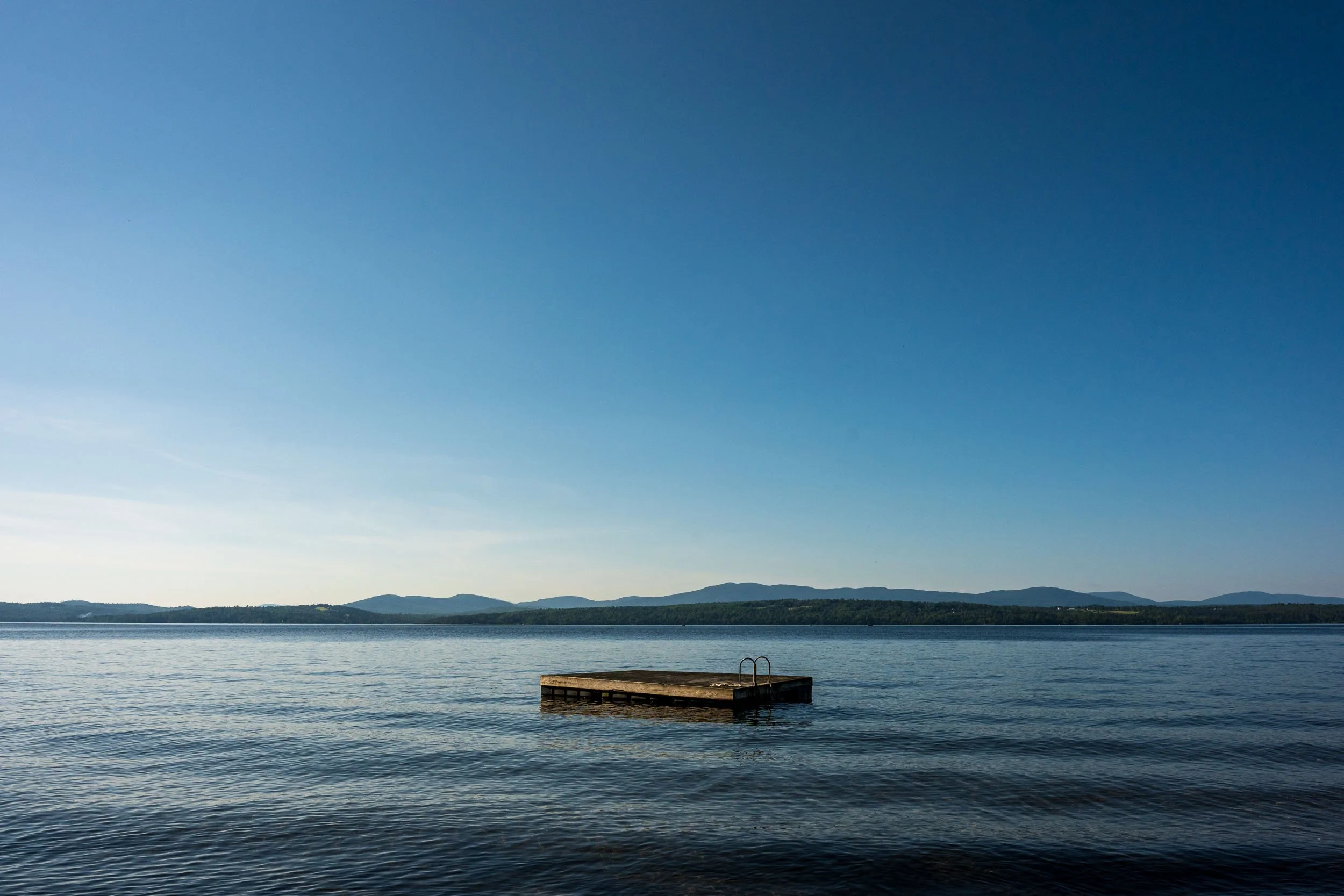
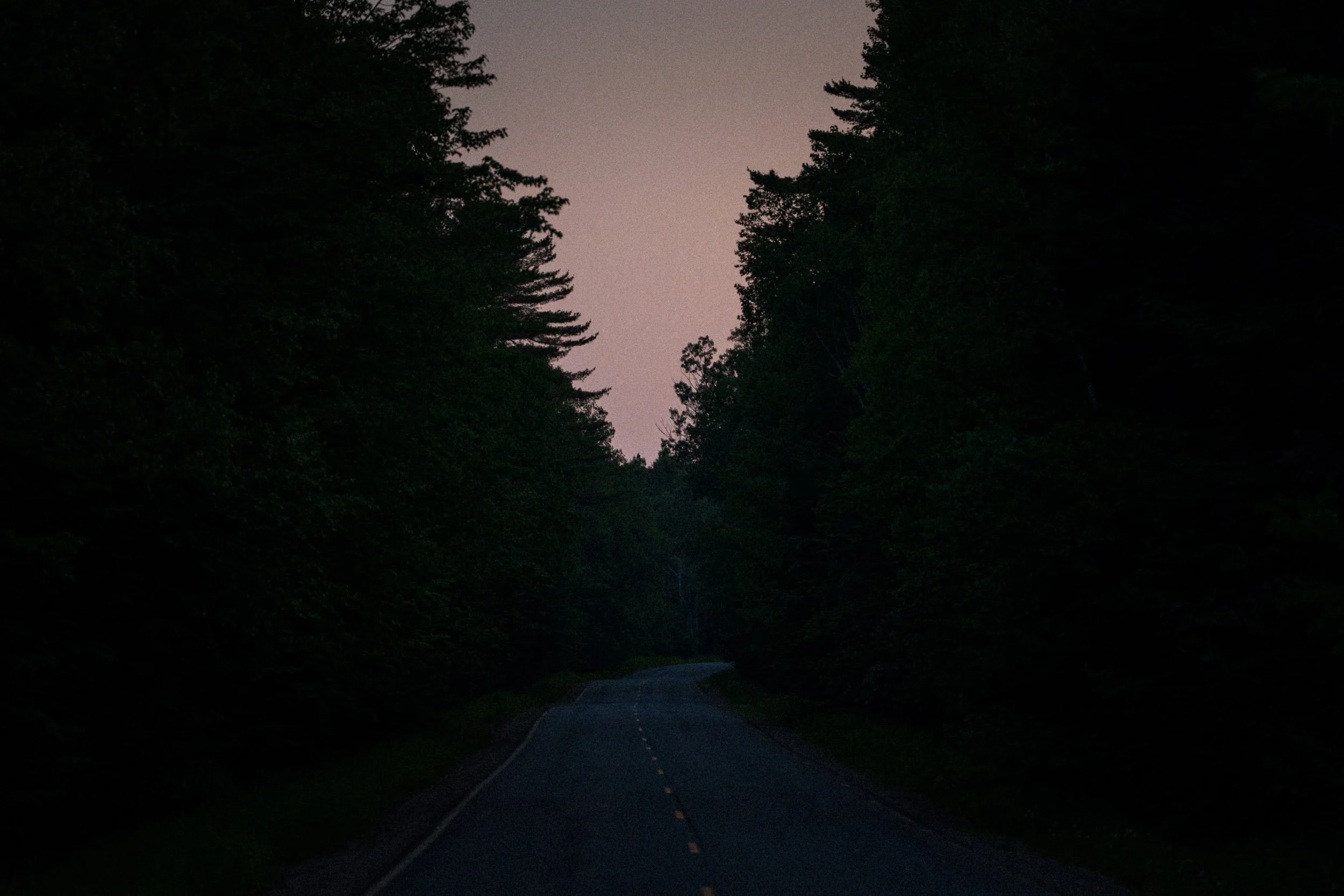
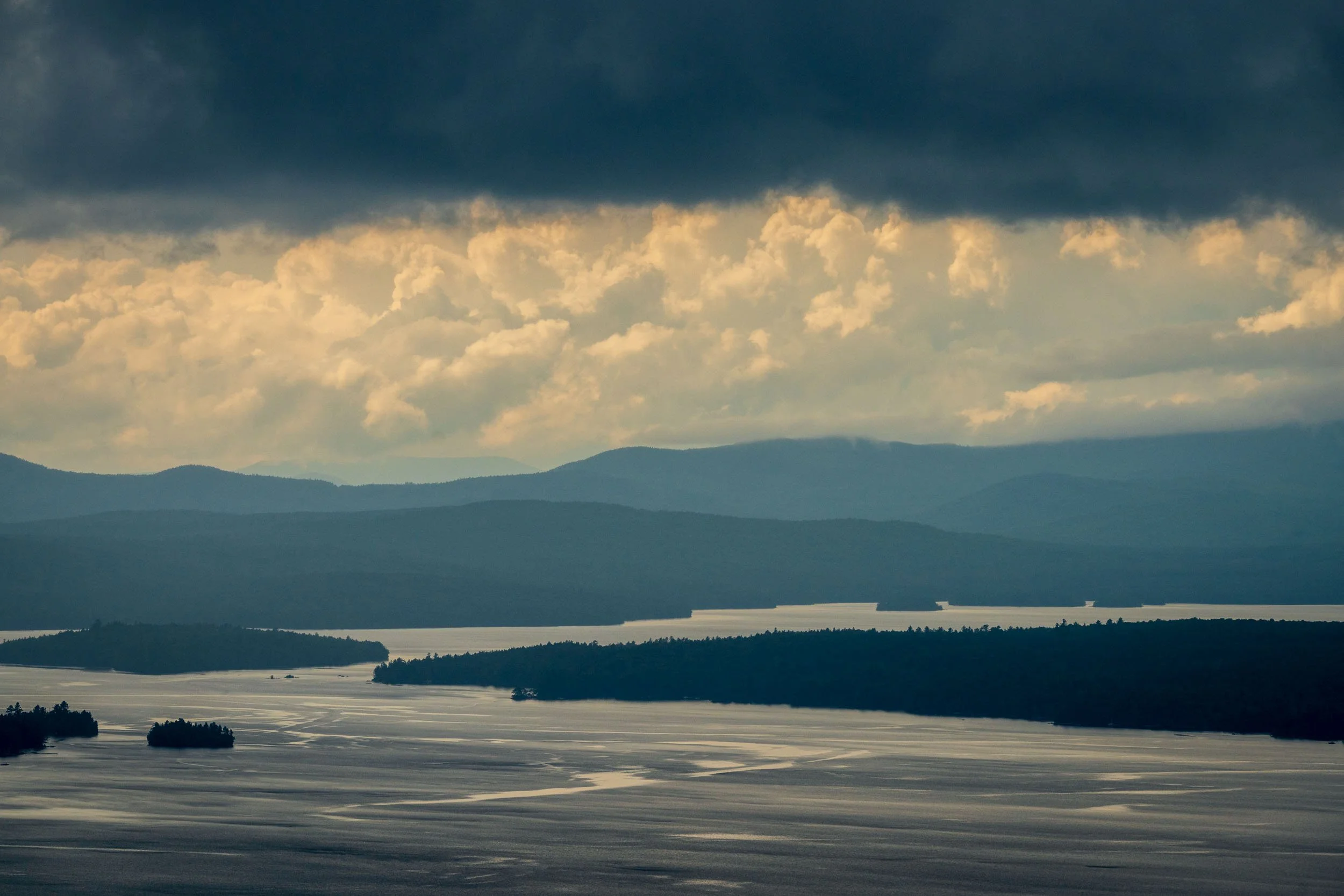
Maine has always pulled me Eastward to its mountains, lakes, forests and coastline. As a young boy I remember being woken up before dawn to watch the sunrise on Cadillac Mountain. I returned with a Forestry degree after college and spent a summer working in the North Maine woods. I remember my boss, at the time, giving directions, “Drive to the top of New Hampshire, head North through Canada for 2 hours and then take a right into Maine” Needless to say, I saw many more moose than people that summer. In the years since, I have been fortunate to film and photograph for Yankee Magazine from Kennebunkport to Lubec. One winter I explored, and filmed, the Caribou area by snow machine, followed by a summer voyage on Moosehead Lake with Captain Rocky aboard the Steamboat Katahdin.
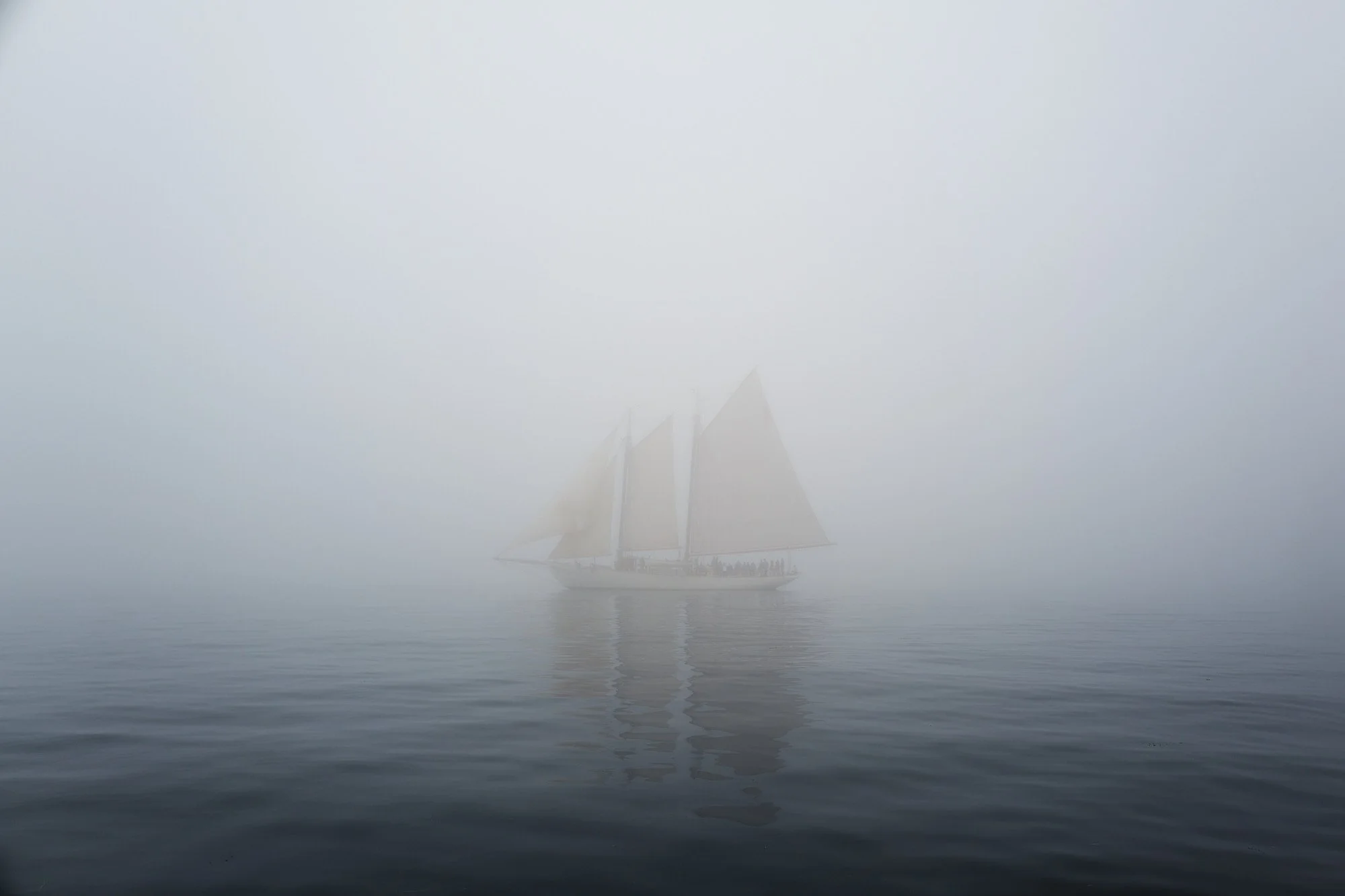
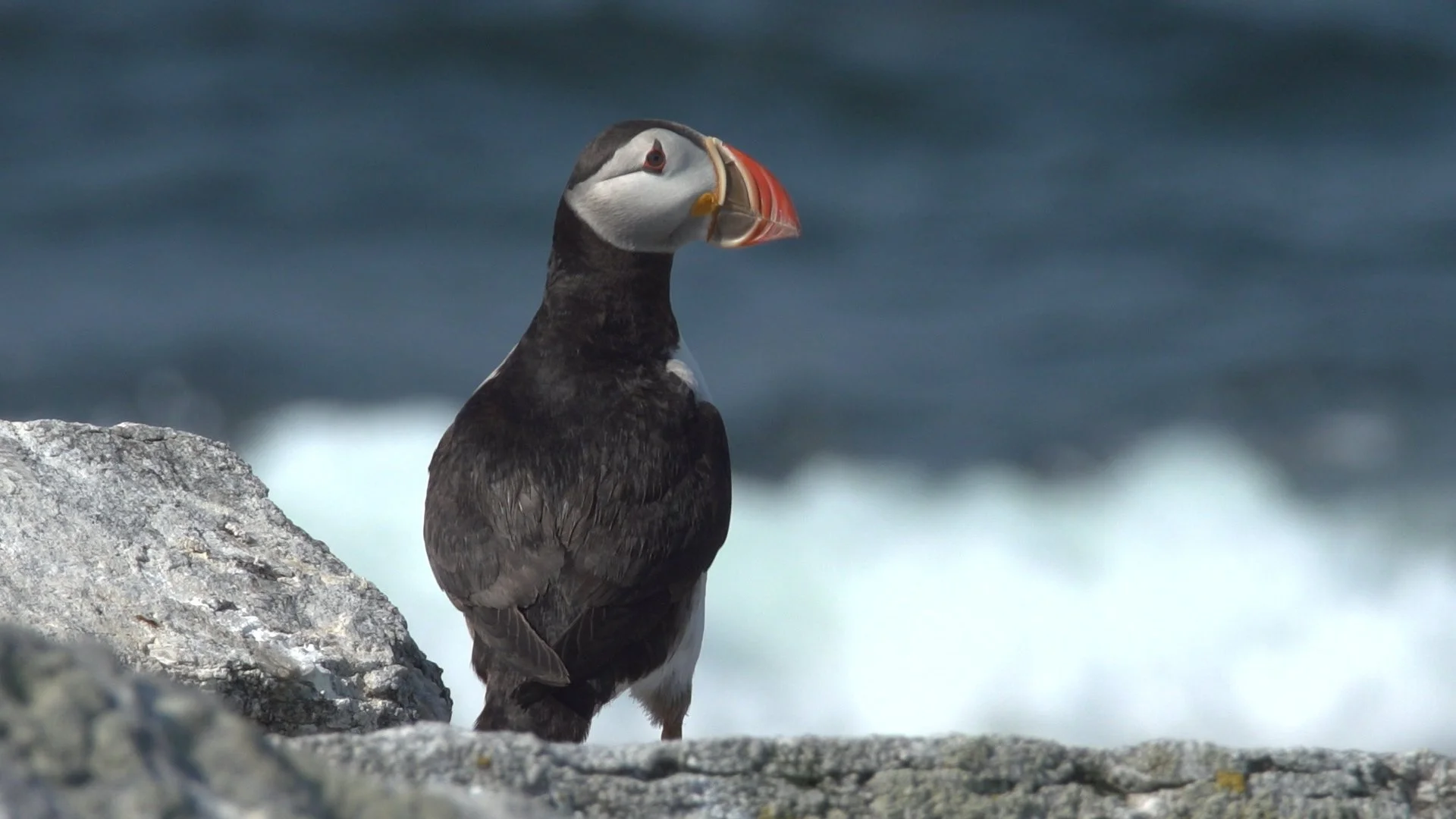
As the Director of Photography for a PBS show, Weekends With Yankee, I got to look back at the Maine coast from inside the Nubble Lighthouse, mountain biked in Bethel, raced a schooner in the fog and filmed a memorable trip to Eastern Egg Island with the Puffin Man, Steve Kress. One of the best parts of my job is getting to share these places and stories with my kids. Last week I took them to another place I learned about from behind the camera, Rangeley. Ironically, I almost do not want to identify this area by name for fear of spoiling it. Too late… but I love the lack of development, long views, cold water and of course, the Loons. My daughter even commented that, “It just feels calm up here.”. A statement made humorous by sharing that our town has less than 500 residents and a single traffic light.
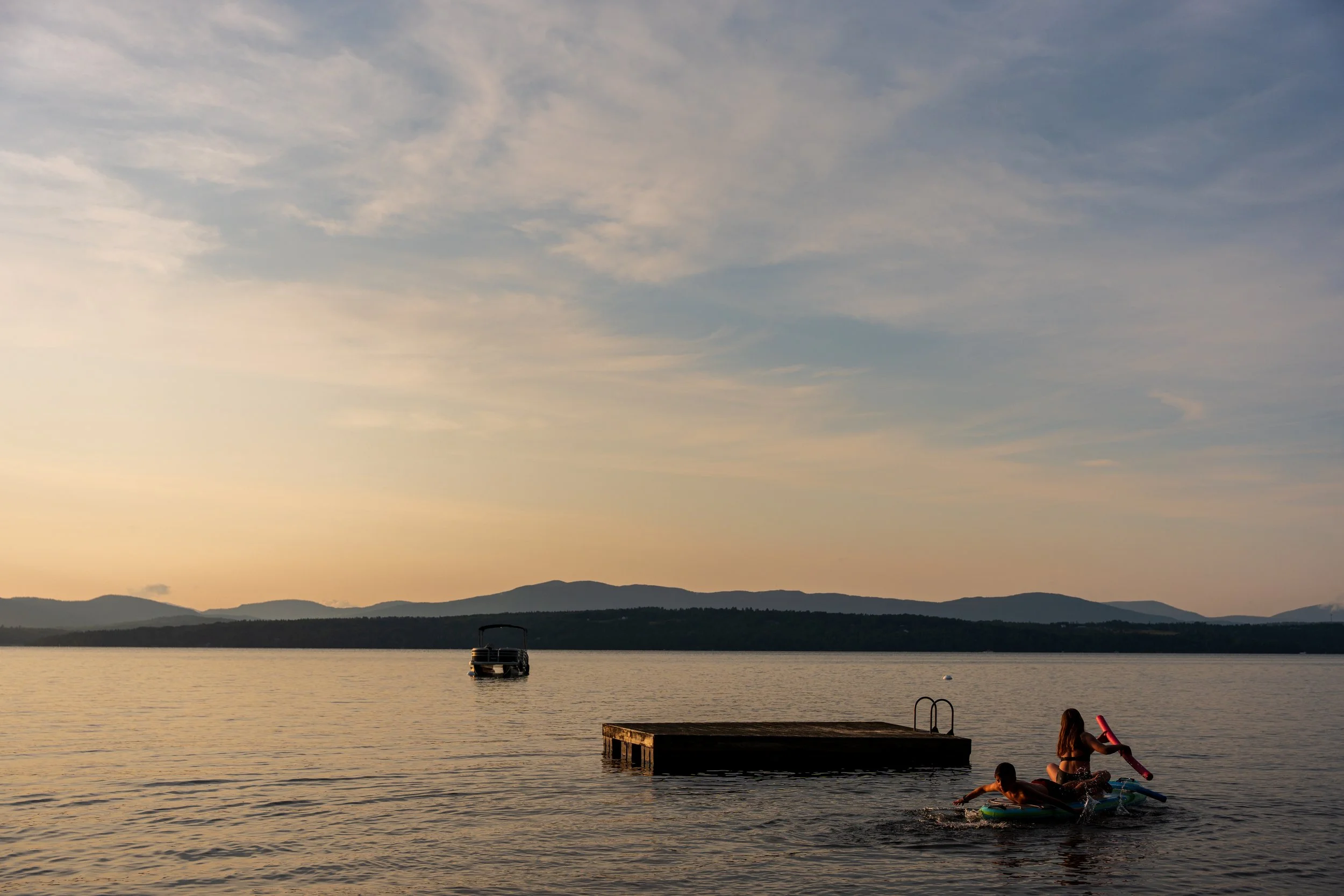
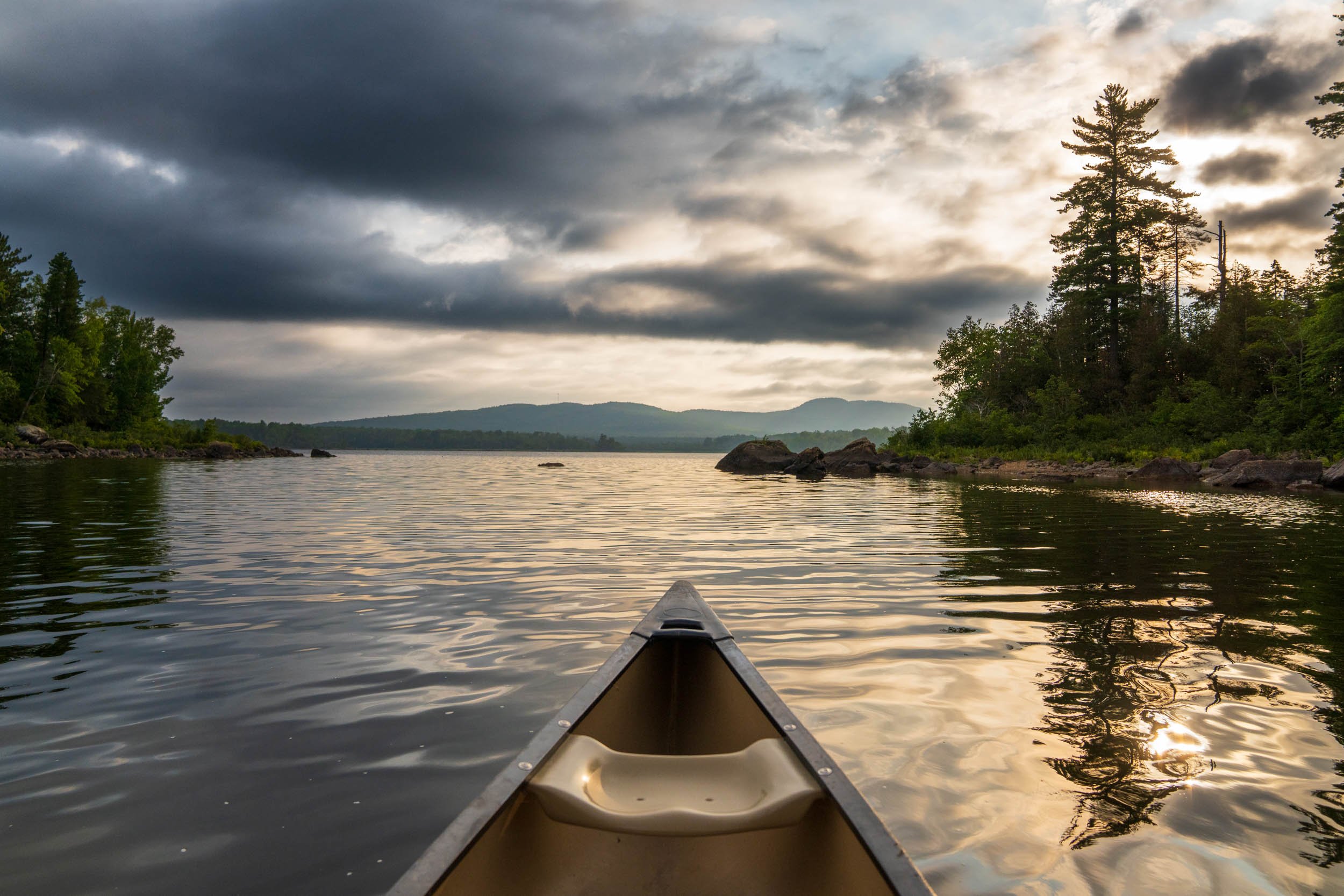
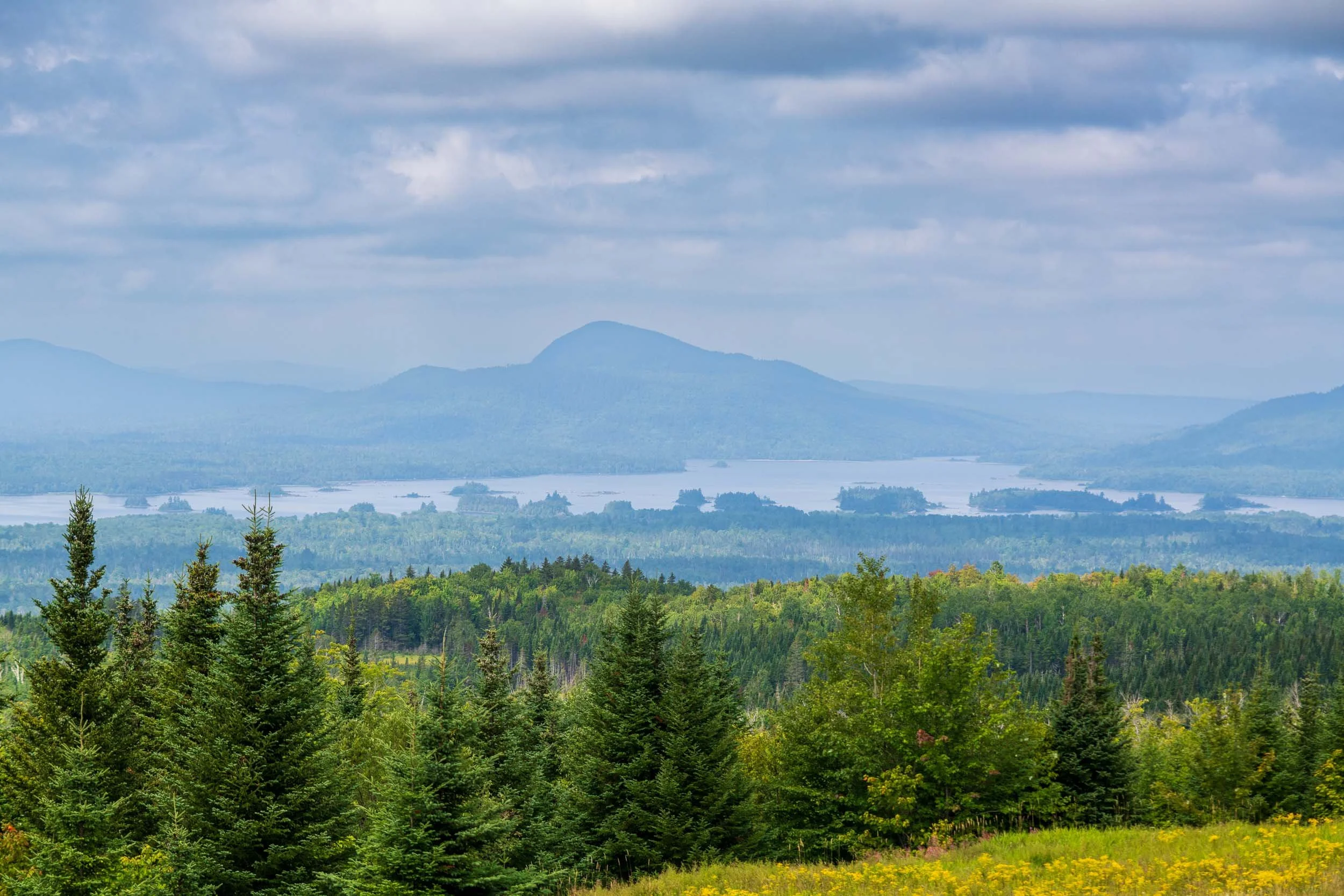
Rangeley Lake, Maine.
If I am being honest, I did not succeed in prying my children entirely off of screens, but the majority of their time was spent blissfully immersed in nature. A highlight being skipping stones, and then racing, with swim goggles on to retrieve them. The reality of our time blew in one day from the West, with a smokey haze replacing the endless blue. I recently finished the book “Immemorial” by Lauren Markham, and it was there that I learned of the term, Solastalgia. It is defined as, “a form of homesickness one gets when one is still at home, but the environment has been altered and feels unfamiliar.” Kids today will inhabit a world vastly different from what I experienced growing up, with deadly floods and catastrophic fire becoming a normal headline. I hope our adventures together in Maine remain recognizable and that they can share a love of the natural world with their own kids.